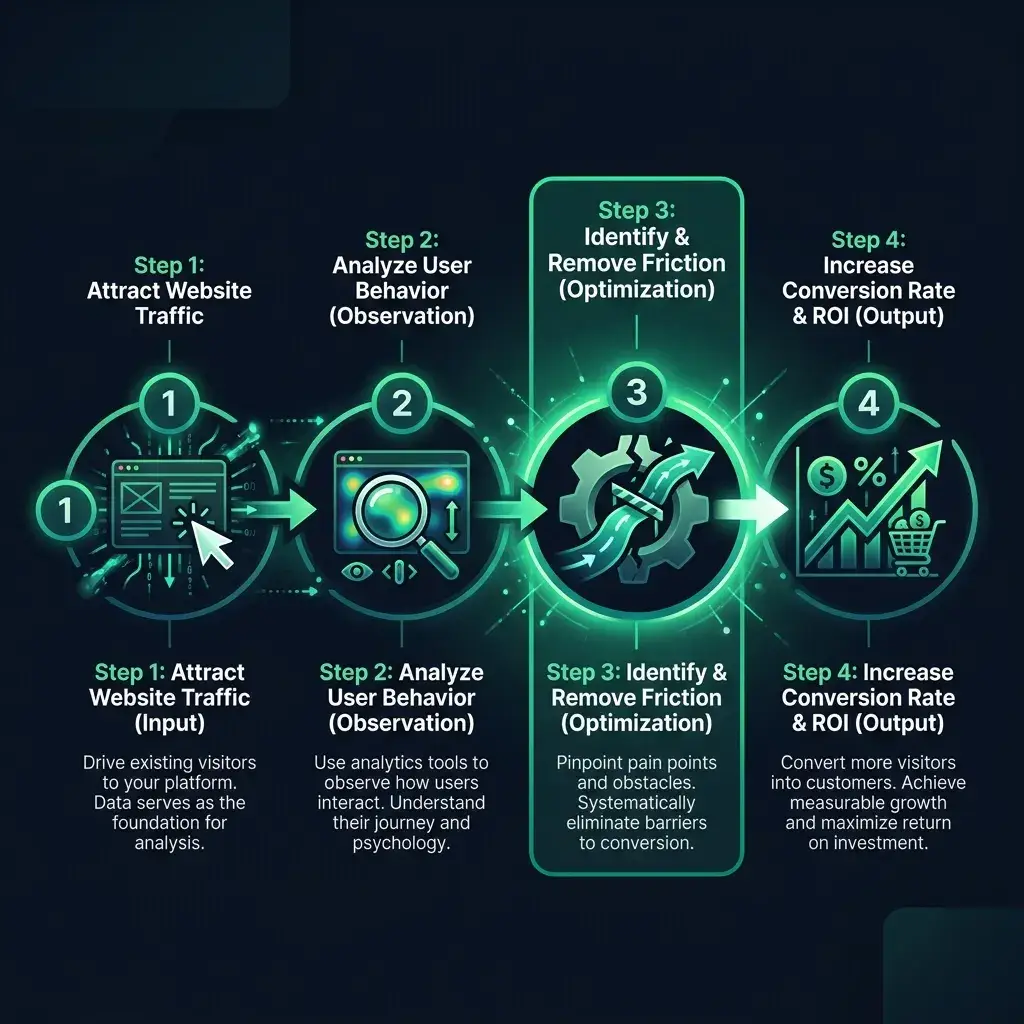

Are you attracting high website traffic but seeing disappointingly low sales? This is a common challenge for businesses worldwide. The solution is what is conversion rate optimization (CRO), a systematic process of analyzing user behavior and improving your website to turn more visitors into customers. It is the key to fixing inefficiencies and maximizing the return on your marketing investment.
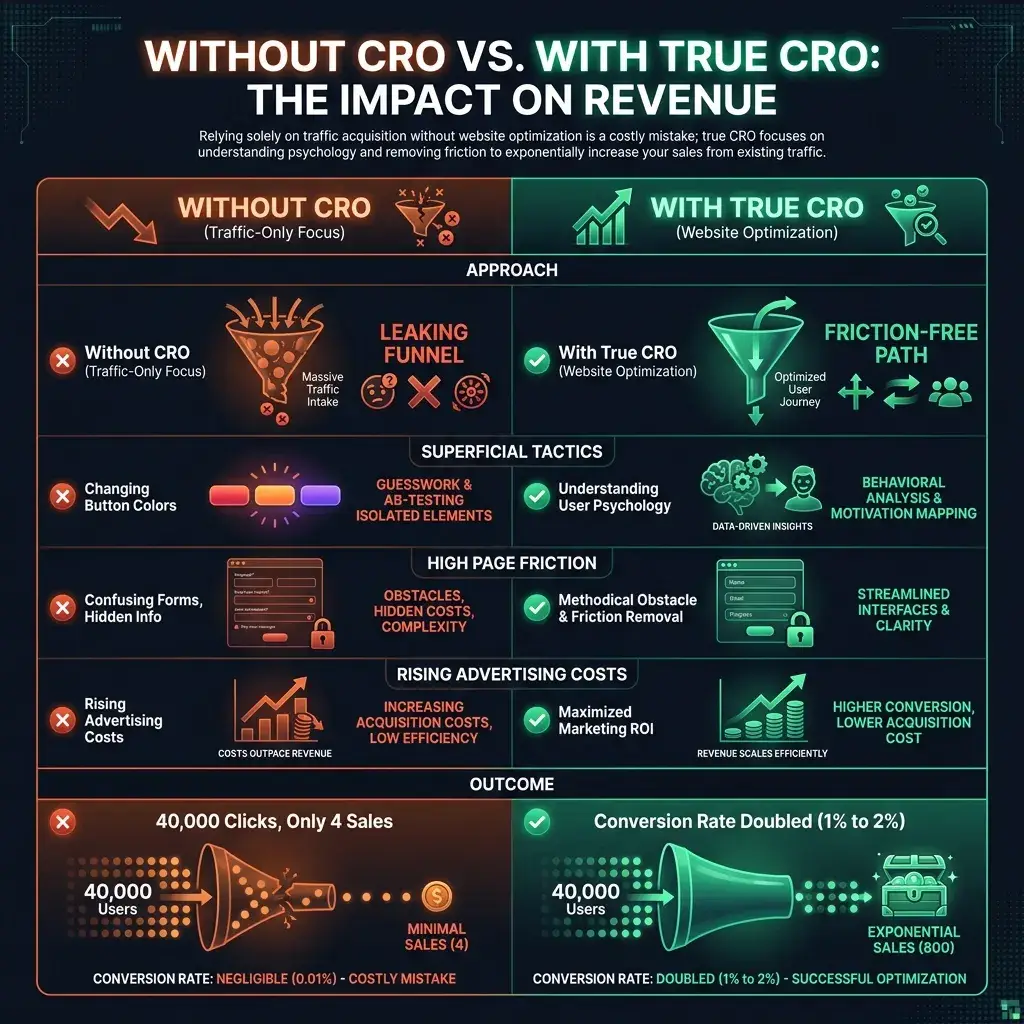
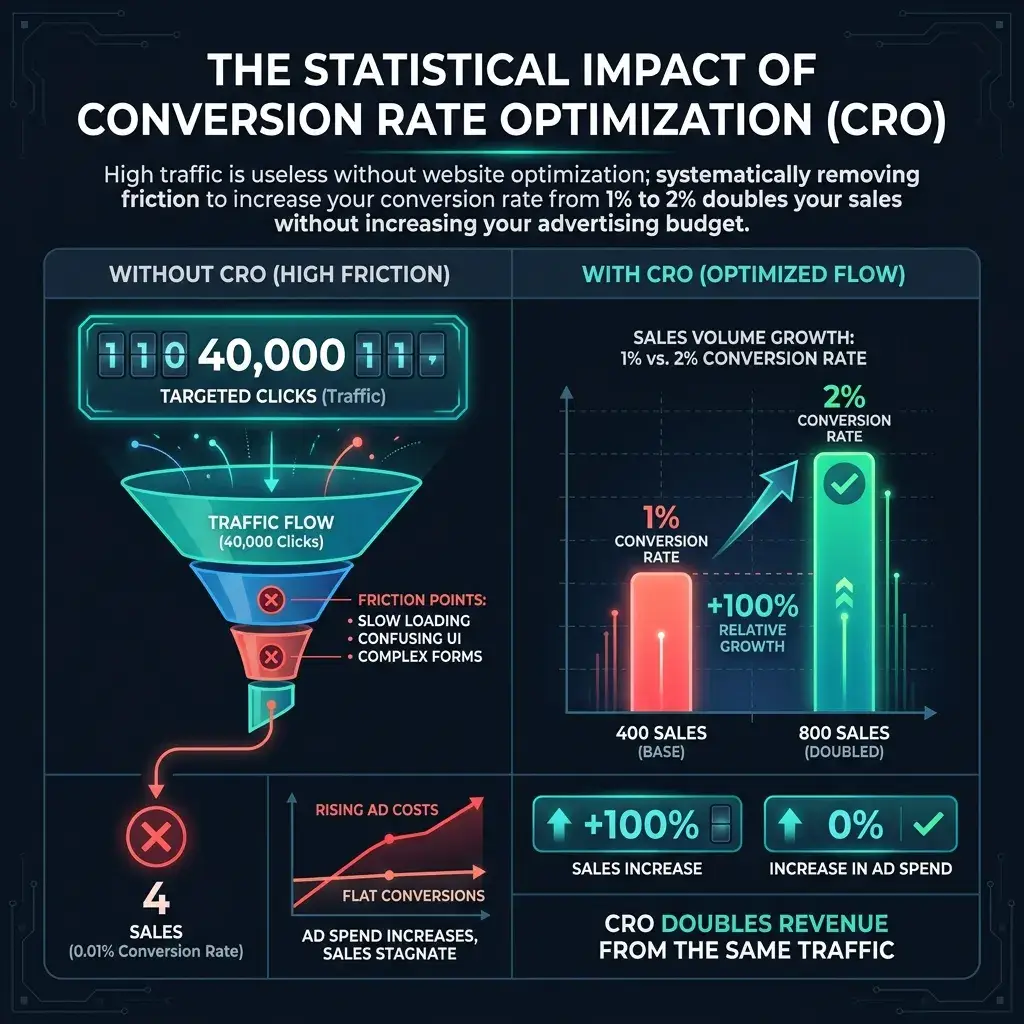
Consider a common scenario: a business owner invests a significant marketing budget into paid ads, resulting in forty thousand targeted clicks but only four sales. If you have ever seen traffic flood your site and felt the deep disappointment of seeing no one make a purchase, you understand the frustration. This exact problem is why a solid CRO strategy can transform your business.
What is Conversion Rate Optimization (CRO)?
Conversion rate optimization, or CRO, is not about simply copying a market leader's design or changing your "buy now" button from green to red. Those are superficial tactics that rarely produce meaningful results. True website optimization is about understanding user psychology and methodically removing obstacles, which we call friction.
Every point of friction on your page forces a user to stop, think, and hesitate. The moment someone is confused by a form or cannot find shipping information, they are more likely to leave. In the world of online business, hesitation is the enemy of revenue.
Why Traffic Without Website Optimization Is a Costly Mistake
Attracting visitors to your website is becoming increasingly expensive. Advertising costs are rising, privacy regulations make targeting more complex, and user attention spans are shorter than ever. Relying solely on paid advertising for growth is an unsustainable and costly strategy.
But what if you could increase your conversion rate from 1% to 2%? You would double your sales without increasing your advertising spend. This simple adjustment can completely reset your profit margins. Suddenly, you have the capital to invest more effectively in growth because every visitor is worth twice as much to your business.
How to Increase Your Website's Conversion Rate
Improving your conversions begins with a clear understanding of your current performance. A data-driven approach to website optimization will always outperform guesswork.
Start by Calculating Your Current Conversion Rate
Establishing your baseline is simple. Divide your total number of conversions (such as orders) by your total unique visitors over a specific period, then multiply by 100. For example, if 5,000 people visit your site and 50 make a purchase, your conversion rate is 1%.
However, stopping there is a mistake. Your overall conversion rate is just an average that can hide critical problems. For instance, your mobile checkout might convert at a low 0.5% while desktop users convert at 3%. Looking only at the average rate can blind you to the fact that a large segment of your audience is facing a frustrating and broken experience.
Understanding Common Conversion Barriers: User Friction
Decades of research from usability experts provide a clear picture of why people abandon a purchase. The Baymard Institute, a leading web research firm, has tracked e-commerce trends for years and found that nearly 70% of all online shopping carts are abandoned.
The top reasons are almost always related to friction and unexpected issues. According to Baymard, the leading causes for abandonment include:
- Extra costs being too high (shipping, taxes, fees)
- The site requiring users to create an account
- A long or complicated checkout process
- Inability to see or calculate the total order cost upfront
- General website errors or crashes
Research from another renowned firm, the Nielsen Norman Group, confirms a fundamental truth: people do not read websites; they scan them. They are looking for visual cues, trust signals, and clear instructions. Your visitors are often looking for any reason to leave, because closing a browser tab requires no effort.