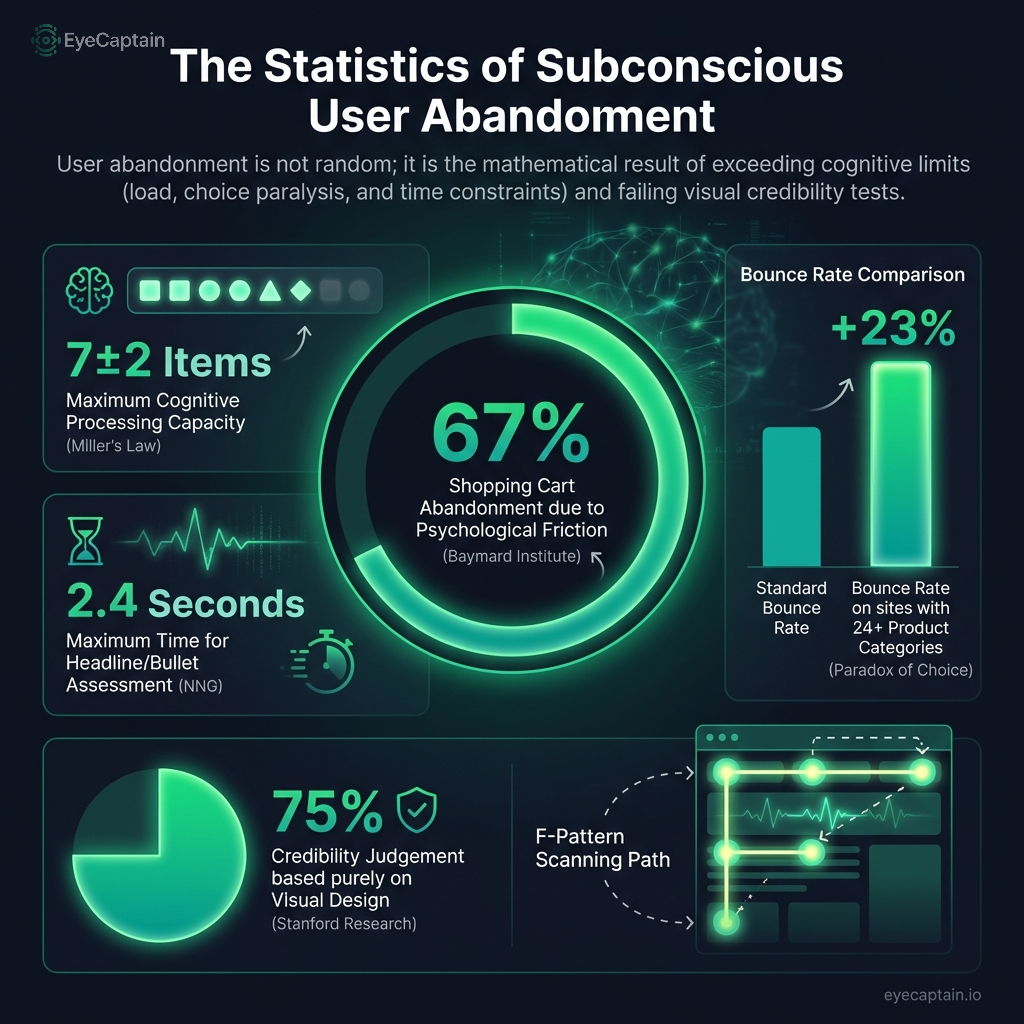

Ever wonder why visitors quickly abandon your website or application? Often, the root cause lies deep within user psychology. Studies, such as those from the Baymard Institute, consistently reveal that a significant portion of online transactions are abandoned due to invisible psychological barriers. This underscores a crucial point: effective digital optimization extends beyond aesthetics. It involves understanding fundamental human brain patterns that influence online behavior, regardless of geographical location - from Tokyo to Berlin or São Paulo. Every click, scroll, and pause offers insight into neurological responses refined over millennia, profoundly shaping the user experience on your digital platform.
Taming the Information Beast on Your Digital Platform
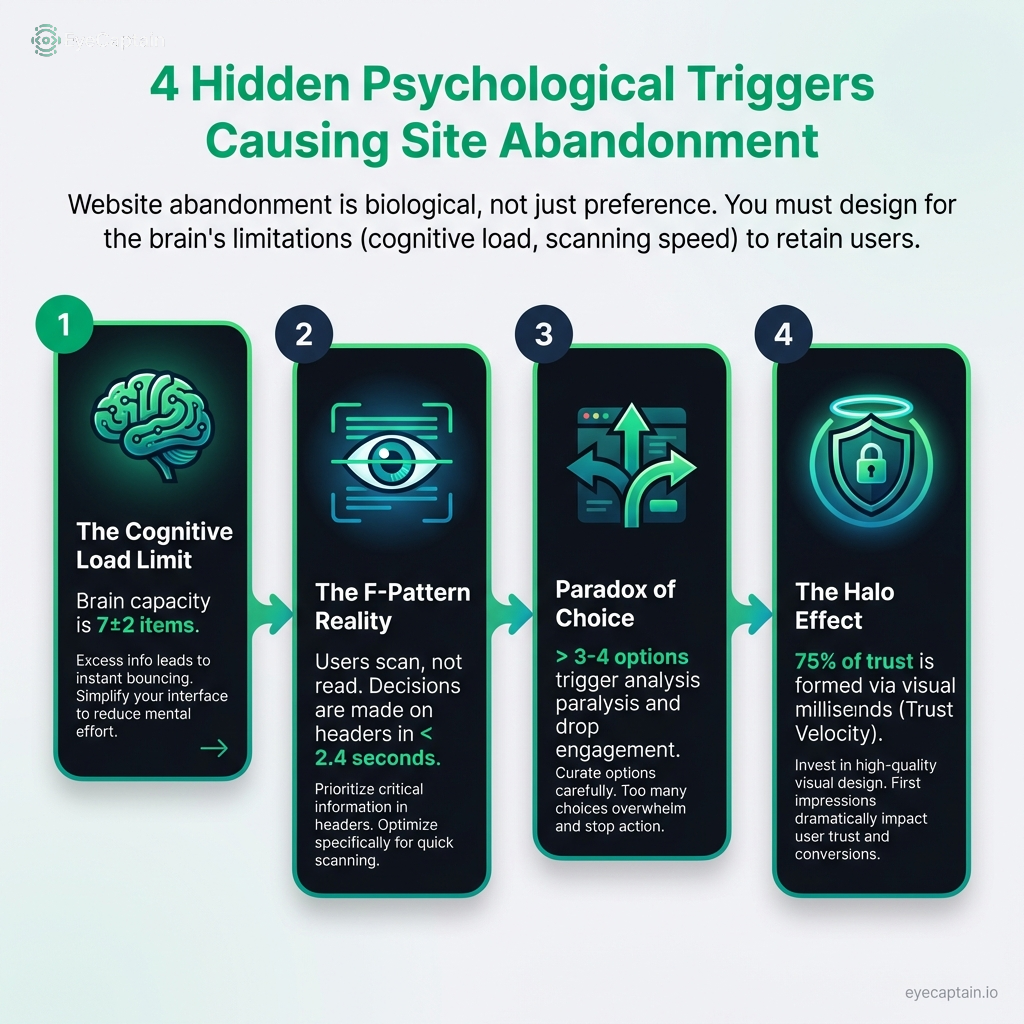
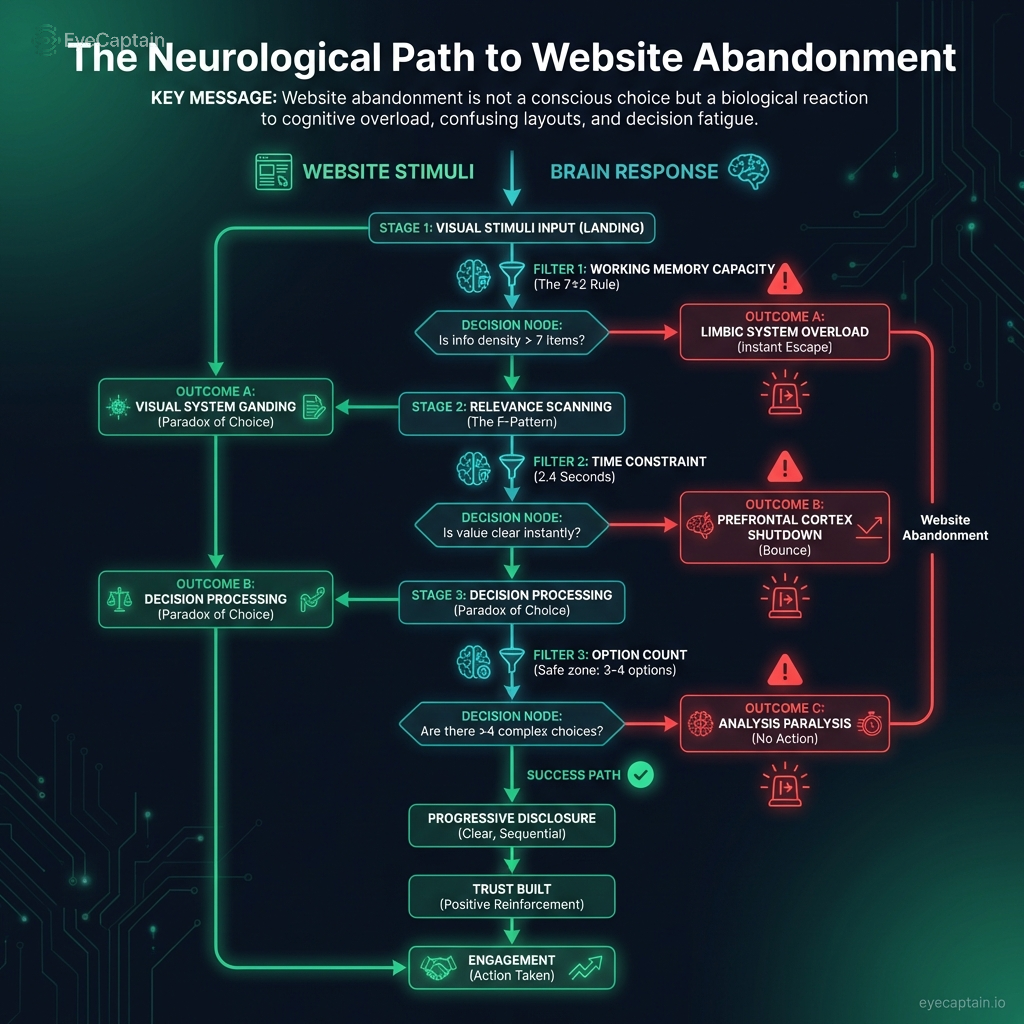
Our brains have inherent limitations, typically managing around seven pieces of information simultaneously. When a digital platform presents an overwhelming amount of data, the primitive limbic system often triggers a "flight" response. This information overload is a primary contributor to high bounce rates globally, impacting diverse cultures and age groups, and significantly hindering website engagement. It's akin to attempting to drink from a firehose: too much, too fast, preventing effective information absorption.
Eye-tracking studies, particularly from the Nielsen Norman Group, consistently demonstrate that users rarely read web pages word-for-word. Instead, they skim content, often in an "F" pattern, focusing briefly on headlines and bullet points. If these initial snippets fail to capture attention, the brain disengages, leading to lost digital engagement. Consider it like browsing a bustling marketplace; if the first items aren't appealing, you move on to the next stall.
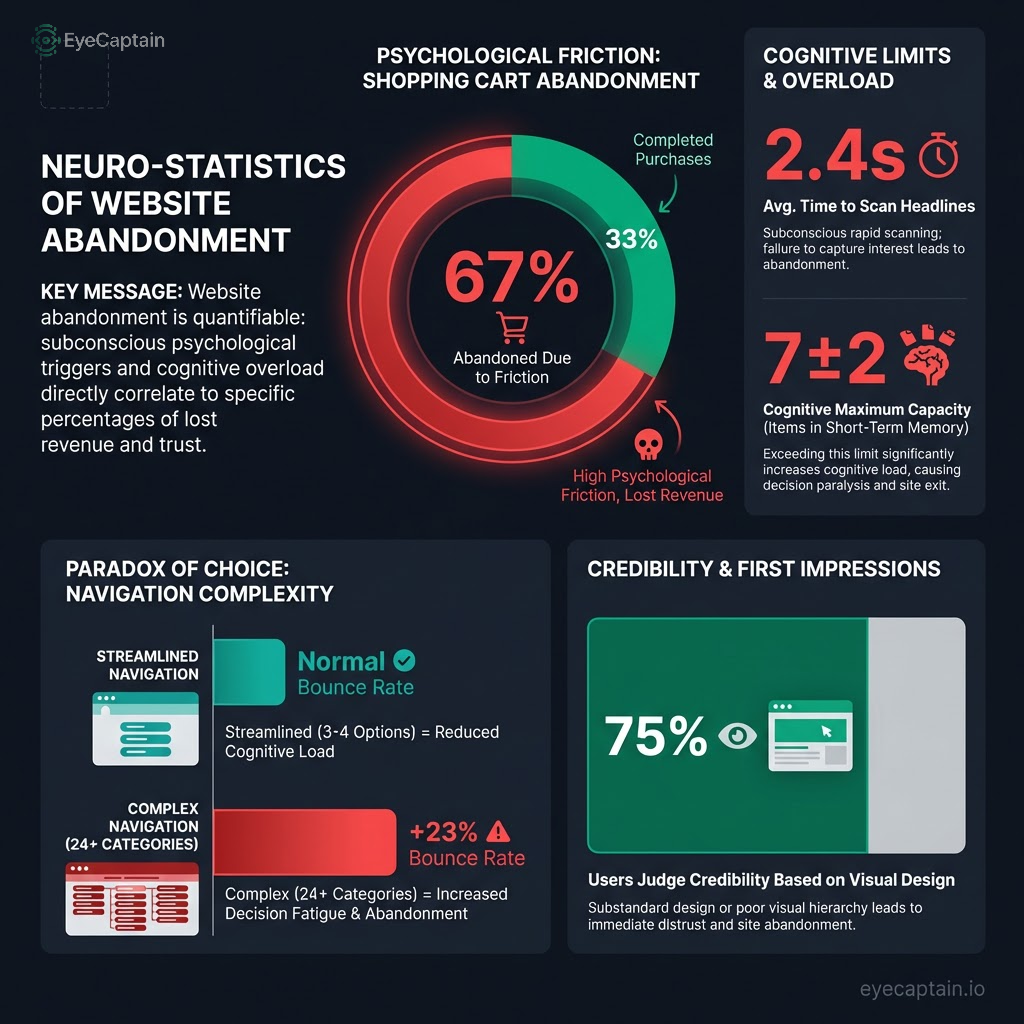

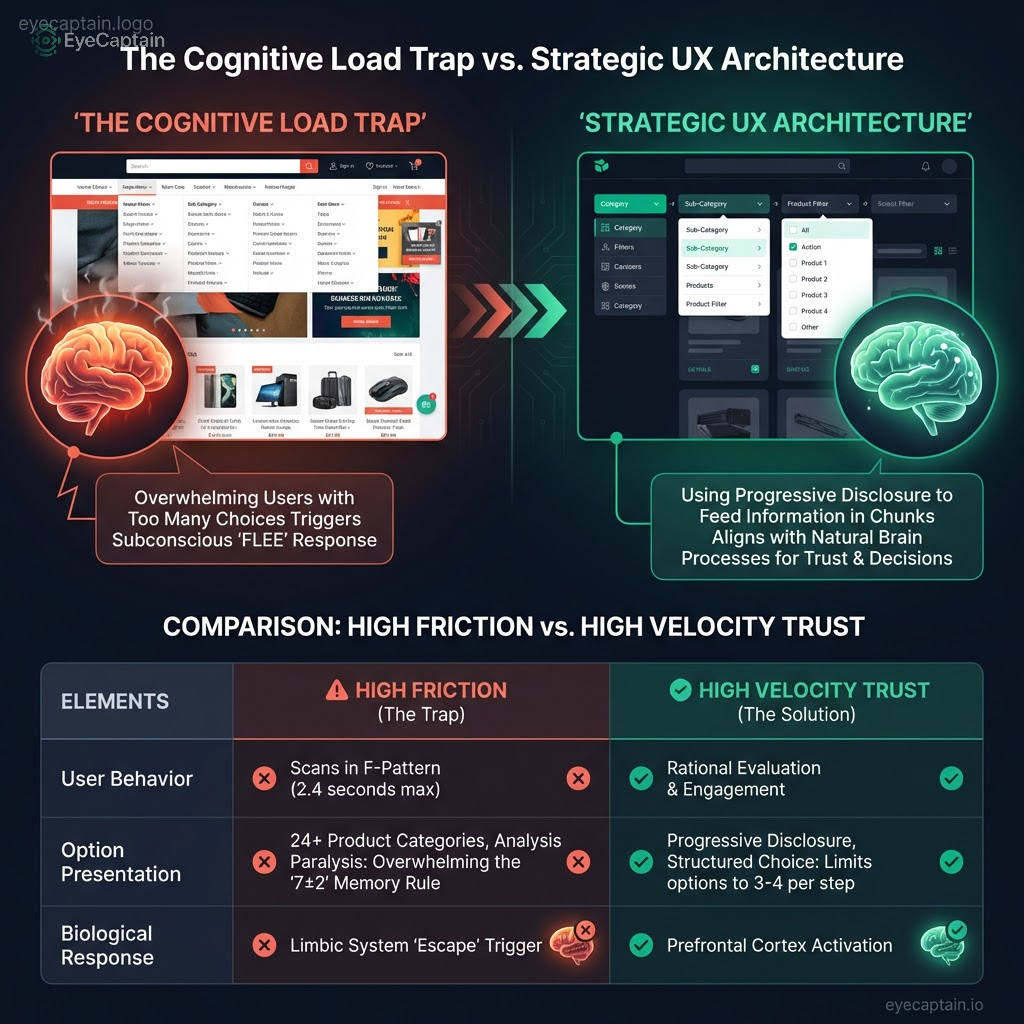
Beyond sheer volume, decision paralysis can severely impair the user experience. Research on the "paradox of choice" suggests that an abundance of options can prevent users from making any decision at all. E-commerce sites with overly complex navigation or endless product categories frequently experience higher bounce rates compared to those that prioritize simplicity. This highlights the critical importance of intelligent information architecture, not merely a minimalist design. Major players like Amazon exemplify this by presenting choices in manageable, bite-sized segments through layered filtering systems - a cornerstone of truly user-friendly digital design. They understand that overwhelming users with too many options can feel like searching for a single grain of sand on a vast beach: overwhelming and unproductive.
Building Trust: The Halo Effect in Digital Design
In the online realm, trust is often formed not through gradual accumulation, but via rapid judgments based on subtle cues. This swift assessment is heavily influenced by the halo effect. Studies across various markets indicate that users frequently evaluate a platform's credibility based on its visual appeal and professional presentation, sometimes even before delving into content or expertise. This initial impression is absolutely vital for establishing website credibility. Whether in a bustling marketplace or on a digital screen, first impressions are paramount.
Social proof plays a significant role, as humans are inherently inclined to follow the crowd. Elements like testimonials, review counts, and usage statistics activate "mirror neurons" in our brains, fostering a sense of reliability. However, generic feedback such as "Great product!" can raise suspicion. Specific, verifiable testimonials, like "This boosted my conversion rate by 34% in two weeks" or "I found the perfect local artisan through this site," are far more effective. Their authenticity significantly enhances your digital credibility. Furthermore, showcasing reviews from diverse regions - perhaps a glowing testimonial from Mumbai alongside one from Manchester - helps build global trust and demonstrates the platform's resonance across various cultures.
Moreover, authority bias can accelerate the trust-building process. Displaying logos from reputable local media, internationally recognized industry certifications (e.g., ISO standards), or endorsements from respected figures in a specific market bypasses rational thought. It serves as a shortcut for users to instantly perceive, "Okay, this site is legitimate." For instance, featuring a local government endorsement in a particular region or an approval stamp from a prominent tech influencer can immediately increase user trust. This psychological shortcut is crucial for establishing instant trust on your digital platform.
Navigating the User Journey Maze: Understanding Friction Psychology
Every form field, page load delay, or confusing navigation choice on a digital platform contributes to psychological friction. This friction doesn't just add up; it multiplies, significantly disrupting the user journey, whether a user is in bustling Mumbai or a quiet European village. Imagine trying to walk through mud - each step is unnecessarily difficult, eventually leading to abandonment.