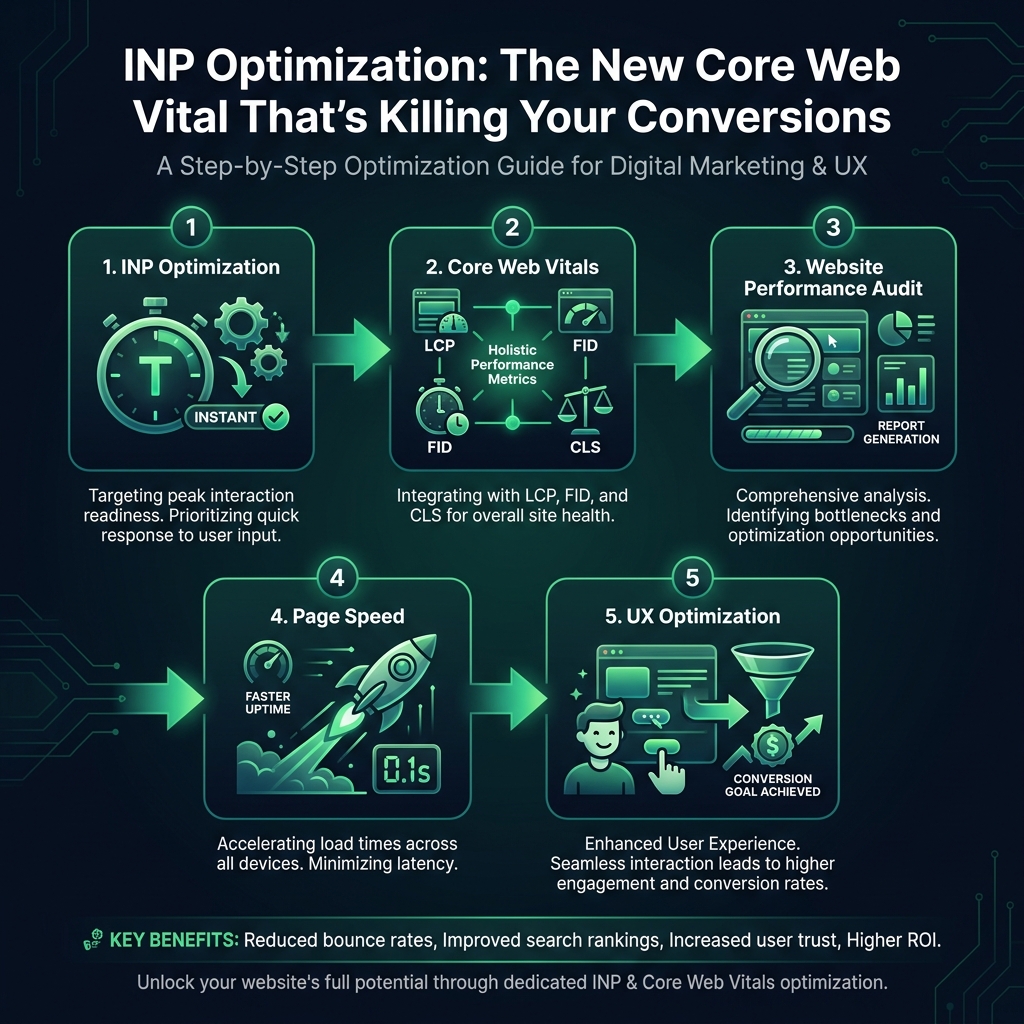

Is your website showing excellent scores for page speed, but users still complain it feels sluggish? This frustrating delay is likely due to poor Interaction to Next Paint (INP), a critical Core Web Vital that directly impacts user experience. Effective INP optimization is no longer optional; it is essential for positive UX optimization and overall website performance, especially since INP officially replaced First Input Delay (FID) in March 2024.
When users click a button and nothing happens for a moment, or a menu freezes upon tapping, they perceive your site as unresponsive or even broken. This delay, measured by INP, assesses the responsiveness of every interaction - every click, tap, and keypress. This guide explains what INP is, why it is a crucial metric for your next website performance audit, and how to fix the issues that are harming your user experience and conversion rates.
Understanding INP: The Core Web Vital for Responsiveness
In simple terms, Interaction to Next Paint (INP) measures the total time from a user's action, like a click, to the moment they see a visual response on the screen. It is the tangible measure of your site's perceived responsiveness.
Here is the challenging part: Google tracks all interactions during a user's visit and reports one of the slowest (specifically, the 98th percentile). This means just one slow interaction on a content-rich page can negatively affect your entire Core Web Vitals score.
The official benchmarks for INP are strict:
- Good: Under 200 milliseconds
- Needs Improvement: Between 200ms and 500ms
- Poor: Over 500 milliseconds
This represents a significant shift from First Input Delay (FID), which only measured the delay on the very first interaction. INP is comprehensive, monitoring everything from a dropdown menu click to a filter application or a final "submit order" button. This makes INP optimization a continuous effort across the entire user journey.
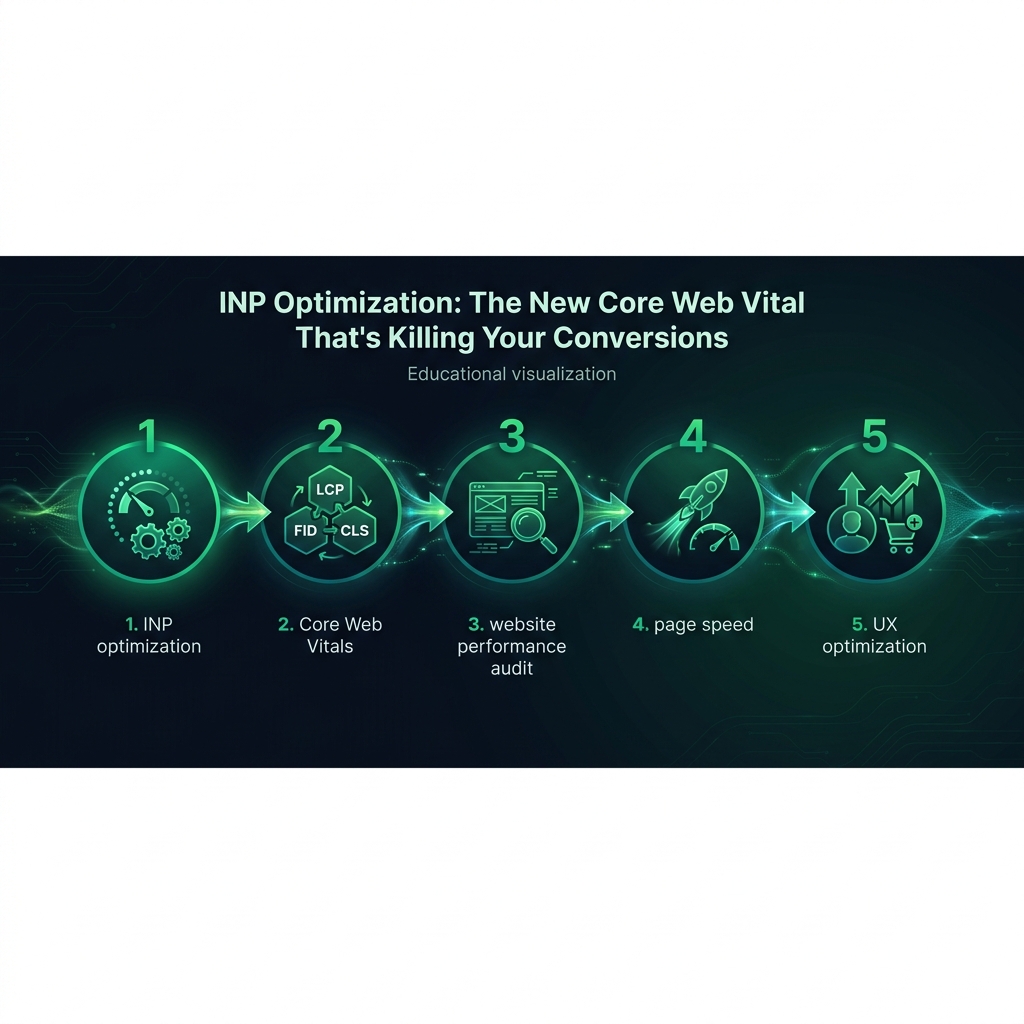

A 2024 Baymard Institute study revealed that a site's perceived responsiveness has a greater impact on a user's decision to purchase than the initial page speed. Users will tolerate a slightly longer load time if the site feels fast and responsive once interactive.
Your conversion rate is no longer just about how fast your page loads; it is about how responsive it feels. This is the core of modern UX optimization.
The Three Phases of Interaction: Where INP Fails
Every user interaction consists of three phases. A delay in any of them can harm your INP score. To improve your website's performance, you must understand where the bottlenecks occur.
Input Delay: The First Bottleneck
Input delay occurs when a user interacts with the page, but the browser's main thread is too busy to respond. It might be occupied running JavaScript, parsing CSS, or performing layout calculations. The user's click is essentially placed in a queue, waiting for the browser to finish its current tasks. This is especially true for users in diverse global markets, who may be using less powerful mobile devices on slower or less stable network connections.
Processing Time: The Cost of Complex Code
This is the time it takes for your event handler code - the JavaScript that runs in response to a click or tap - to execute. If this code is inefficient or bloated, the user is left waiting. This is a common problem on e-commerce sites where tracking scripts, analytics, and A/B testing tools all compete to run simultaneously on every interaction.
Presentation Delay: The Final Hurdle
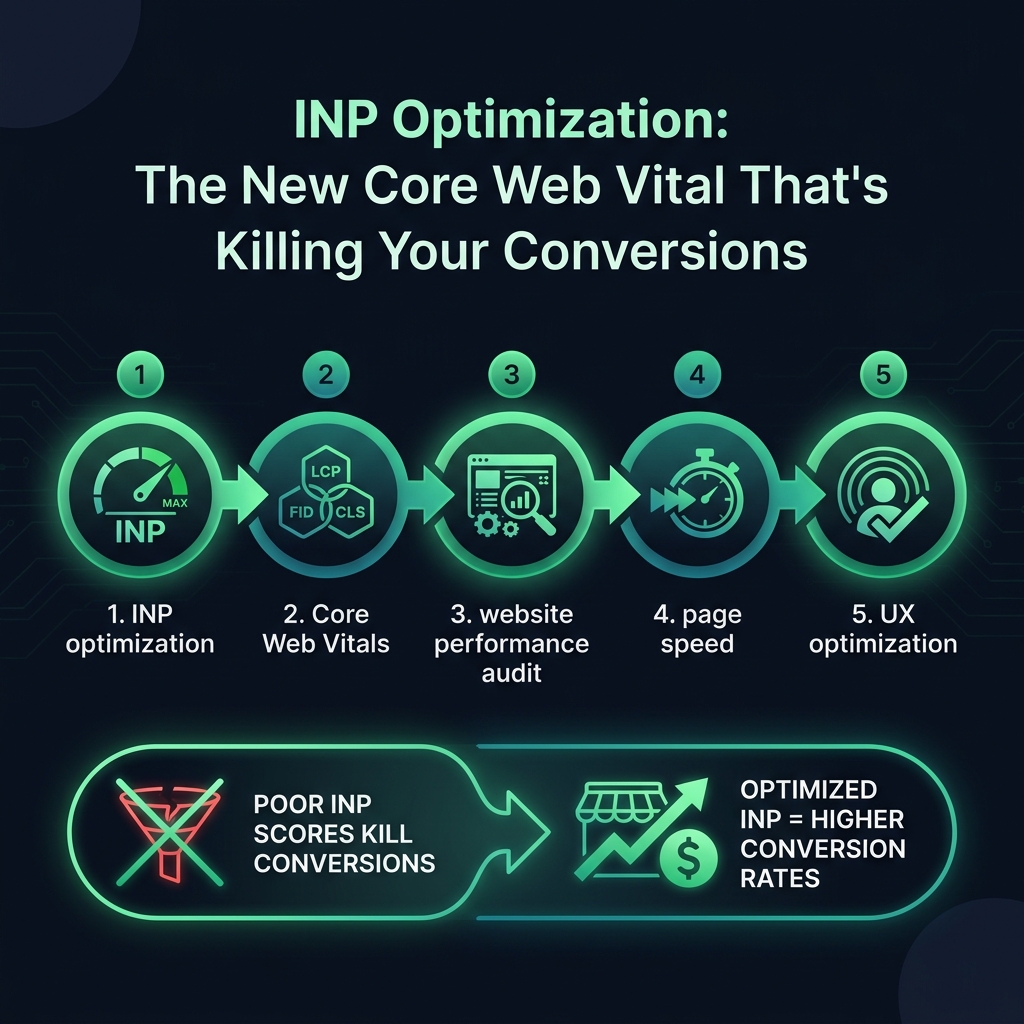
Finally, presentation delay is the time it takes for the browser to paint the visual changes to the screen after your code has finished running. If an interaction triggers significant changes to the page structure, forces a complex layout recalculation, or applies heavy CSS styles, this phase can become a major contributor to a poor INP score.