
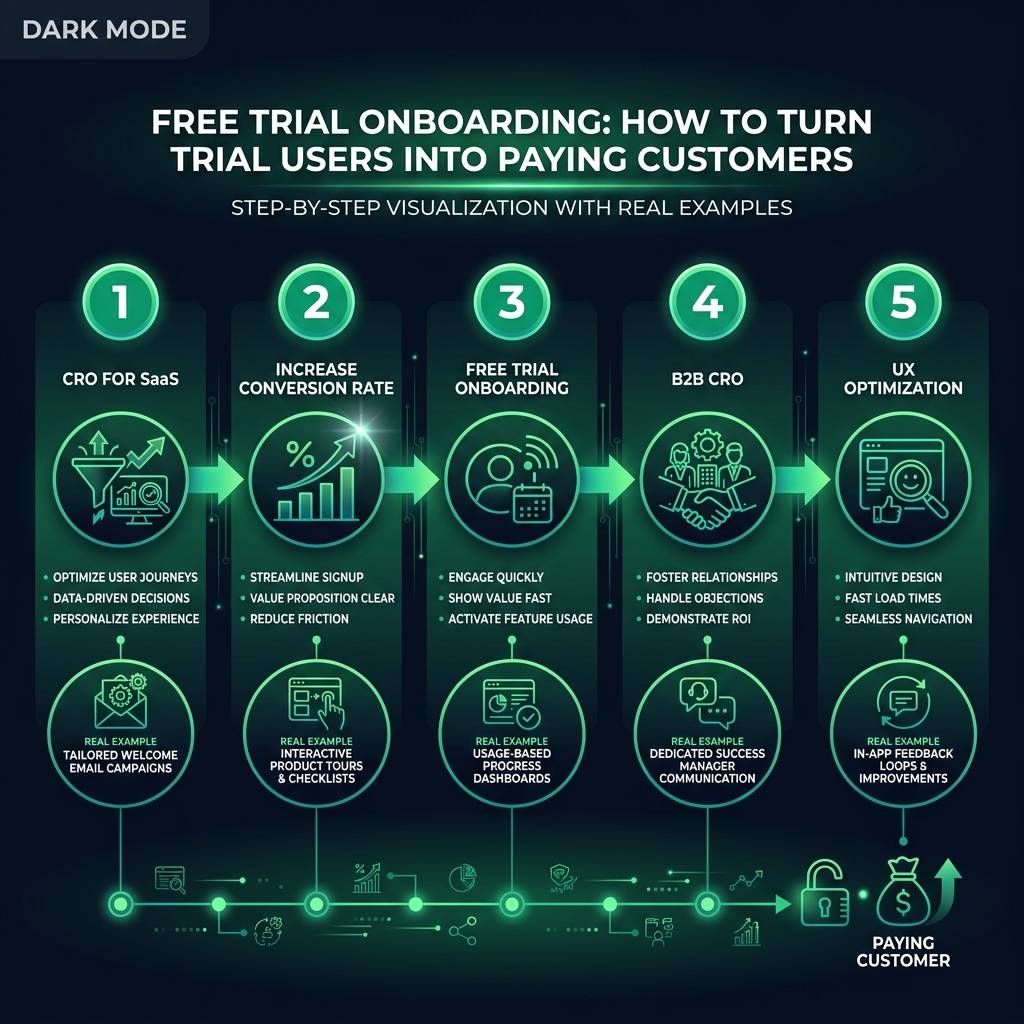
Struggling to increase your conversion rate from free trials? If you are losing a large number of signups before they become paying customers, the problem likely is not your product - it is your free trial onboarding. Effective CRO for SaaS is not about adding more features; it is about guiding new users to their first "aha!" moment. This guide reveals why users abandon trials and provides actionable strategies to convert them into loyal subscribers.
Why Most SaaS Free Trial Onboarding Fails
Many SaaS companies mistakenly believe the trial period is for showcasing every single feature. They overwhelm users with options, assuming they will explore and discover the value on their own. This approach rarely works and is a common pitfall in SaaS conversion optimization.
A study by the Baymard Institute of 147 SaaS onboarding flows found that 63% of trial users never complete their first meaningful action. The issue is not a bad product; it is a confusing user onboarding experience where the path to value is unclear.
You are essentially asking a new user to learn a complex system in just a few days. Imagine someone signing up during a busy workday. They click around for a few minutes, and if nothing immediately provides value, they close the tab, intending to "come back later." They rarely do. Your carefully crafted reminder emails become just another piece of noise in an inbox they have already mentally muted.
The companies with high conversion rates do things differently. They do not try to teach everything at once. Instead, they focus all their energy on engineering one specific, valuable win for the user in their very first session. This focus on immediate success is a cornerstone of effective B2B CRO.
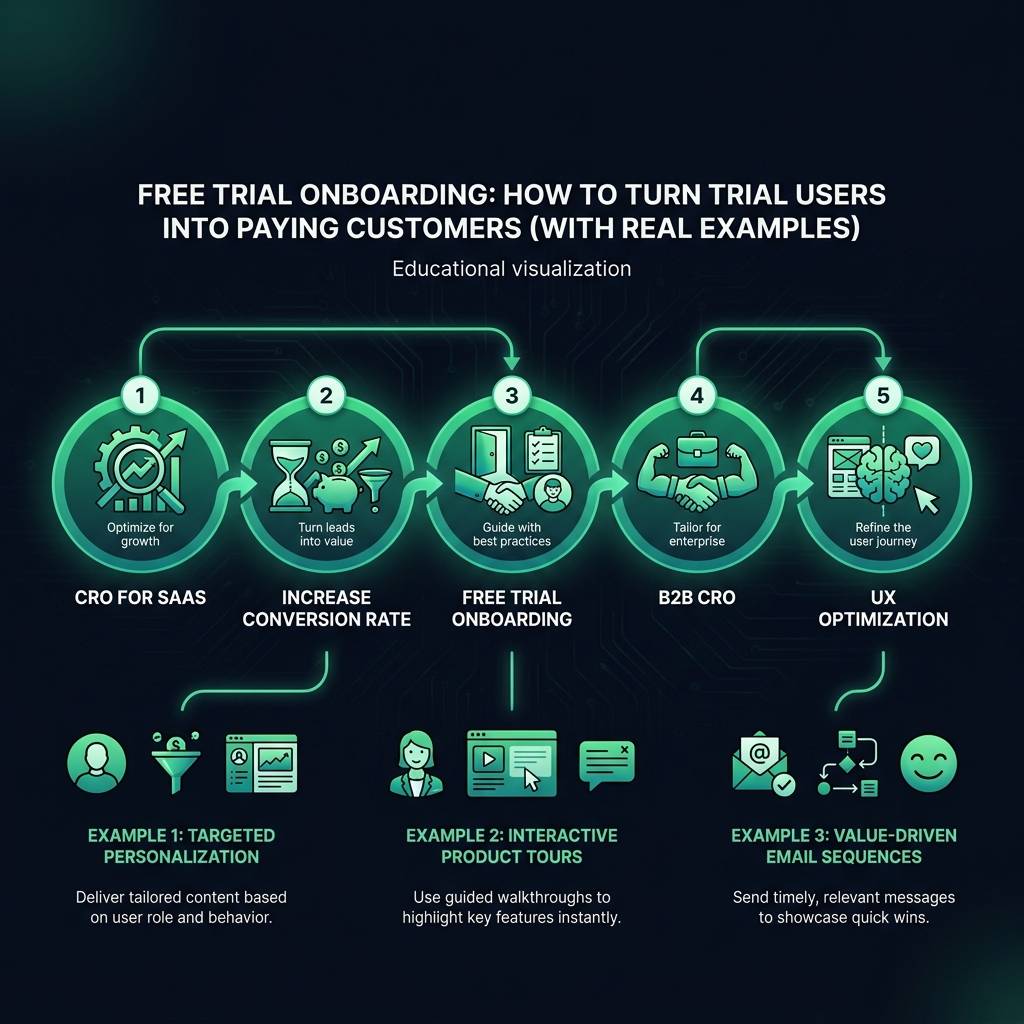
For example, one B2B analytics platform increased its conversion rate from 11% to 34% in eight weeks. They did it by simplifying their onboarding to a single goal: get the user to see their first dashboard with real data in under three minutes. This is not about features; it is about building momentum and proving value instantly.
The Critical First Session Window
You have about three minutes. That is the window of opportunity. Eye-tracking studies from the Nielsen Norman Group show that users form their main impression of a software interface within the first 2-3 minutes. After that, they are either engaged with a purpose or looking for the exit. This is where UX optimization is paramount.
Most onboarding flows waste these precious seconds on tedious account setup, profile completion, and feature tours that users skip. By the time they get to something useful, their attention and patience are gone. The winning strategy is to reverse this approach: deliver value first, and handle the administrative tasks later.
A project management tool we analyzed saw its conversion rate jump from 9% to 28% by making one change. They used to start with a sequence of setup tasks. Now, users begin with a pre-populated demo project. They complete one task, experience the workflow, and only then are they prompted to invite their team. Users experience a successful outcome before they are asked to do any work, creating a powerful first impression.
7 Proven CRO Strategies to Increase Your SaaS Conversion Rate
So, how do you fix a leaky trial funnel and improve your conversion metrics? It comes down to implementing proven patterns in your user onboarding. Here are seven effective B2B CRO and SaaS strategies that focus on user success from the very first click.
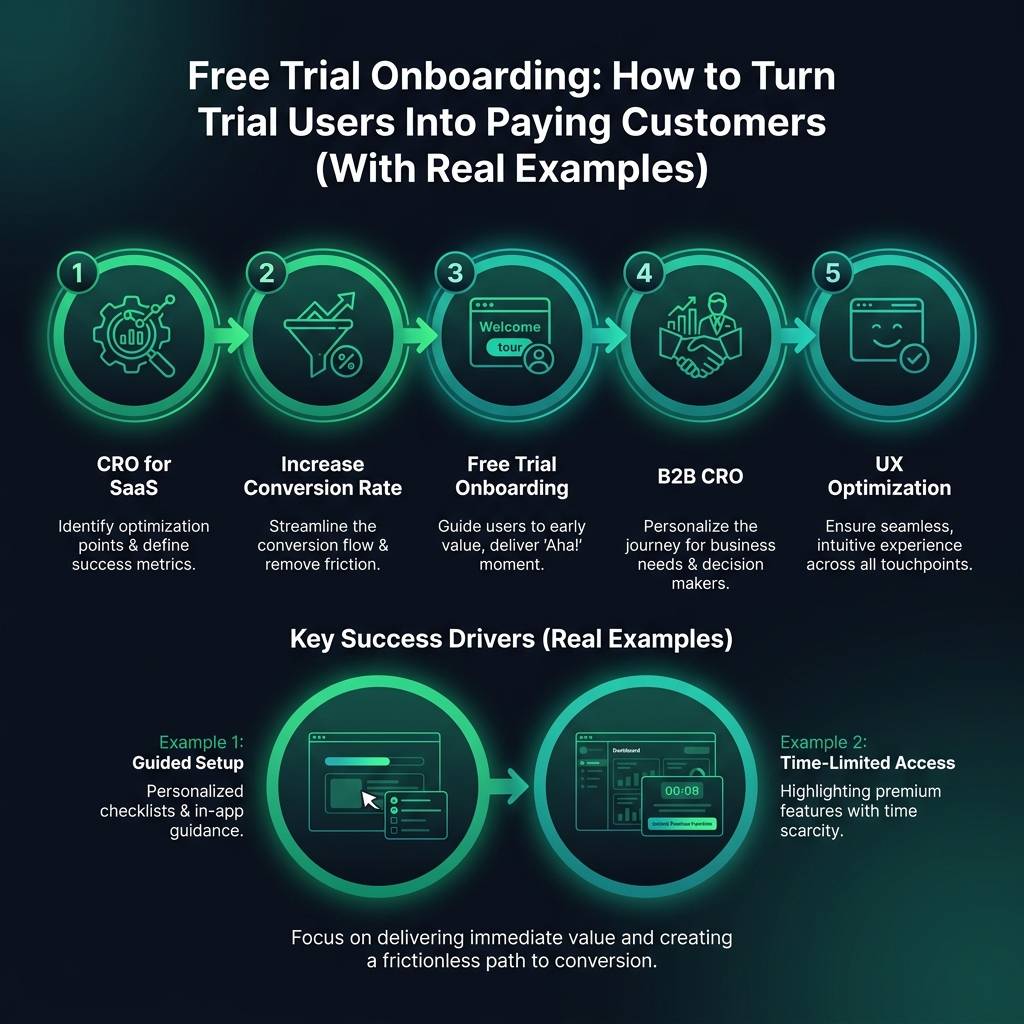
- Progressive Disclosure: Do not show the entire interface at once. A CRM platform improved its first key action completion rate from 23% to 61% by reducing the initial visible options from 47 to just 8. Other features were revealed only when they became contextually relevant.
- Contextual Education: Replace long, upfront tutorials. Use small, timely tooltips that appear exactly when a user needs guidance. According to the Nielsen Norman Group, users retain information four times more effectively this way because they are learning by doing.
- Artificial Constraints: It may sound counterintuitive, but limiting options can boost conversions. An email marketing tool with a 43% conversion rate limits trial users to sending just one campaign. This forces focus and ensures the user achieves a single, successful outcome, which feels better than having multiple unfinished drafts.
- Immediate Value Proof: Show users the end result before they even start. A data visualization tool does this by generating a user's first three charts from a demo dataset during signup. They see the powerful outcome in under a minute, long before they have input any of their own data.
- Focus on the Activation Metric: Identify the one key action that strongly correlates with long-term retention - your activation metric. For Slack, it was a team sending 2,000 messages. Your entire free trial onboarding should be designed to make this action as easy and unavoidable as possible.
- Strategic Friction: Not all friction is bad. Adding a simple, purposeful question during signup, like "What is your main goal?", can have a significant impact. A B2B CRM used this to create personalized onboarding paths, which increased its conversions by 19%.
- The Day-Three Intervention: Data shows that users who convert are active on day one and again by day three. If a user is inactive by day three, automated emails are unlikely to bring them back. However, a personal message from a real person can be highly effective. One founder converts 31% of these at-risk users by sending a personal email on day three.
When Users Actually Decide to Pay
The decision to become a paying customer happens much earlier than most SaaS companies think. Users who convert typically make that mental commitment within the first 48 hours. The rest of the trial is simply for confirming that they made the right choice. This means your "trial ending soon" emails are often too late.