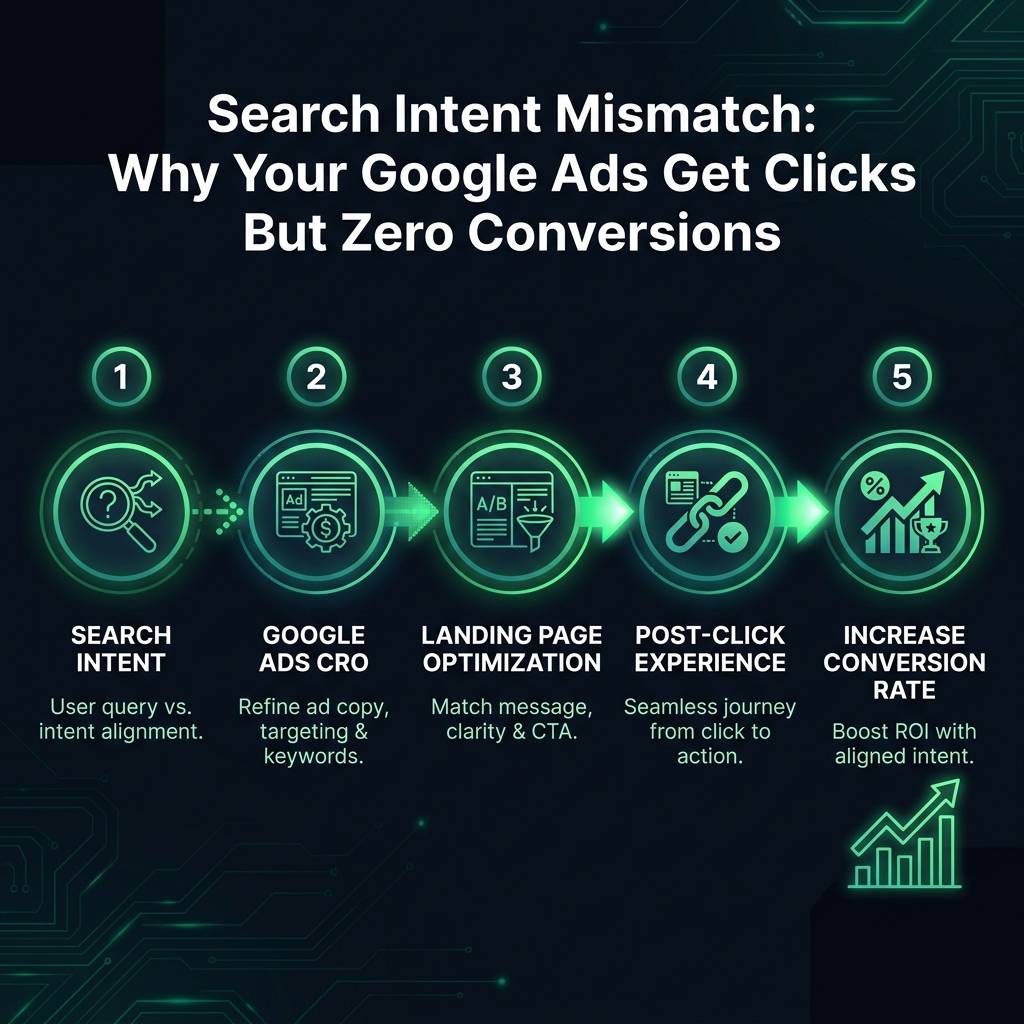
Search Intent Mismatch: Why Google Ads Clicks Don't Convert
    EyeCaptain

    Search Intent Mismatch: Why Google Ads Clicks Don't Convert

    When the ad promises one thing and the landing page answers another, clicks don't turn into sales. How to spot search intent mismatch and fix the page.

    Dimitris Andreadakis

    4 min read
    359 views
    search intentgoogle ads CROlanding page optimizationpost-click experienceincrease conversion rate

    Are your digital advertising campaigns getting high click-through rates but failing to generate leads or sales? If you're paying for clicks that lead nowhere, the problem may not be your ad copy. It's likely a critical mismatch between your ad's promise and your landing page's content. To truly increase your conversion rate, you must master aligning search intent with the entire post-click experience, turning expensive clicks into valuable customers.

    This disconnect is where most advertising budgets are wasted. Your ad makes a specific promise, but your landing page tells a generic story. That visitor you just paid for feels misled and hits the back button in seconds, eliminating your chance for a sale and destroying your return on ad spend.

    Understanding Search Intent: The Key to Ad Conversion Optimization

    At its core, search intent is the "why" behind a user's search query. It's not just about the keywords they type; it's about the specific goal they want to achieve. Failing to understand this is a primary reason for poor ad performance and a key focus of effective Conversion Rate Optimization (CRO) for advertising.

    For example, a person searching "how to choose running shoes" has informational intent - they are learning. Someone searching "buy waterproof running shoes size 10" has transactional intent - they are ready to buy. Yet, many campaigns send both users to the same generic product page, leading to immediate bounces.
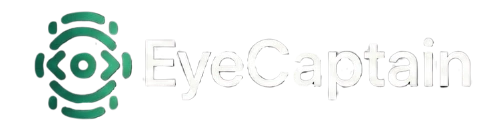
    Search Intent Mismatch: Why Your Google Ads Get Clicks But Zero Conversions infographic showing search intent, google ads…EyeCaptain

    Research from the Nielsen Norman Group found that when landing pages matched the search intent, conversion rates increased significantly. When they didn't, a majority of users left without even scrolling.

    Everything that happens after the click determines whether that traffic converts. Your entire post-click experience, from the headline to the call-to-action, must be a direct continuation of the conversation started by your ad.

    When the Post-Click Experience Fails

    Consider these common scenarios where a search intent mismatch hurts conversions:

    • The Emergency Search: Someone searches for "emergency plumber near me" because a pipe has burst. Your ad promises 24/7 service. They click and land on a page with a long contact form asking for a "preferred appointment time" instead of a prominent, clickable phone number. They needed immediate help; you created an unnecessary obstacle.
    • The Research Search: A user searches "compare project management software," signaling they are in the research phase. Your ad highlights great features. They click and are met with a page demanding they "Request a Demo," with no comparison chart or feature breakdown. They wanted information; you demanded a commitment.

    In both cases, the ad did its job by attracting the right person. However, a poor landing page optimization strategy created a disconnected experience that drove the potential customer away.

    How to Increase Conversion Rates with Landing Page Optimization

    The solution is to stop thinking about your ads in isolation and start architecting a cohesive journey based on user intent. This begins with categorizing your keywords and creating dedicated landing pages that serve the user's specific goal.
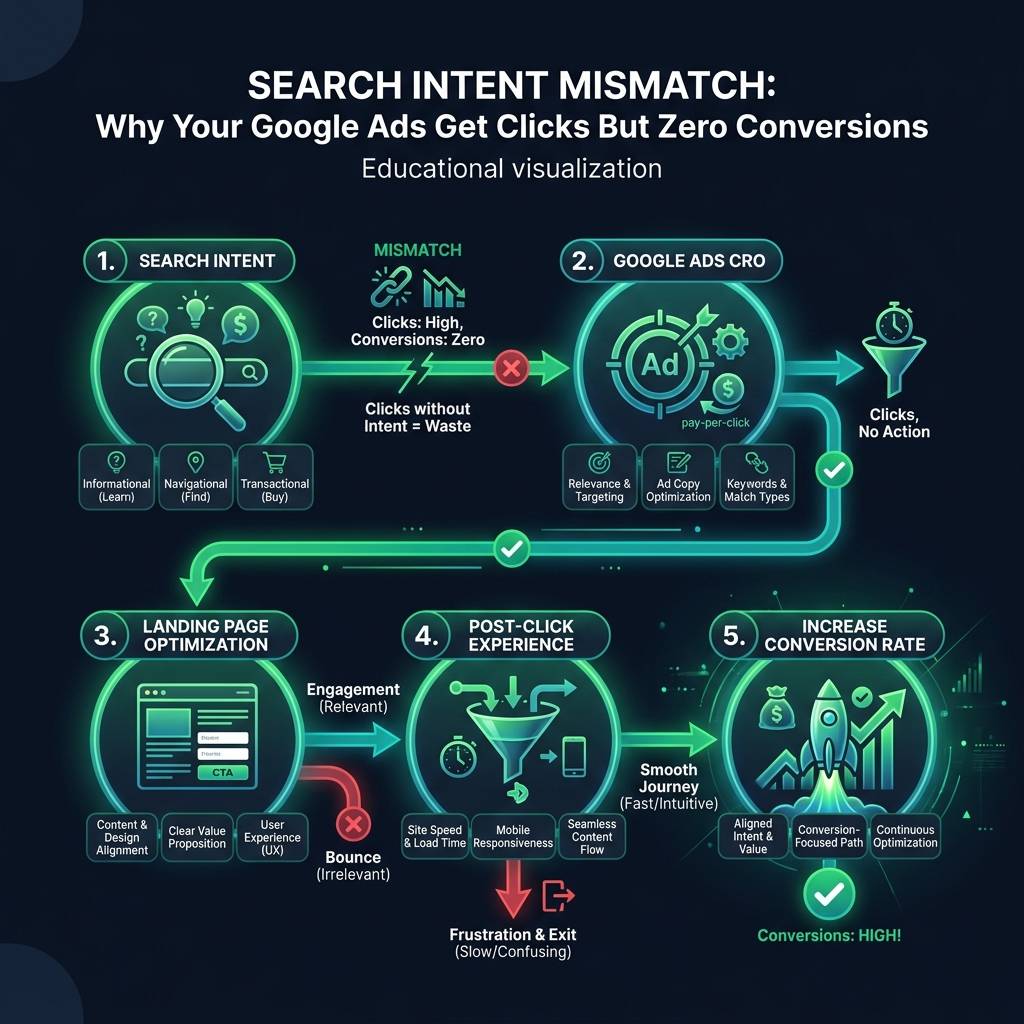
    Search Intent Mismatch: Why Your Google Ads Get Clicks But Zero Conversions infographic showing search intent, google ads…EyeCaptain

    Here are the four primary types of search intent and how to optimize for them:

    EyeCaptainEyeCaptain
    97%
    Conversions Booster

    Your visitors leave without converting

    Most websites lose 97% of their traffic without a single conversion. Our AI scans 200+ CRO elements to find exactly where visitors drop off.

    Hero CTA missing

    • Informational Intent: Users search with terms like "how to," "what is," or "guide." They want answers, not a sales pitch. Send them to high-value educational content like a blog post, a detailed guide, or a video tutorial that directly solves their problem.
    • Navigational Intent: Users search for your brand or a specific product name, like "Acme Co login." They know where they want to go. Your job is to take them there directly - not to your homepage, but to the exact page they are looking for.
    • Transactional Intent: Users are ready to buy, using words like "buy," "price," or "order." This is where your landing page optimization must be flawless. Send them to a clean product page with clear pricing, a simple checkout process, and a prominent call-to-action.
    • Commercial Investigation: Users are comparing options with searches like "best," "review," or "vs." They need proof that you are the best choice. Direct them to pages with comparison charts, customer case studies, or in-depth feature breakdowns that help them make an informed decision.
    Search Intent Mismatch: Why Your Google Ads Get Clicks But Zero Conversions infographic showing search intent, google ads…EyeCaptain

    A Practical Audit for Your Ad Campaigns

    It's time to find the conversion gaps in your own account. Go to your advertising platform's search terms report and filter for terms with a significant number of clicks but a low conversion rate (e.g., under 2%, though this varies by industry). This list represents your most costly search intent mismatches.

    For each term on that list, ask these three critical questions:

    1. What did this person expect to see after clicking my ad?
    2. What did they actually see on my landing page?
    3. What specific element on the page likely caused them to leave?

    The gap between expectation and reality is where your ad budget disappears. Many advertisers focus on ad-level metrics while ignoring the single most important factor for conversions: the post-click experience.

    An analysis of thousands of landing pages revealed that pages with a headline and opening paragraph that perfectly matched the search query converted at a much higher rate than generic pages.

    You can't force a user who is researching to book a demo, but you can offer a valuable comparison guide. You can't make a user who is ready to buy read a long article. To increase your conversion rate, you must show them the right page at the right time. Stop optimizing for clicks and start optimizing the entire customer journey.

    Enjoyed this article?

    One short email a week with practical CRO and UX tips

    No spam. Unsubscribe anytime.

    Find what stops your visitors from converting

    EyeCaptain is an AI-powered CRO & UX audit tool that automatically scans your pages, identifies UX issues, and gives you actionable optimization suggestions to increase conversions. Try it for free, no card, no commitment.

    Free CRO Audit
    Share this article
    LinkedIn X

    About the author

    Founder of EyeCaptain. Writes about conversion rate optimization, UX analysis and the neuromarketing behind pages that actually sell.

    More articles by Dimitris Andreadakis