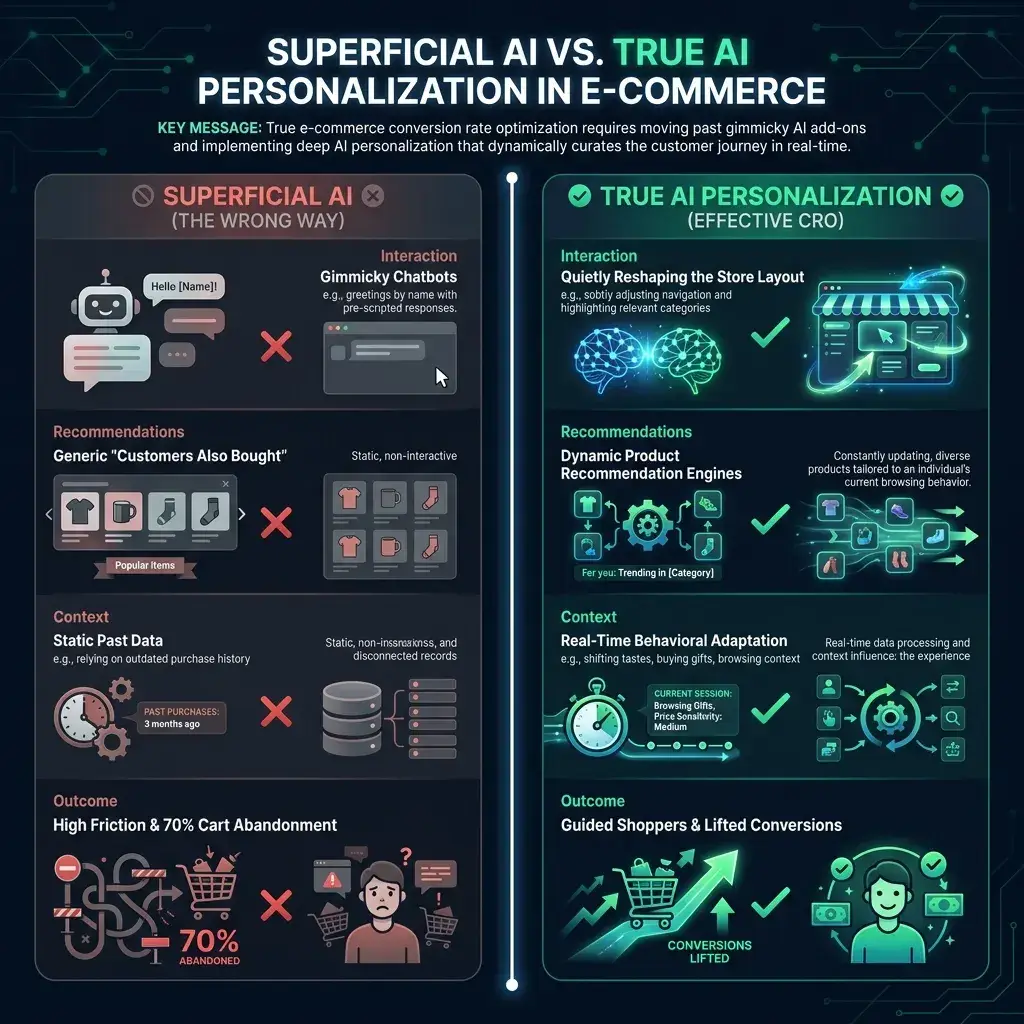

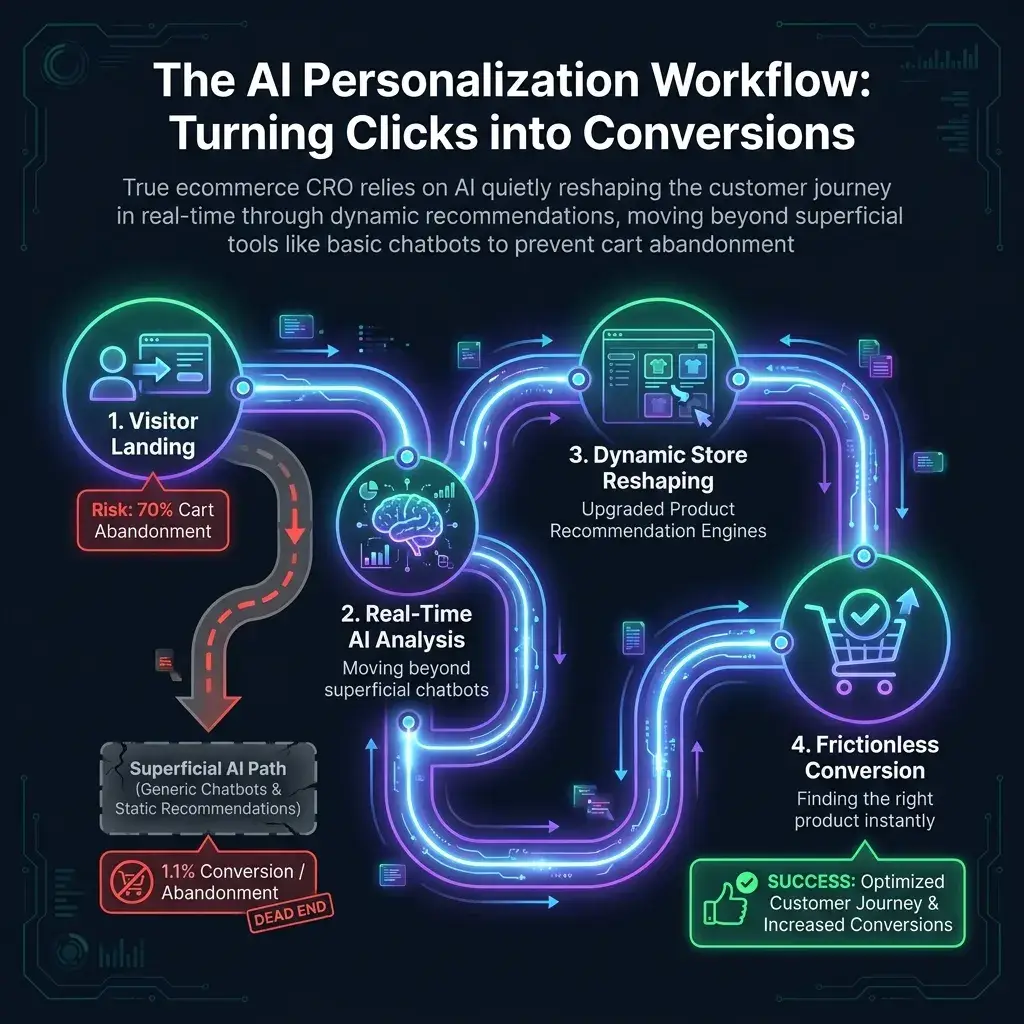
Struggling to figure out how to use AI for conversion rate optimization in your online store? You are not alone. Many ecommerce brands invest in superficial AI features that fail to deliver, while their overall ecommerce CRO remains stagnant. True AI personalization goes beyond a simple chatbot; it is about fundamentally reshaping the customer journey to reduce friction and guide shoppers to the perfect product, turning clicks into conversions.
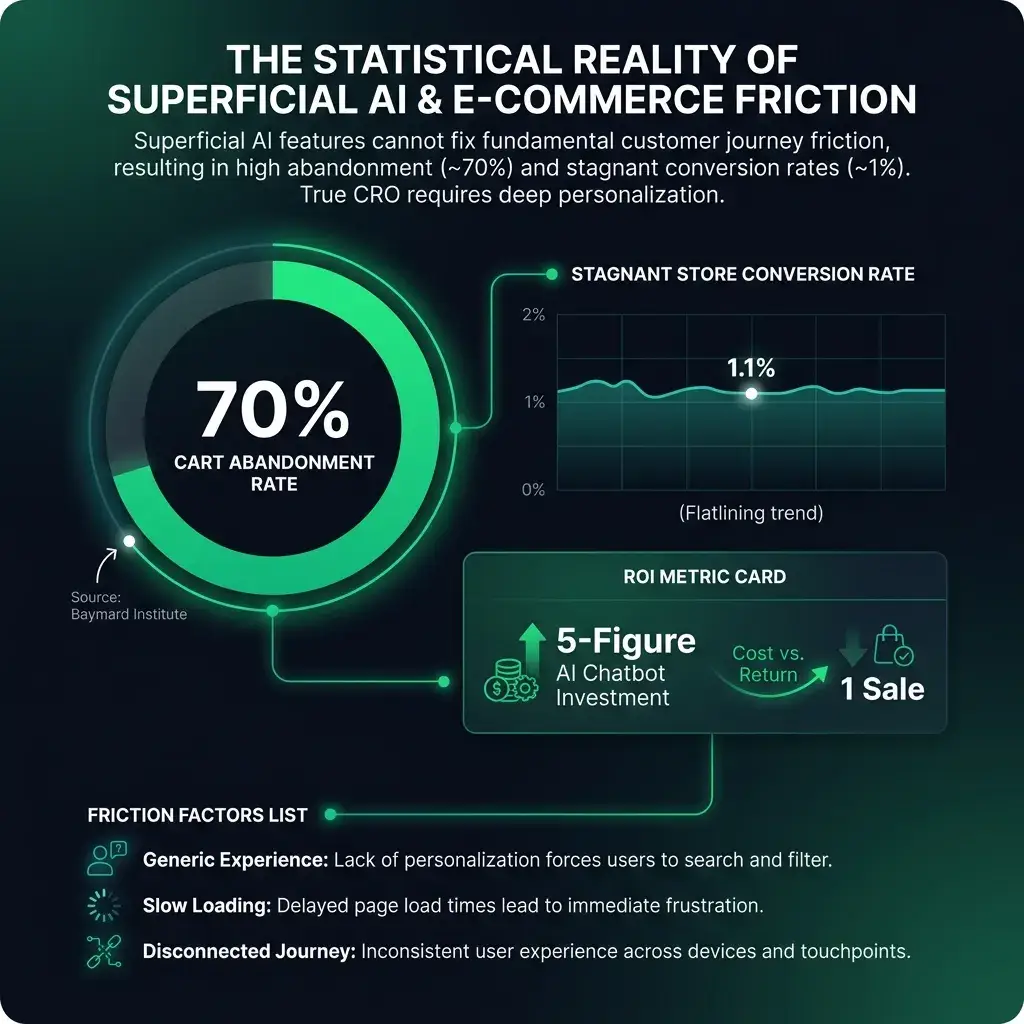
This challenge was captured by an apparel founder who made a significant five-figure investment in an AI chatbot that could greet visitors by name. The return on that investment was a single sale, while the store's conversion rate was stuck at a low 1.1 percent. Simply adding a chat bubble to your site does not fix a broken customer journey. When someone lands on your page, they want to find the right product, right away, at a price that feels fair.
Research from the Baymard Institute shows that nearly 70% of all online shopping carts are abandoned. This often happens because the shopping experience feels generic, slow, and disconnected from what the customer actually wants.
The most effective way to fix this issue is by using AI to quietly reshape the store around each visitor, often without them ever noticing an algorithm is at work. It is the secret to powerful ecommerce CRO.

Beyond "Customers Also Bought": Upgrading Your Product Recommendation Engines
You have seen them on almost every product page: ineffective carousels labeled "customers also bought." Most of these are powered by a simplistic system that pairs items people happened to buy together months ago. This entire approach fails the moment your shopper is buying a gift, their tastes change, or they are a new customer.
Worse yet, when you show heavy winter coats to a customer who just clicked on three different lightweight running vests, your store does not just look unhelpful - it looks completely unaware of their needs. This is where modern product recommendation engines come in. These systems do not rely on outdated data; they recalculate what a customer might like after every single click and scroll.
Leveraging AI for Real-Time Intent and Personalization
A modern recommendation engine pays close attention to behavioral data. It tracks micro-signals, like the time someone spends looking at a size chart or the specific color swatches they click on. This is AI personalization in action. For example, if a visitor filters by price twice in 90 seconds, a smart system knows to stop showing them premium luxury goods and instead highlights suitable mid-tier options.
By using AI to respond to a user's current intent, you can dramatically improve their experience. A smart AI recommendation system can:
- Analyze in-session behavior like clicks, scrolls, and filter usage.
- Adjust product suggestions in real-time based on that behavior.
- Reduce "relevance fatigue" and prevent shoppers from leaving.
- Increase add-to-cart clicks by removing the friction of searching through a catalog.
From Reactive to Proactive: Ecommerce CRO with AI Analytics
Your traditional analytics tools are like a rearview mirror. They tell you what went wrong in the past, leaving you to sift through page views and bounce rates to figure out why. A bounce rate just tells you people left; it does not explain the silent frustration that caused them to leave.