Infographic για digital marketing - οπτικοποίηση εννοιών consumer psychology, neuromarketing, ecommerce CRO
    eyecaptain.io

    Loss Aversion Marketing: 3 Techniques That Make Customers Fear Missing Out

    Why do customers abandon carts at the last second? Learn how loss aversion psychology increases conversions by up to 200% with these 3 proven techniques.

    Dimitris Andreadakis

    07 September 2026

    3 min read
    47 views
    consumer psychologyneuromarketingecommerce CROpsychological conversion optimizationcognitive bias

    Is your ecommerce store struggling with high cart abandonment, even with a seemingly perfect setup? The solution often lies not in your platform, but in consumer psychology. A powerful cognitive bias quietly influences buying decisions, and understanding it is the key to effective neuromarketing and unlocking higher conversion rates. This guide will show you how to apply psychological conversion optimization to ethically guide customers and significantly boost your global online sales.

    You are not just selling a product; you are offering relief from the fear of missing out. Once you grasp this fundamental aspect of customer behaviour, your entire approach to ecommerce can transform. We will deconstruct this powerful psychological trigger and provide specific ways to reframe your offer for maximum impact.

    Understanding Loss Aversion: A Key Cognitive Bias in Consumer Psychology

    So, what is this influential principle? It is a cognitive bias known as loss aversion. First identified by psychologists Daniel Kahneman and Amos Tversky, the concept is strikingly simple: the psychological pain of losing something is about twice as powerful as the pleasure of gaining the exact same thing.

    Consider this: How would you feel if you lost a sum of money, for instance, €50 or $50? Now, how would you feel if you found the same amount? For most people, the negative feeling of the loss is far more intense than the positive feeling of the gain. This is not a logical response, but it is a fundamental part of the human decision-making process across cultures.

    This principle is directly linked to your online store's success. The staggering 70% average cart abandonment rate is not just about shipping costs. It is driven by a customer's brain warning them that making a purchase could be a mistake - a potential loss. This uncertainty creates hesitation and is a major barrier to improving your ecommerce CRO (Conversion Rate Optimization).

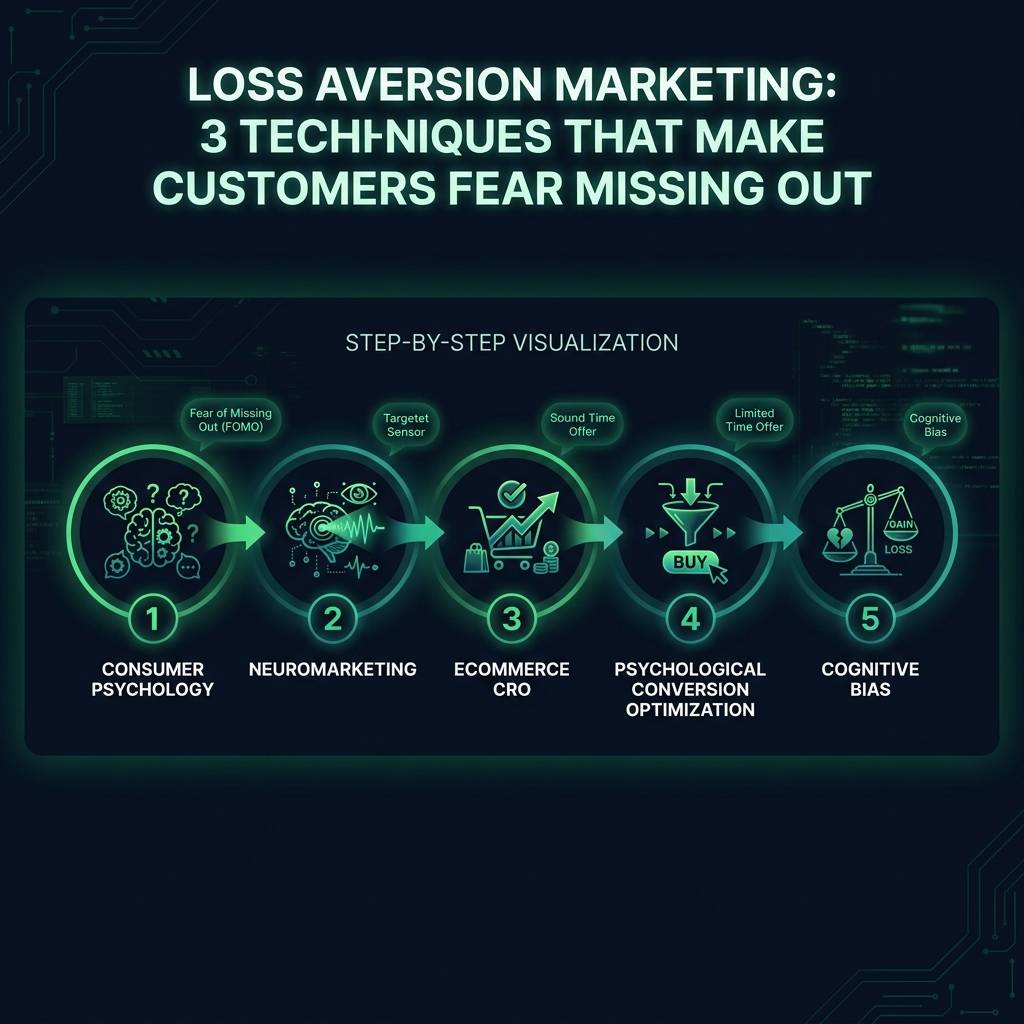
    Loss Aversion Marketing: 3 Techniques That Make Customers Fear Missing Out infographic showing consumer psychology, neuromarketing, ecommerce CRO for digital marketing
    EyeCaptain
    eyecaptain.io

    Neuromarketing in Action: How Loss Aversion Influences Buying Decisions

    When a customer visits your product page, a conflict occurs in their brain. One part, the reward system, is activated by the potential benefits your product offers. However, another, more primal and powerful part - the threat detection system - scans for any potential loss, such as wasting money or making the wrong choice.

    A common mistake in ecommerce is focusing exclusively on the gains. "Buy this and get X!" This approach appeals only to the reward system, which is the weaker of the two forces in this context. The real power of neuromarketing lies in soothing the threat system. Research from the globally respected Nielsen Norman Group confirms that messaging focused on what a person will lose by not acting commands significantly more attention than messaging about potential gains.

    A B2B software company we analyzed changed its headline from "Increase productivity by 25%" to "Stop losing 10 hours per week to manual tasks." The result was a 47% increase in conversions. The product was the same, but the new framing spoke directly to the brain's powerful loss aversion instinct.

    When you frame your offer around what the customer is losing by not taking action, you are communicating in a language their brain is wired to understand. This is not manipulation; it is effective communication, provided the loss you are highlighting is genuine.

    3 Powerful Psychological Conversion Optimization Techniques

    How can you apply this principle ethically? Here are three proven psychological conversion optimization techniques that leverage loss aversion to achieve real results in any market.

    1. Frame the Cost of Inaction

    Do not just list the benefits a customer will gain. Calculate and demonstrate what they are losing right now by not using your product. Instead of saying, "Our software saves you 5 hours a week," present a more tangible and impactful reality: "Your team may be wasting over 250 hours a year on inefficient workflows. At an average staff cost, that represents a significant financial loss." Specificity is crucial; vague statements do not trigger the brain's loss-assessment response.

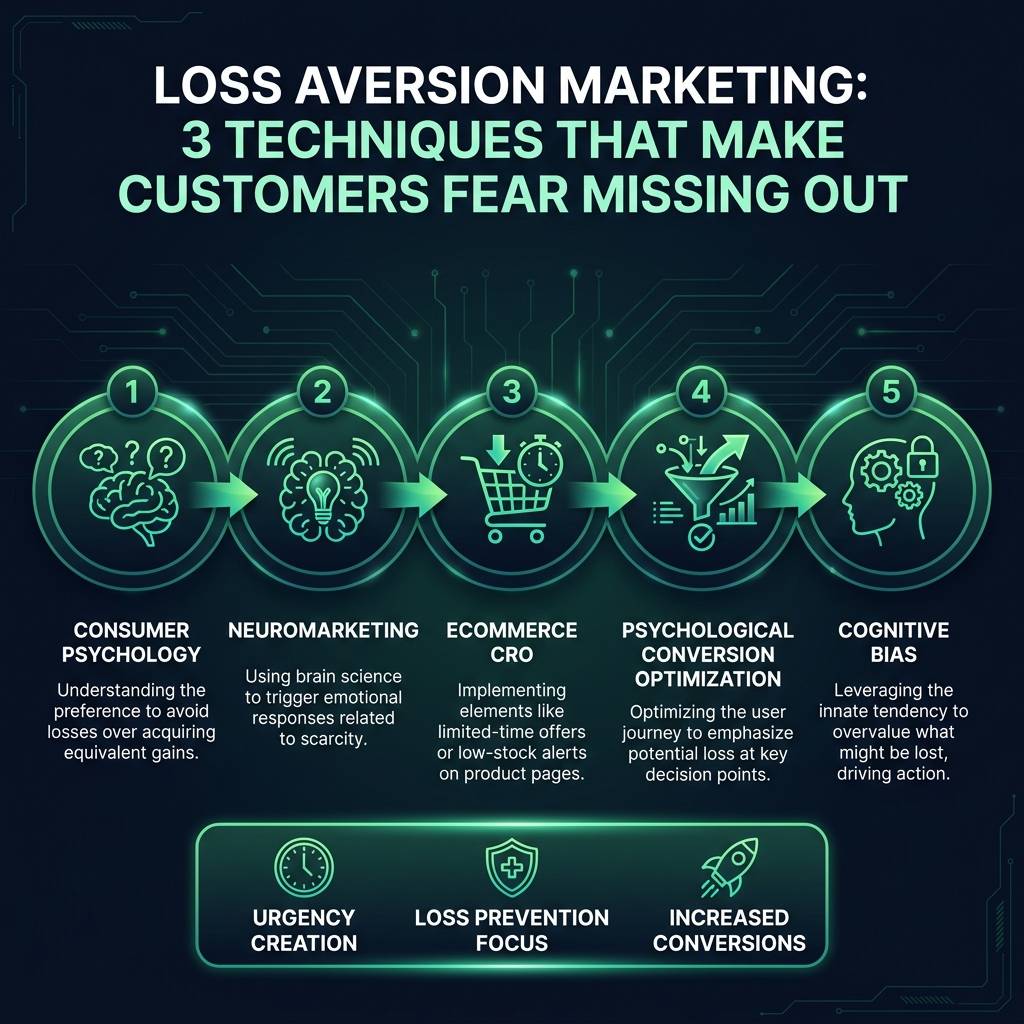
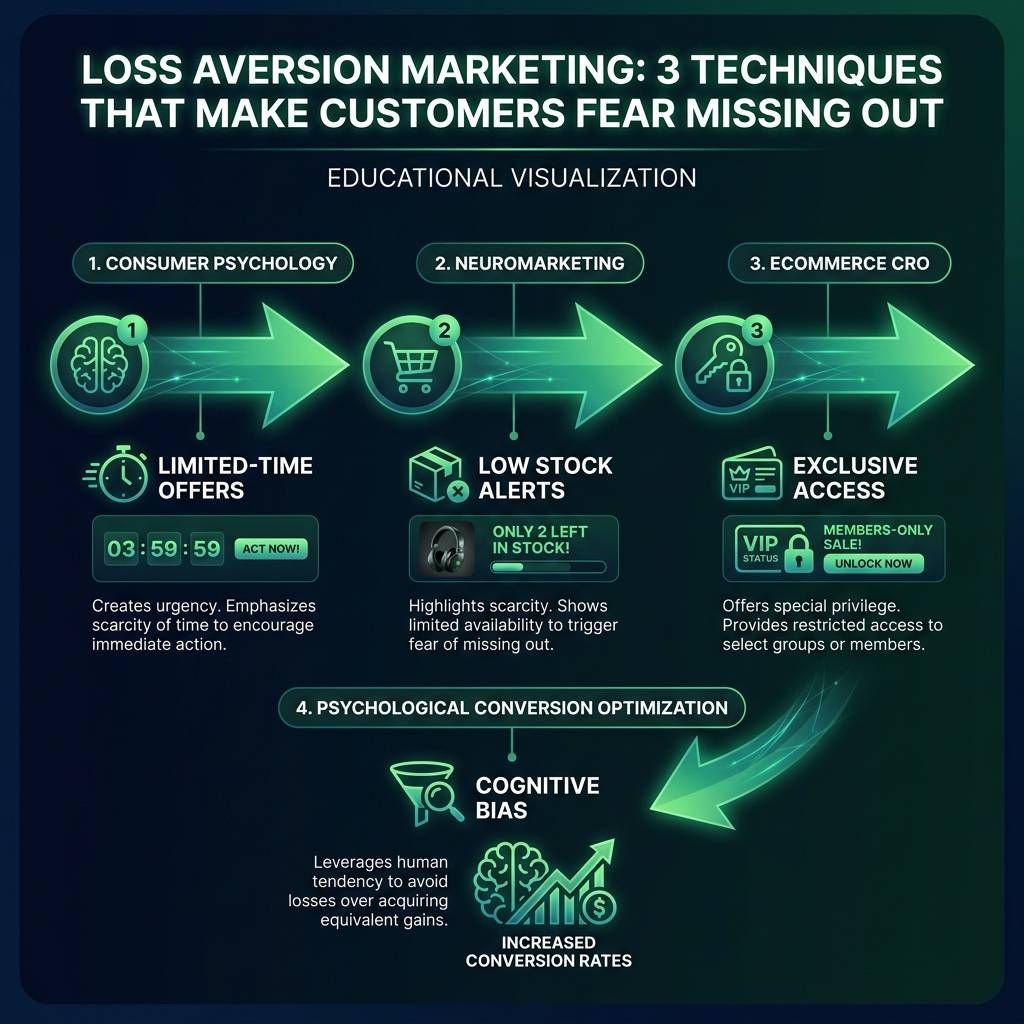
    Loss Aversion Marketing: 3 Techniques That Make Customers Fear Missing Out infographic showing consumer psychology, neuromarketing, ecommerce CRO for digital marketing
    EyeCaptain
    eyecaptain.io

    2. Leverage Authentic Scarcity and Urgency

    This technique is only effective if it is completely truthful. A simple "Only 3 left in stock" message makes the customer feel as if they possess an opportunity that they are now about to lose. It transforms the purchase from a potential "gain" to "avoiding a loss." For this to be effective, it must feel active and real. A static "limited time" banner is easily ignored. A real-time inventory counter that visibly decreases, or a message like "Selling fast: also in 2 other shoppers' carts," shows a tangible loss happening in the present moment.

    EyeCaptainEyeCaptain
    97%
    Conversions Booster

    Your visitors leave without converting

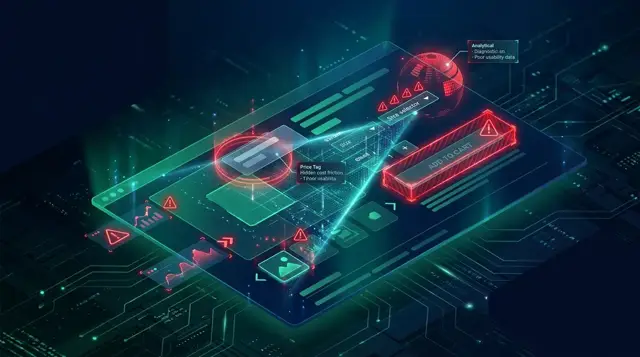
    Most websites lose 97% of their traffic without a single conversion. Our AI scans 200+ CRO elements to find exactly where visitors drop off.

    Hero CTA missing

    3. Reframe Your Guarantee to Eliminate Perceived Loss

    Many stores use a standard guarantee like, "30-day money-back guarantee." This is common, but it does not actively combat loss aversion. Instead, frame your guarantee as total loss prevention. Consider this approach: "Use our product for 30 days. If you do not see the results we promised, you have lost nothing. We will refund your purchase in full, no questions asked." The difference is subtle but powerful. One statement reduces risk; the other aims to completely eliminate the possibility of loss, calming the threat-detection part of the brain and making the purchase feel neurologically safe.

    The Ethical Line: Using Neuromarketing Responsibly

    Loss aversion is a powerful tool, but it must be used with integrity. Fake countdown timers, invented scarcity, and high-pressure tactics will ultimately harm your business. Today's global consumers are discerning and can easily identify disingenuous marketing. While these tactics might create a short-term increase in sales, they will erode customer trust and damage your brand's reputation in the long run.

    The rule is simple: only highlight a loss when it is real and genuine. If your stock is truly limited, show it. If a promotional price genuinely ends on a specific date, make that clear. If inaction truly costs the customer time or money, help them see the numbers. Authenticity is the foundation that makes these powerful principles of consumer psychology work for you, not against you.

    Loss Aversion Marketing: 3 Techniques That Make Customers Fear Missing Out infographic showing consumer psychology, neuromarketing, ecommerce CRO for digital marketing
    EyeCaptain
    eyecaptain.io

    Why Focusing Only on Gains Hurts Your Ecommerce CRO

    As marketers, we are trained to sell on benefits and features - what the customer gains. This is not wrong, but it is only half of the equation. The potential gain sparks interest, but the potential loss is what often drives immediate action.

    Your ecommerce CRO strategy must address both sides. Most online stores stop after listing the benefits and then wonder why conversion rates are not higher. A study in the Journal of Consumer Research found that for the same offer, messages framed around a potential loss boosted immediate action by over 200% compared to messages framed around a gain.

    Your product page must answer two critical questions for the customer:

    • What do I gain if I buy this?
    • More importantly, what do I stand to lose if I do not buy this right now?

    If you are only answering the first question, you are likely leaving potential sales unrealized every single day.

    Enjoyed this article?

    Join 1,500+ professionals getting weekly CRO & UX tips

    🎁 Bonus: Weekly CRO insights + exclusive resources

    No spam. Unsubscribe anytime.

    🚀 Boost Your Conversion Rate with EyeCaptain

    EyeCaptain is an AI-powered CRO & UX analysis tool that automatically scans your pages, identifies UX issues, and gives you actionable optimization suggestions to increase conversions. Try it for free, no card, no commitment.

    Free CRO Audit

    Did you find this helpful?

    Share it with someone who might find it useful.

    Dimitris Andreadakis

    About the author

    Founder of EyeCaptain. Writes about conversion rate optimization, UX analysis and the neuromarketing behind pages that actually sell.

    More articles by Dimitris Andreadakis

    Be the first to learn CRO secrets

    Actionable tips, case studies & early access to new AI tools. Weekly in your inbox.

    1,200+ marketers trust us

    Cookie Settings

    We use cookies to improve your experience.