
Infographic για digital marketing - οπτικοποίηση εννοιών consumer psychology, neuromarketing, pricing page optimization
    eyecaptain.io

    The Anchoring Effect: How the First Price Your Customer Sees Controls Their Decision

    Why do customers think $99 is cheap after seeing $199? Learn how anchoring bias manipulates every buying decision—and how to use it ethically.

    Dimitris Andreadakis

    16 August 2026

    4 min read
    160 views
    consumer psychologyneuromarketingpricing page optimizationcognitive bias in marketingpsychological conversion optimization

    Unlock higher conversions by understanding the core principles of consumer psychology. Effective pricing page optimization is not just about the numbers you choose, but how you present them. By leveraging key insights from neuromarketing, you can guide customer perception, overcome hesitation, and significantly improve sales without changing your final prices.

    Imagine showing a customer a product with a 199 price tag, and a moment later, revealing the same product is on sale for 99. They feel as though they've secured an exceptional bargain. But what if you had just shown them the 99 price from the start? They would likely pause and question the value. It is the same product and the same final price, but a completely different psychological response. This powerful effect is a cornerstone of psychological conversion optimization.

    The Anchoring Bias: A Powerful Cognitive Bias in Marketing

    That simple pricing scenario demonstrates the anchoring bias, a fundamental cognitive bias in marketing that quietly influences every purchase decision. The first piece of information, or "anchor," that a customer sees becomes the reference point for all subsequent information. In pricing, the first number they see sets their entire perception of value.

    This is not just a theory. A study by the Baymard Institute on e-commerce checkouts found that a high percentage of cart abandonments were due to unexpected costs. The critical insight here is that the final prices were not necessarily too high in an objective sense; they were simply high compared to the initial price anchor the customer had established. The first number sets the stage for the entire value judgment.
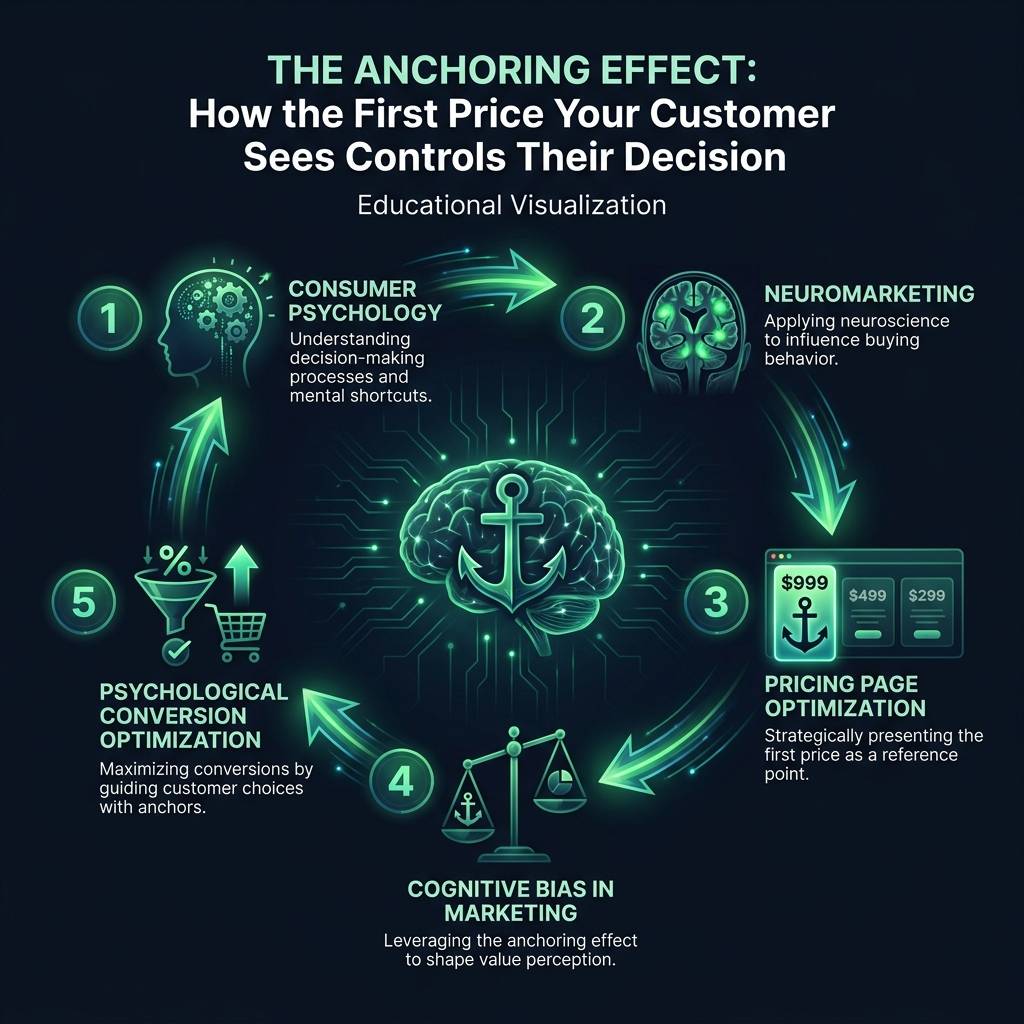

    The Anchoring Effect: How the First Price Your Customer Sees Controls Their Decision infographic showing consumer psychology, neuromarketing, pricing page optimization for digital marketing
    EyeCaptain
    eyecaptain.io

    How Neuromarketing Explains Customer Reactions

    When a person lands on your pricing page, their brain is searching for context to answer the question, "What is a good deal here?" Without an internal benchmark for your specific service, they latch onto the first number they see. This is a core concept in neuromarketing - understanding the brain's mental shortcuts.

    Remarkable studies have shown that even unrelated numbers can influence spending. In one experiment, participants exposed to high random numbers before bidding on items consistently bid more money than those exposed to low numbers. The anchor did not even need to be related to the product. This demonstrates how easily our perception of value can be framed. Your pricing page functions in the exact same way, making psychological conversion optimization a critical strategy.

    Strategic Pricing Page Optimization Using Neuromarketing

    Many businesses make a critical mistake in their pricing page optimization efforts. Take a look at your own pricing page. Is it organized from the lowest price to the highest? This common "Basic, Standard, Premium" layout seems logical, but it often undermines your conversion goals.

    By starting with your cheapest option, you anchor every visitor to the lowest possible price. This inadvertently makes your more profitable mid-tier plan seem expensive and your premium plan appear completely out of reach. This is a common issue on e-commerce platforms worldwide that default to sorting by "price: low to high," anchoring customers to low-margin items and making higher-quality products feel overpriced.
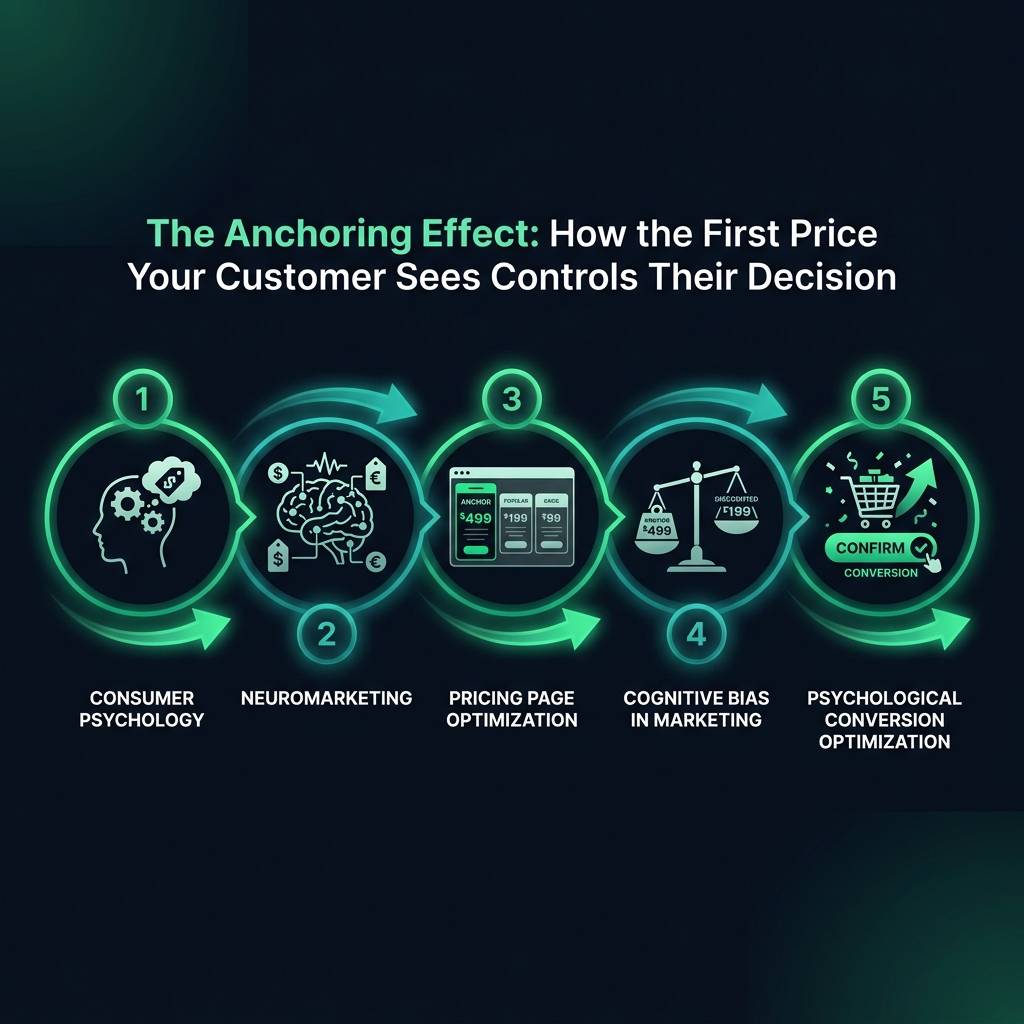
    The Anchoring Effect: How the First Price Your Customer Sees Controls Their Decision infographic showing consumer psychology, neuromarketing, pricing page optimization for digital marketing
    EyeCaptain
    eyecaptain.io

    The High-Anchor Method: Reversing Your Price Order

    The solution is to be strategic. Present your most expensive option first. This is not because you expect everyone to buy it; it is to set a high price anchor. When a customer sees a 299 premium plan first, the 149 standard plan next to it suddenly feels like a smart, reasonable compromise.

    EyeCaptainEyeCaptain
    97%
    Conversions Booster

    Your visitors leave without converting

    Most websites lose 97% of their traffic without a single conversion. Our AI scans 200+ CRO elements to find exactly where visitors drop off.

    Hero CTA missing

    By establishing a high initial price, you reframe the context, making your target offer seem more valuable and affordable in comparison. This is a foundational tactic in consumer psychology.

    Global technology leaders, from SaaS providers to hardware giants like Apple, are masters of this. They often present their "Enterprise" or "Pro" models first, with their high price tags. This makes the standard, more accessible model seem like an excellent deal, even though its price might have felt steep in isolation.

    Leveraging the Decoy Effect for Psychological Conversion Optimization

    To make your target offer nearly irresistible, you can introduce a "decoy." This is a slightly less attractive option designed to make your preferred option look even better. The global publication The Economist famously demonstrated this with three subscription options:

    • Online-only subscription: 59
    • Print-only subscription: 125
    • Print + Online subscription: 125

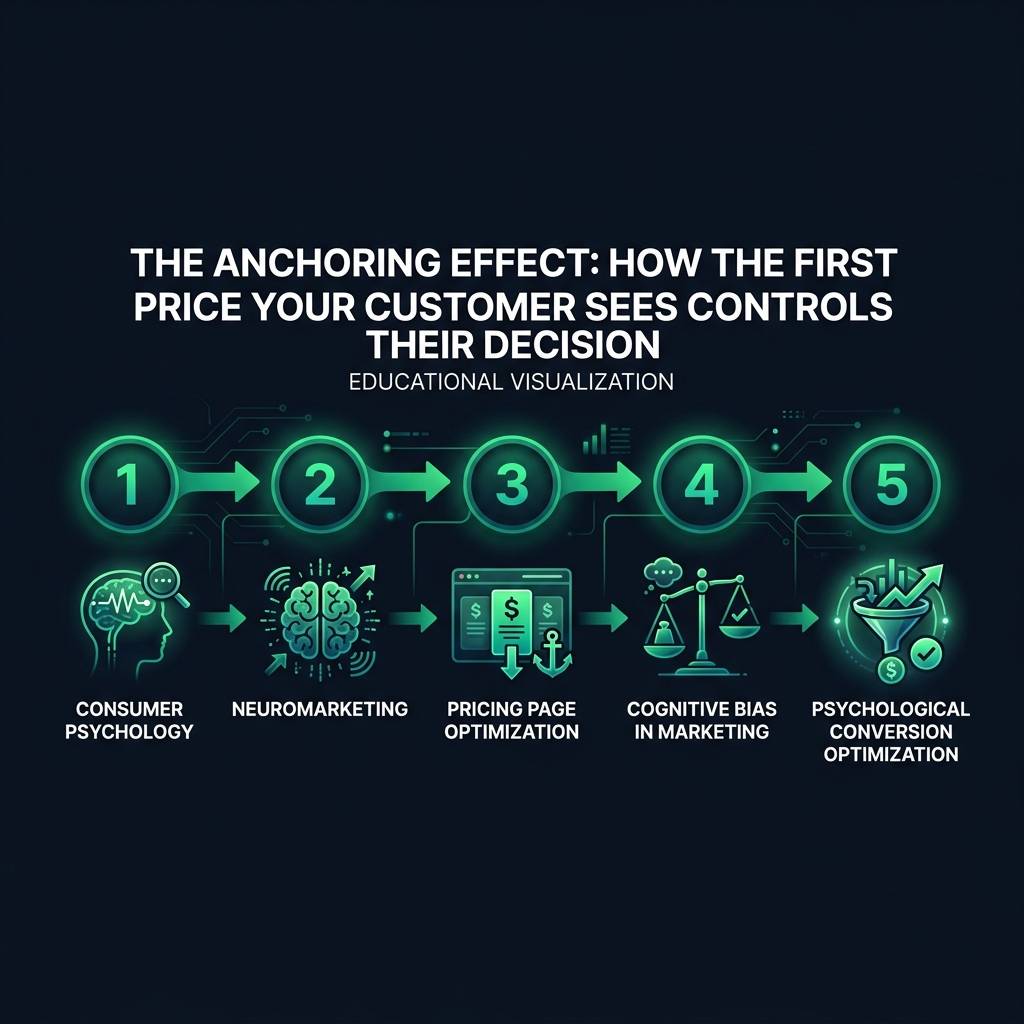
    The "Print-only" option at 125 is the decoy. Its sole purpose is to make the "Print + Online" bundle at the same price look like an incredible deal, as if the online access is free. When researchers removed this decoy, sales of the high-value bundle dropped significantly. This is a prime example of advanced psychological conversion optimization.

    The Anchoring Effect: How the First Price Your Customer Sees Controls Their Decision infographic showing consumer psychology, neuromarketing, pricing page optimization for digital marketing
    EyeCaptain
    eyecaptain.io

    Ethical Application of Consumer Psychology in Pricing

    These techniques work because they align with how the human brain naturally makes decisions. However, there is a clear line between guiding perception and being deceptive. Effective neuromarketing is about building trust, not exploiting cognitive biases.

    Avoid inventing a false "original" price just to show a discount. Modern customers are discerning and can often recognize disingenuous tactics, which will destroy credibility. Instead, use anchoring to strategically frame the genuine value you already offer. Showcase your premium tier first because it provides real value to a segment of your audience. Use a decoy that represents a real, albeit less ideal, choice.

    The objective is not to mislead customers. It is to help them clearly see and understand the value of your products in a favorable context. Your website is already setting price anchors for every visitor; the only question is whether you are controlling the narrative and setting the right ones for successful pricing page optimization.

    Enjoyed this article?

    Join 1,500+ professionals getting weekly CRO & UX tips

    🎁 Bonus: Weekly CRO insights + exclusive resources

    No spam. Unsubscribe anytime.

    🚀 Boost Your Conversion Rate with EyeCaptain

    EyeCaptain is an AI-powered CRO & UX analysis tool that automatically scans your pages, identifies UX issues, and gives you actionable optimization suggestions to increase conversions. Try it for free, no card, no commitment.

    Free CRO Audit

    Did you find this helpful?

    Share it with someone who might find it useful.

    Dimitris Andreadakis

    About the author

    Founder of EyeCaptain. Writes about conversion rate optimization, UX analysis and the neuromarketing behind pages that actually sell.

    More articles by Dimitris Andreadakis

    Be the first to learn CRO secrets

    Actionable tips, case studies & early access to new AI tools. Weekly in your inbox.

    1,200+ marketers trust us

    Cookie Settings

    We use cookies to improve your experience.