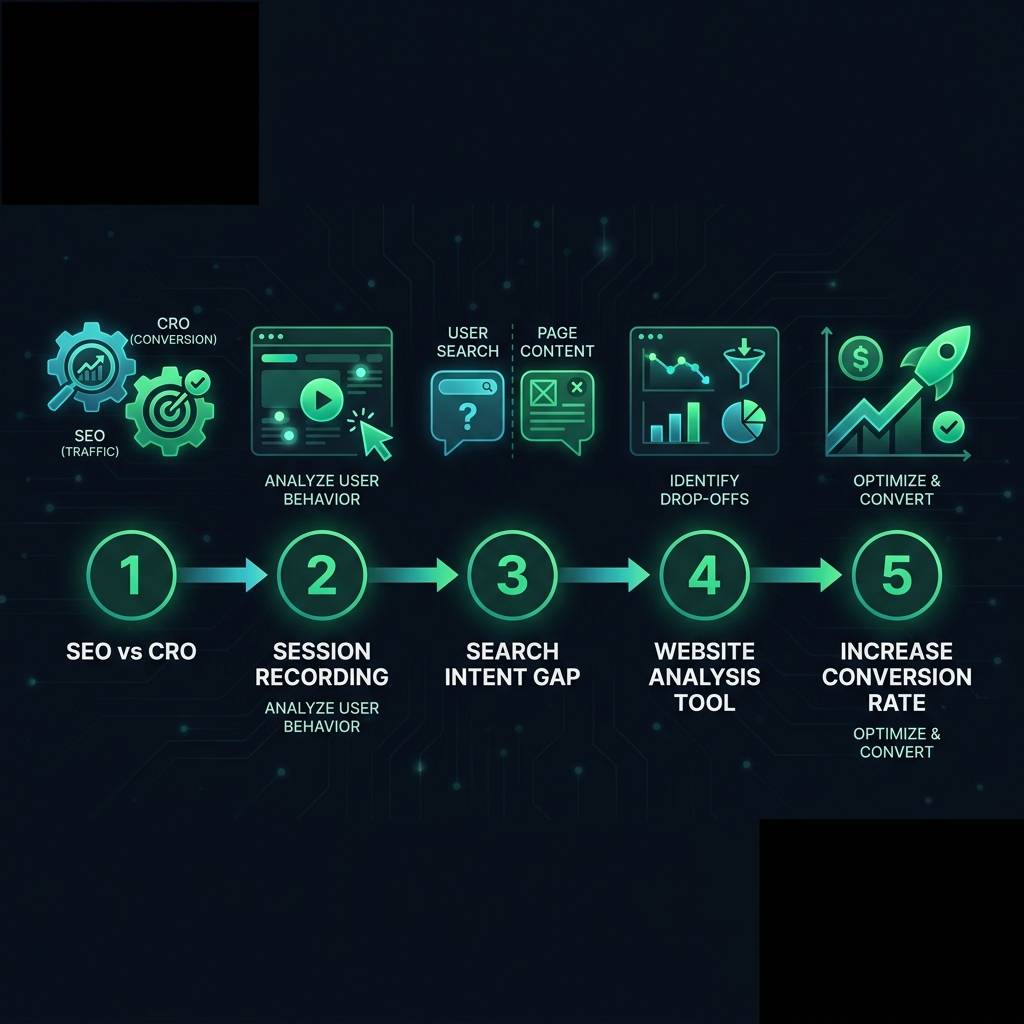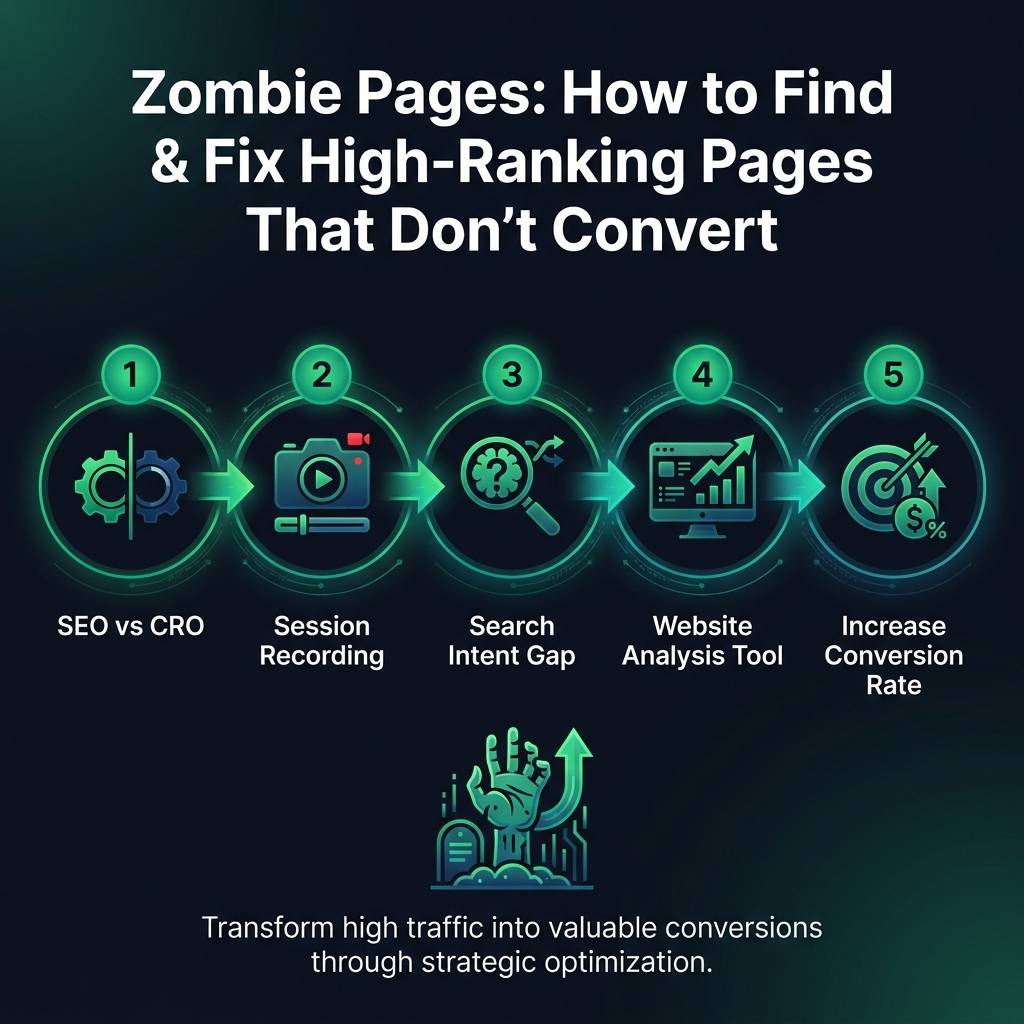

Are you achieving high search rankings and seeing significant traffic, yet your sales and leads are not increasing? This common frustration highlights the classic challenge of SEO vs CRO. You have successfully attracted visitors, but you have not convinced them to take action. This guide will help you diagnose the issue by identifying "zombie pages," understanding the crucial search intent gap, and using the right website analysis tool to finally increase your conversion rate and turn traffic into revenue.
What Are Zombie Pages and Why Do They Exist?
A zombie page is a page on your website that ranks well in search engines and receives substantial traffic but fails to generate any meaningful business results. No sales, no sign-ups, no leads - just empty visits that consume your marketing budget. They appear healthy in analytics reports but are inactive when it comes to your business goals.
This problem almost always originates from a search intent gap. This is the critical disconnect between what a user expects to find when they click your link and what your page actually delivers. You successfully optimized for a keyword, but you failed to satisfy the underlying reason a person was searching for it in the first place.
An electronics retailer had a blog post ranking highly for "best wireless headphones 2024." It generated immense traffic, attracting thousands of visitors monthly. The number of sales from that page? Fewer than twenty. The page was a detailed comparison but offered no clear path to purchase. Visitors came, learned what to buy, and then left to purchase from a competitor.
This is a perfect example of the conflict between SEO vs CRO (Conversion Rate Optimization). Many businesses focus on one or the other - either pursuing traffic or optimizing conversions - but few build a bridge between the two. With global e-commerce cart abandonment rates hovering around 70%, zombie pages only worsen the problem by attracting the wrong audience or failing to guide the right one.
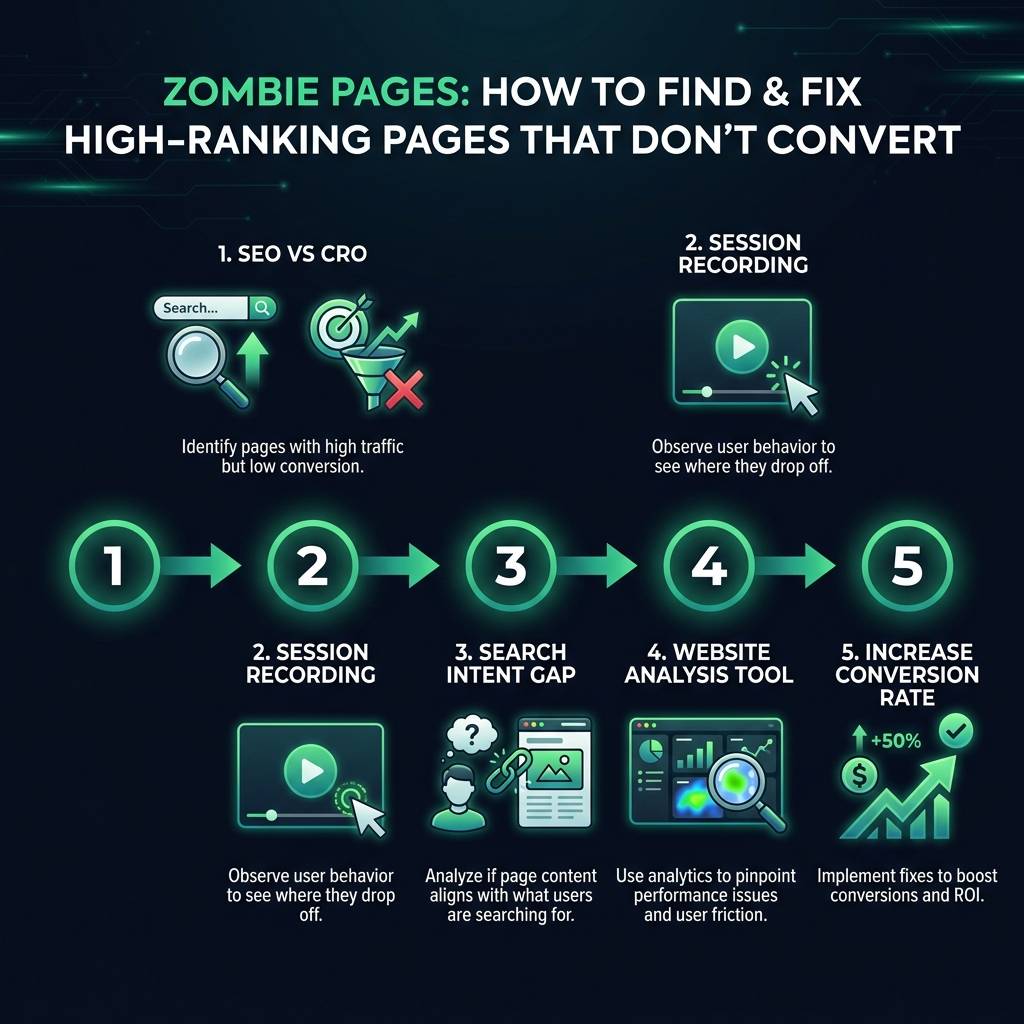

How to Find Zombie Pages with Data-Driven Website Analysis
Ready to identify your conversion-killing pages? You only need to analyze three key metrics: traffic volume, conversion rate, and revenue per session. Using a robust website analysis tool like Google Analytics is the perfect place to start.
In Google Analytics 4, navigate to the "Pages and screens" report under the Engagement section. Sort your pages by sessions to see your highest-traffic content first. Next, add "Conversions" as a secondary column. Any pages in your top 20 with a conversion rate significantly below your site average are your primary suspects.
However, traffic and conversions alone do not provide the complete picture. A page might have a low 0.8% conversion rate, but if those conversions are for your highest-value enterprise service, it is a valuable asset. This is why revenue per session is the ultimate metric. Simply divide a page's total revenue by its total sessions. A page with high traffic, a low conversion rate, AND low revenue per session is a confirmed zombie page.
Use Session Recording to Understand User Behaviour
Analytics tell you what happened, but they cannot tell you why. To understand the user experience, you need to see what people are actually doing on your site. This is where a session recording tool becomes an indispensable part of your website analysis toolkit.
Session recording software reveals everything analytics miss: user hesitation, repeated clicks on broken elements, and moments of frustration. While heatmaps show aggregate click patterns, session recordings show individual user journeys and where their interest fades. Watch 20 recordings for a suspected zombie page, and you will likely spot a pattern. Perhaps users are endlessly scrolling for information that is not there, or the call-to-action is unclear.