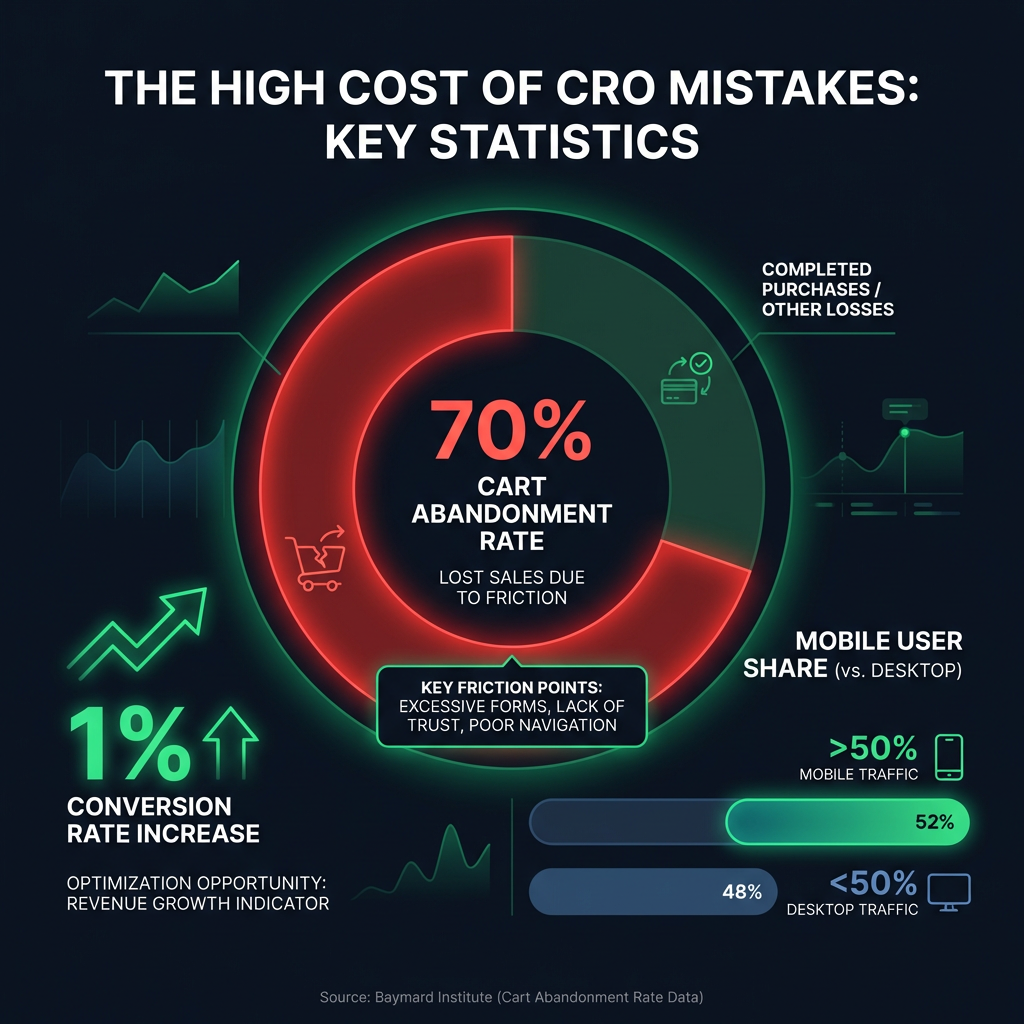

Are common CRO mistakes negatively impacting your business? Many companies unknowingly make critical website mistakes that disrupt their sales process, leading to a high bounce rate and lost revenue. By identifying and fixing these conversion barriers, you can significantly improve your digital marketing strategy and increase your revenue.
5 Common CRO Mistakes That Are Costing You Sales
Every percentage point in your conversion rate matters. For a growing business, even a small 1% increase can translate into a significant increase in revenue. Yet, many websites are full of invisible roadblocks that cause potential customers to leave. Let's look at the most common conversion rate optimization errors and how to fix them.
1. Ignoring User Psychology and Creating Friction
Visitors do not just land on your site for information; they are seeking an experience that feels easy, intuitive, and trustworthy. The smallest moment of friction or doubt can disrupt the entire process. This is a primary reason for a high bounce rate.
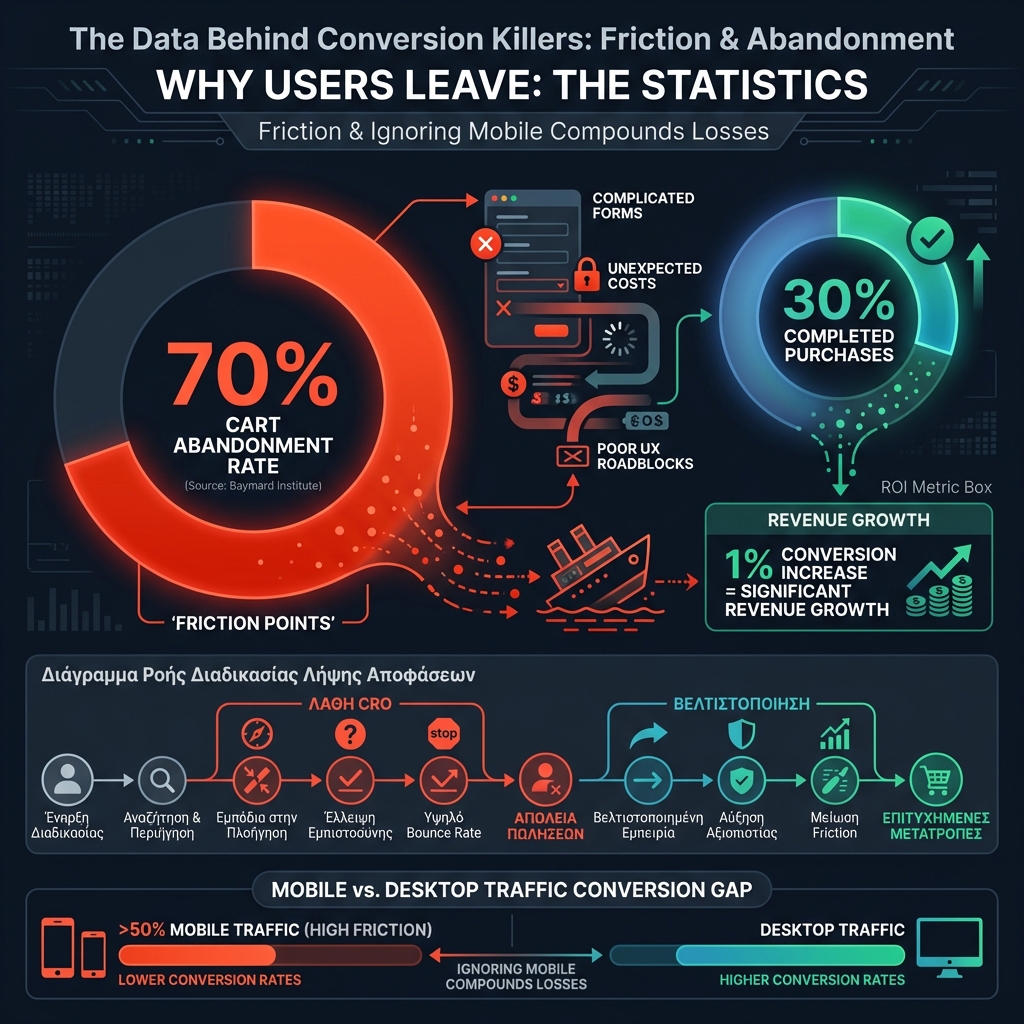
Research from the Baymard Institute shows that nearly 70% of online shopping carts are abandoned. This is not random; it is a direct result of overlooked friction points. Consider a globally recognized platform like Amazon - its checkout is engineered to be almost effortless. Every extra field to fill, every confusing step, forces the user to pause and weigh risk versus reward. If your site creates hesitation, you are likely losing the sale.
You have only a few seconds to establish credibility. A complex design will not build trust, but clear promises and a transparent process will. Avoid surprises in the checkout process to build confidence and guide users smoothly toward conversion.

2. Neglecting the Mobile User Experience
With more than half of all web traffic coming from mobile devices, a poor mobile site is a critical website mistake. Many sites are still designed for desktops and then awkwardly adapted for smaller screens, creating a frustrating user experience.
A "responsive" design is no longer enough; it is the minimum standard. Your goal should be a mobile-first experience that feels intuitive to use with one hand. A/B tests consistently show that websites truly optimized for mobile convert at a much higher rate - sometimes two or three times better - than their desktop-first counterparts.