

This comprehensive heatmap analysis guide will show you how to do a UX audit that uncovers exactly why your website visitors are not converting. By leveraging powerful website optimization tools and insights from session recordings for CRO, you can pinpoint and reduce UX friction, turning lost opportunities into loyal customers and improving your financial results. If your website is losing revenue, it's time to find and resolve the issues in your user experience.
How to Reduce UX Friction and Boost Conversions
Heatmap analysis often reveals truths about user behavior that can be difficult to face. Consider this: a study from the Baymard Institute found that nearly 70% of e-commerce shopping carts are abandoned globally. Much of this lost revenue stems from user experience problems that are practically invisible without the right tools. This invisible friction is what severely harms your conversion rates.
Understanding True User Behavior with Heatmap Analysis
How users actually behave on your site rarely matches how you intended it to be used. This is a critical insight that forms the foundation of any successful UX audit. A complete heatmap analysis guide reveals where users are actually clicking, scrolling, and focusing their attention - not where you assume they are.
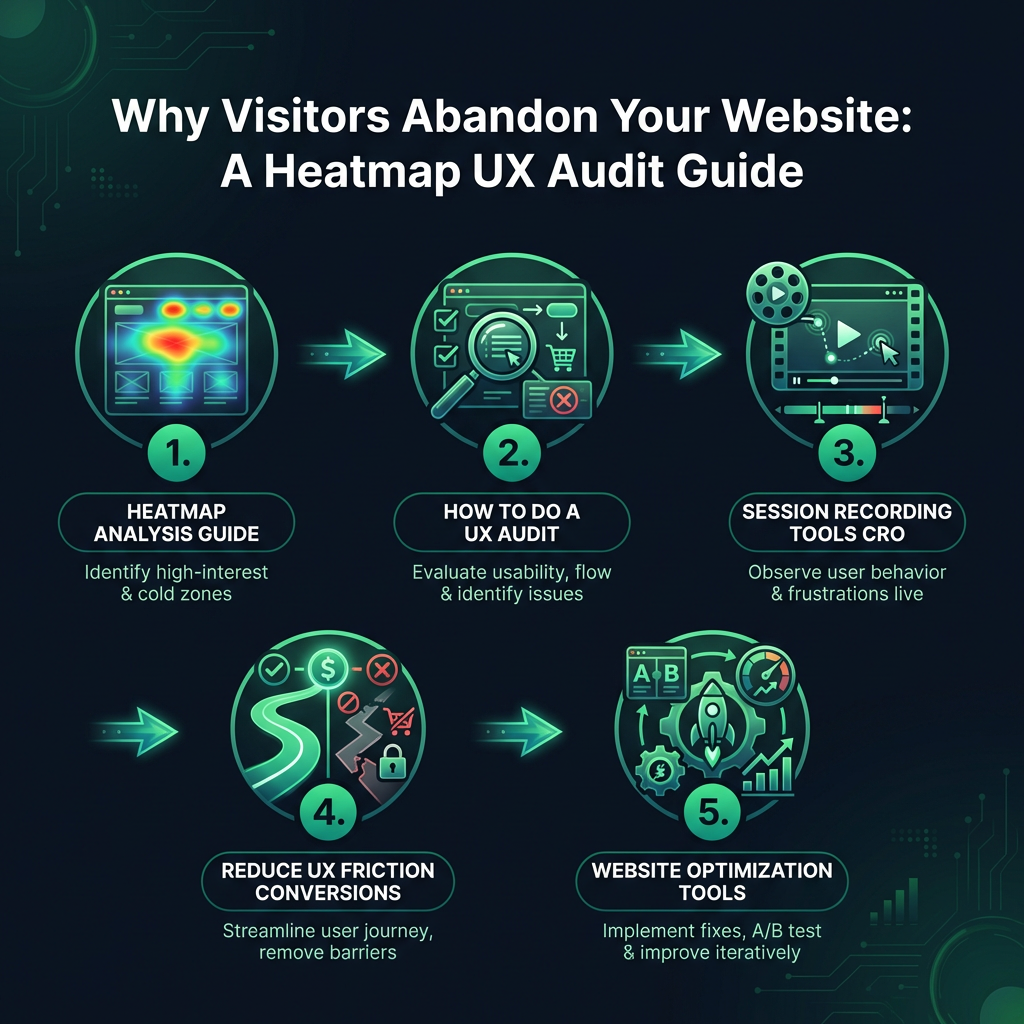

For example, session recording tools for CRO (Conversion Rate Optimization) can reveal surprising user patterns. We worked with a technology company struggling with low sign-ups. A heatmap analysis showed that users were completely ignoring their main call-to-action button because it did not stand out from the background. This simple design flaw was costing them significant potential revenue.
The real customer journey looks nothing like the clean, linear mockups you approved. Research from the Nielsen Norman Group shows that users scan websites in complex, non-linear patterns, challenging most assumptions about how to guide them toward a conversion.
Your Guide to Essential Website Optimization Tools
Conducting a proper UX audit requires more than just assumptions; it requires the right website optimization tools. Watching session recordings with tools like Hotjar or FullStory is like investigating your conversion rate. These platforms allow you to see every mouse movement, scroll, and moment of hesitation, providing invaluable data on where users get confused, frustrated, or lose trust.
As you review this data, you will begin to notice the clear signs of UX friction. These are the clues that lead you directly to the problem areas:

- Frantic Cursors: Rapid, erratic mouse movements often signal confusion or an inability to find what the user is looking for.
- Rage Clicks: Repeated clicks on a non-interactive element (like an image or text) indicate a user's unmet expectation.
- Sudden Exits: A user abruptly leaving a page after attempting a specific action is a significant warning sign of a broken or confusing process.
The Core Principle: Remove Obstacles to Improve User Flow
A key principle of effective conversion rate optimization is that great UX is not about adding more features. It is about systematically removing obstacles. The goal is to avoid obstructing the user's path and make their journey as seamless as possible.