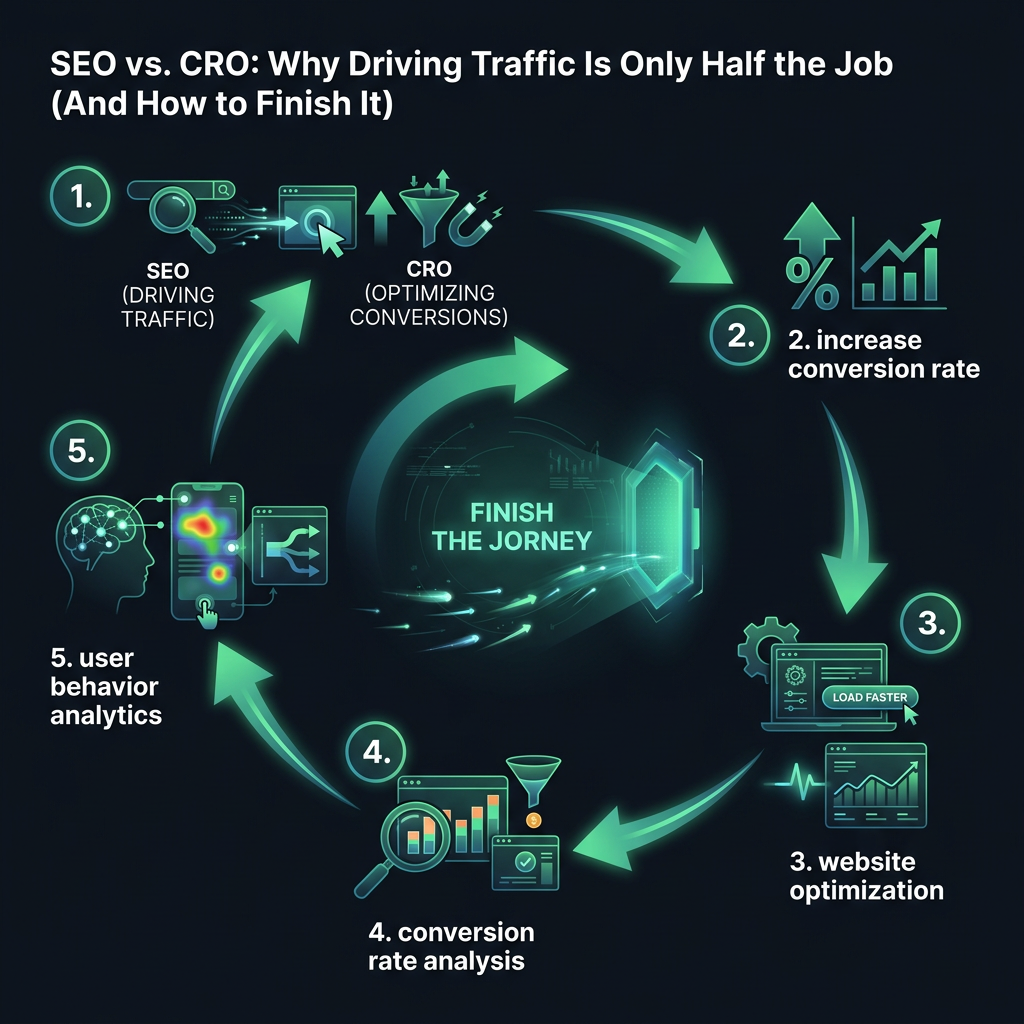

Are you attracting substantial website traffic but struggling to see a corresponding increase in revenue? This common challenge highlights a disconnect in many digital strategies between generating traffic and generating sales. Understanding the fundamental differences between SEO vs CRO (Conversion Rate Optimization) is the first step toward a holistic approach to website optimization that transforms visitors into valuable, long-term customers.
SEO vs CRO: Understanding the Core Difference
You've successfully improved your search engine rankings, and your traffic is growing. Yet, your sales targets remain just out of reach. The problem often lies in optimizing for search engines while neglecting the human experience of the people visiting your site. You have mastered guiding them to your website, but you have not yet convinced them to take action.
Consider the impact of small improvements. For a site with 10,000 monthly visitors and a 1% conversion rate, simply learning how to increase the conversion rate to 2% can double your revenue without any additional advertising spend. This is the power of bridging the gap between website traffic and conversions.
What SEO Achieves (And Where It Stops)
Think of Search Engine Optimization (SEO) as the global marketing agent for your digital presence. It uses tactics like relevant keyword content, high-quality backlinks, and technical site health to signal to search engines like Google that your business is a relevant and authoritative source. When successful, SEO drives a steady stream of potential customers to your website.
However, the primary role of SEO concludes the moment a user clicks on your link. It is not designed to influence what happens after they arrive. This represents a critical blind spot for many businesses worldwide.
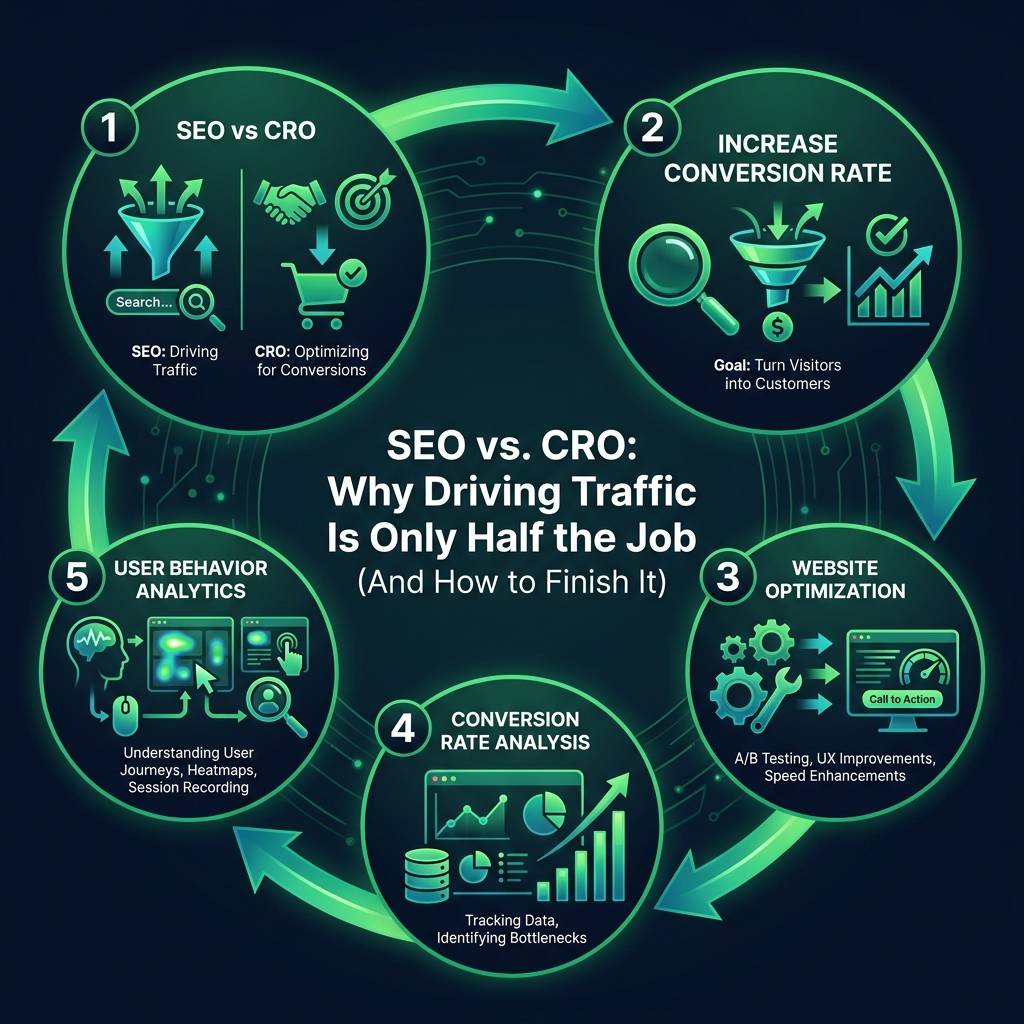

The Baymard Institute, a global research firm, found that the average e-commerce cart abandonment rate is nearly 70%. This means seven out of ten potential customers who add items to their cart leave without completing the purchase. SEO brought them to the site, but a poor user experience often drives them away.
SEO success is measured by metrics like rankings and click-through rates. Conversion Rate Optimization (CRO), on the other hand, focuses on what users do next. It investigates why they did not convert, using user behavior analytics to pinpoint friction, confusion, and missed opportunities. SEO fills your sales funnel; CRO ensures that potential customers complete the journey.
Why a Balanced Website Optimization Strategy is Crucial
A crucial point to consider is that a website ranking fifth in search results can easily generate more revenue than the top-ranked result if it is better at converting visitors. So why do many businesses invest their entire budget into SEO and treat conversions as an afterthought? The answer often lies in perceived simplicity. SEO can provide clear metrics that show upward trends, while CRO is a more nuanced discipline rooted in user psychology and iterative testing.
The High Cost of a Poor User Experience
A suboptimal user experience has immediate and significant financial consequences. Researchers at the globally recognized Nielsen Norman Group discovered that users form a strong first impression of a website in just 0.05 seconds. In that instant, a cluttered, confusing, or untrustworthy design can cause a visitor to leave, regardless of your SEO success.
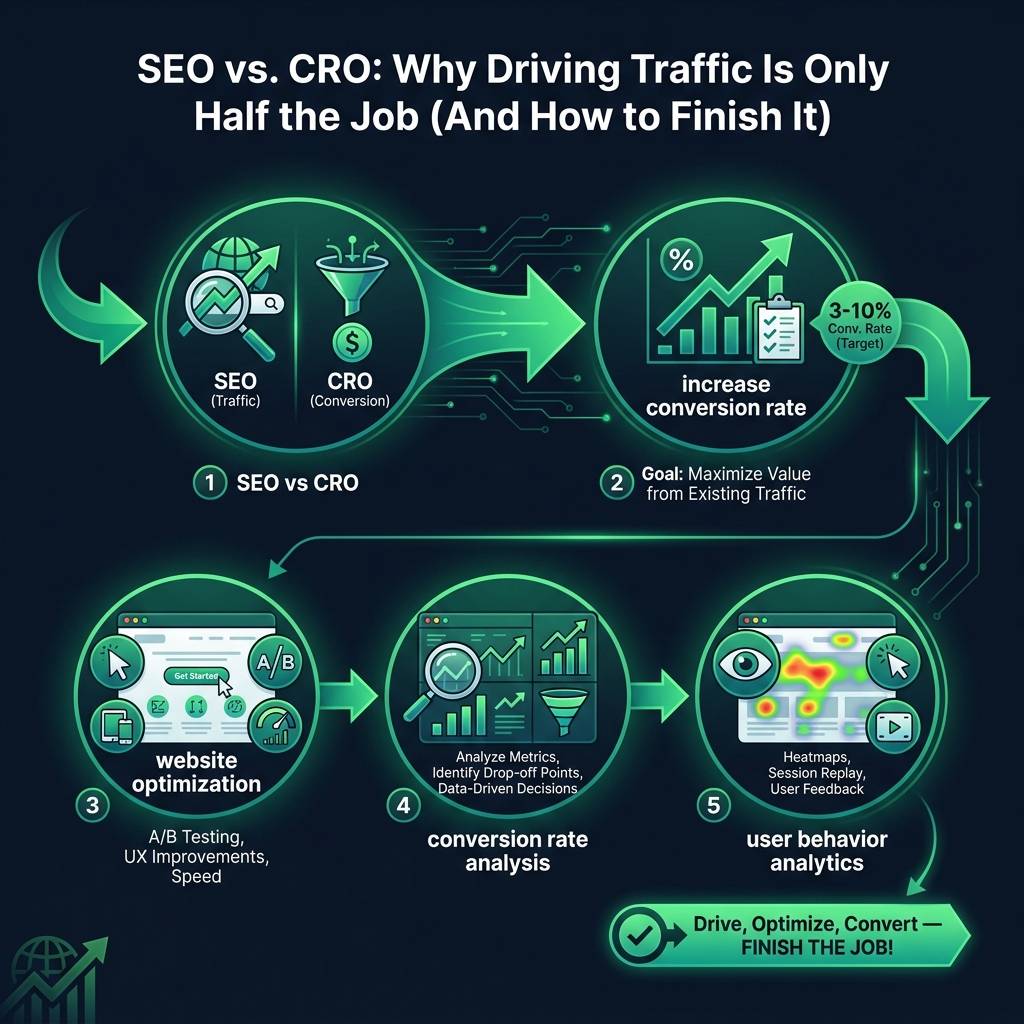
Effective website optimization for conversions involves identifying and resolving these points of friction. Common global issues include: