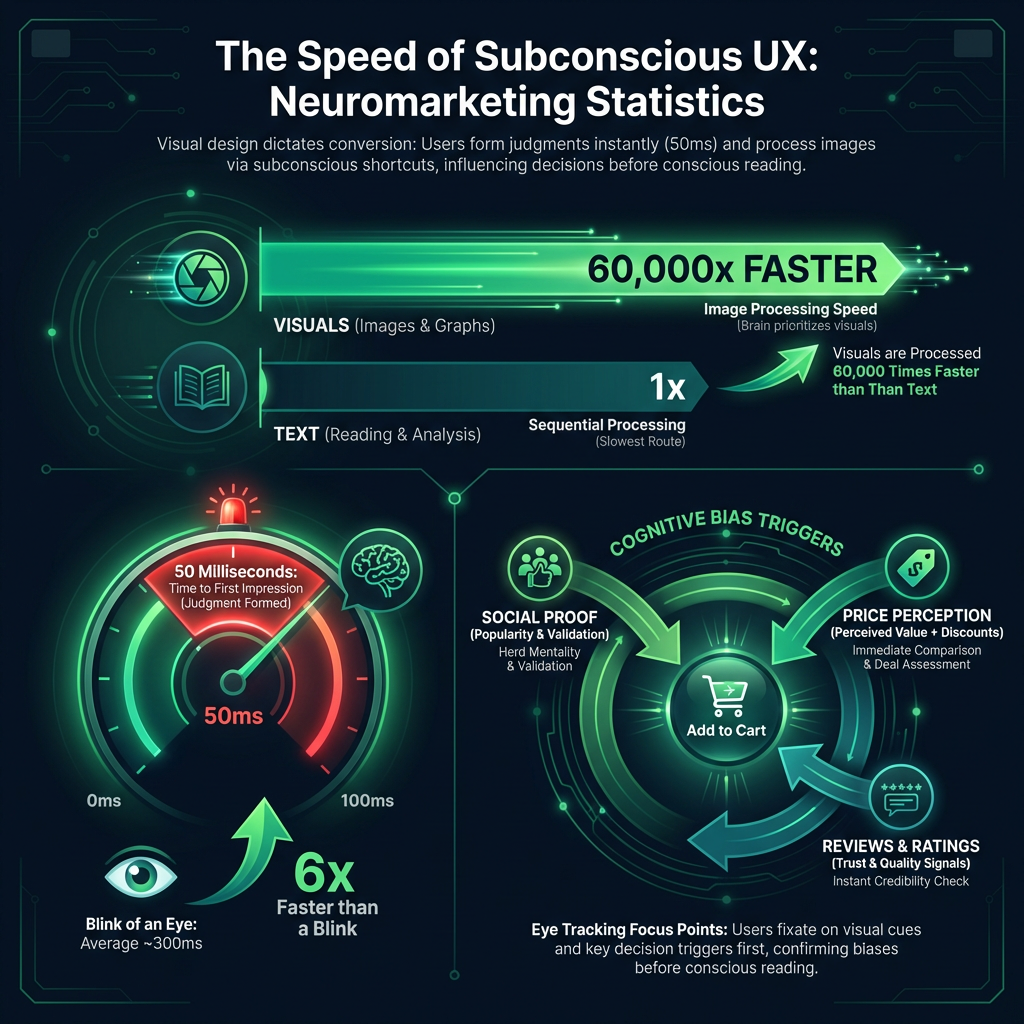

A Guide to Neuromarketing and Psychological UX Optimization
Unlock the secrets of your users' minds with this comprehensive heatmap analysis guide. By understanding the principles of neuromarketing website design and psychological UX optimization, you can transform your site from a simple page into a powerful conversion tool. This guide explores how to decode user behavior by analyzing subconscious clicks, scrolls, and hesitations to create a more intuitive and effective user experience.
A Guide to Heatmap Analysis and User Psychology
Think of your website as a psychological landscape where every interaction tells a story. Heatmap analysis offers a direct window into your user's subconscious mind, revealing insights that are often overlooked. Research from the Baymard Institute shows a visitor forms a critical judgment about your website in just 50 milliseconds - faster than a blink and long before conscious thought begins. This is possible because our brains process images approximately 60,000 times faster than text, making your site's visual design a powerful tool that appeals directly to your user's instinctive reactions and mental shortcuts.
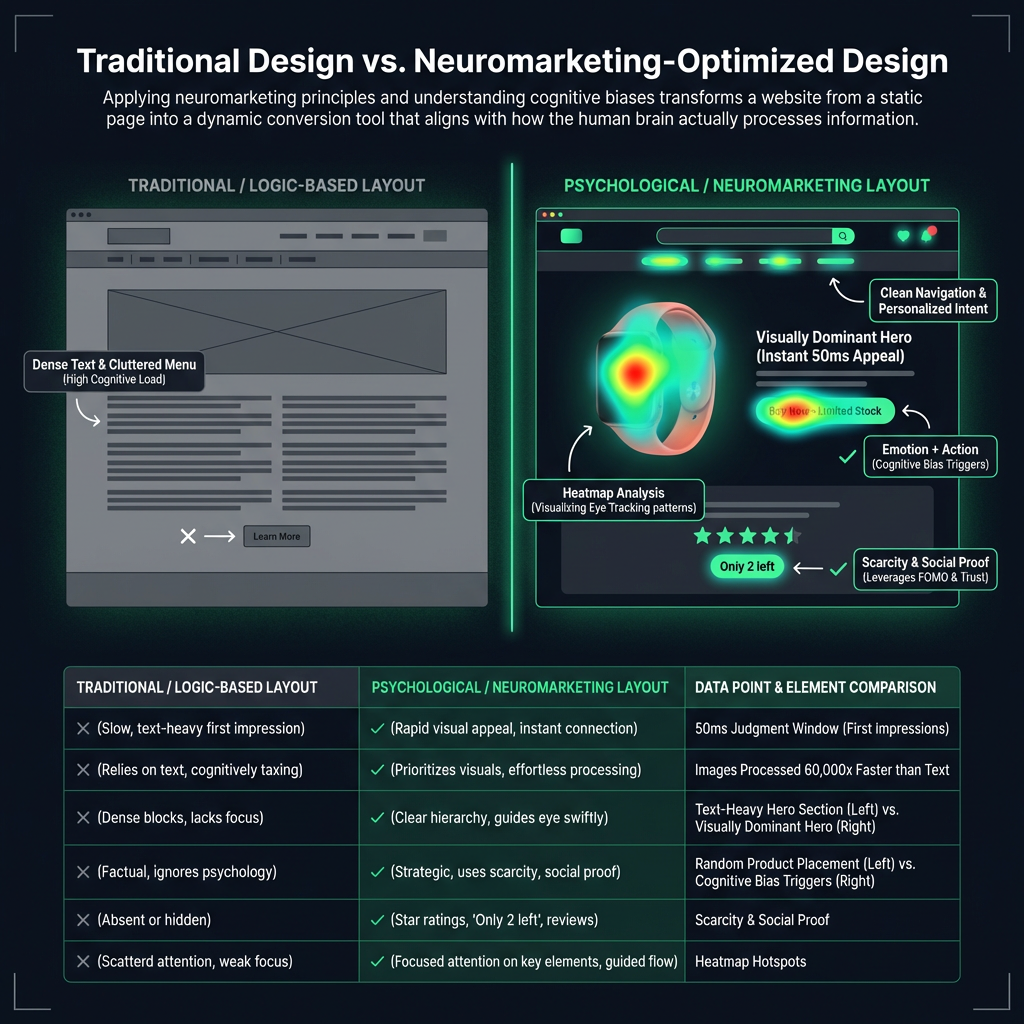

Leveraging Cognitive Bias in UX Design
For an excellent example of applied psychology, consider the product pages of a global e-commerce leader like Amazon. The layout is not random; it is a deliberate exercise in psychological UX optimization. Every element is strategically placed to trigger a specific response, a concept central to understanding cognitive bias in marketing. The display of prices, placement of reviews, and use of social proof are all engineered to appeal to subconscious decision-making and encourage a click on "Add to Cart."
This is where user behavior analysis becomes critical. Data from eye tracking studies, famously conducted by the Nielsen Norman Group, reveals a consistent F-shaped scanning pattern for left-to-right languages like English. Users overwhelmingly focus on the top and left side of a screen. It is crucial to note that this pattern is reversed for right-to-left (RTL) languages such as Arabic or Hebrew, where user focus shifts to the top and right. Content placed outside these primary zones risks being ignored.
Decoding User Behavior: Key Psychological Principles
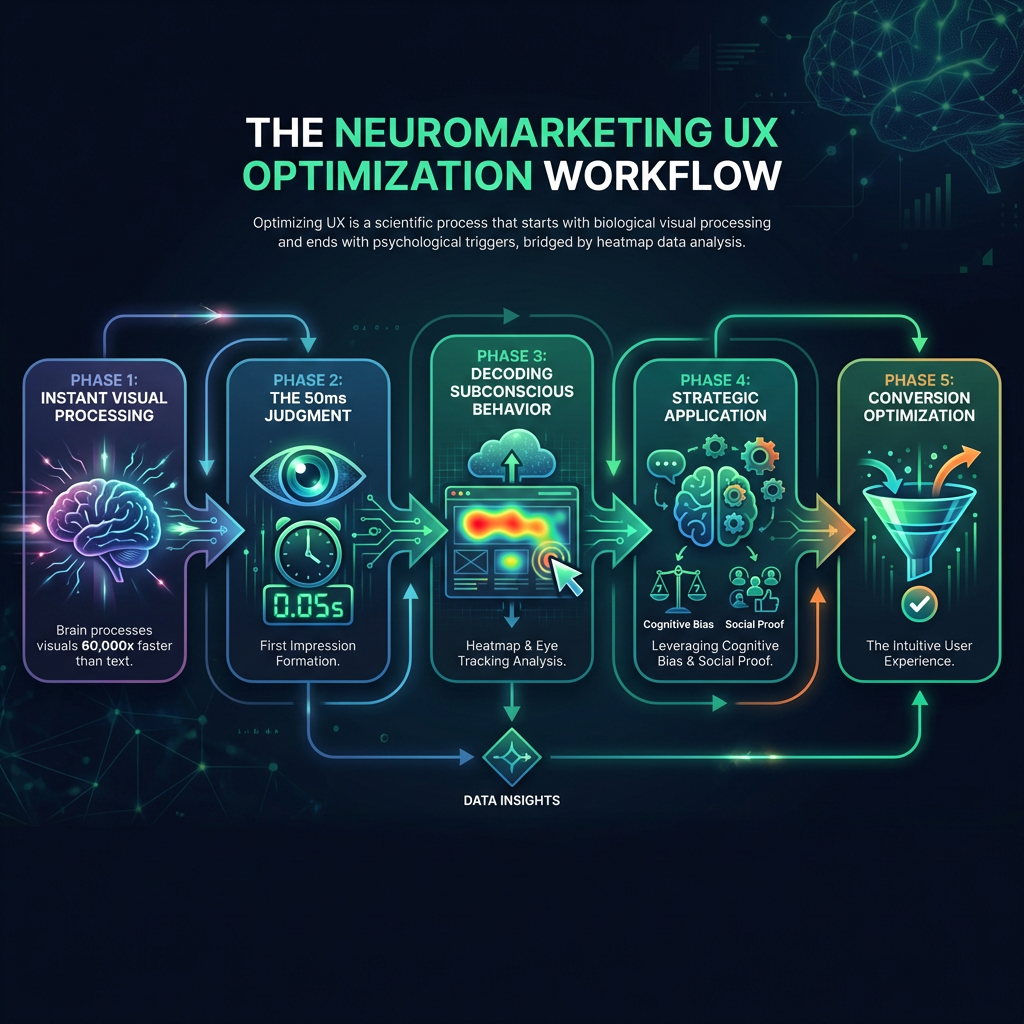
Cognitive biases are the invisible forces that influence user experience. By understanding them, you can optimize your design for how people actually think and behave. Key biases include: