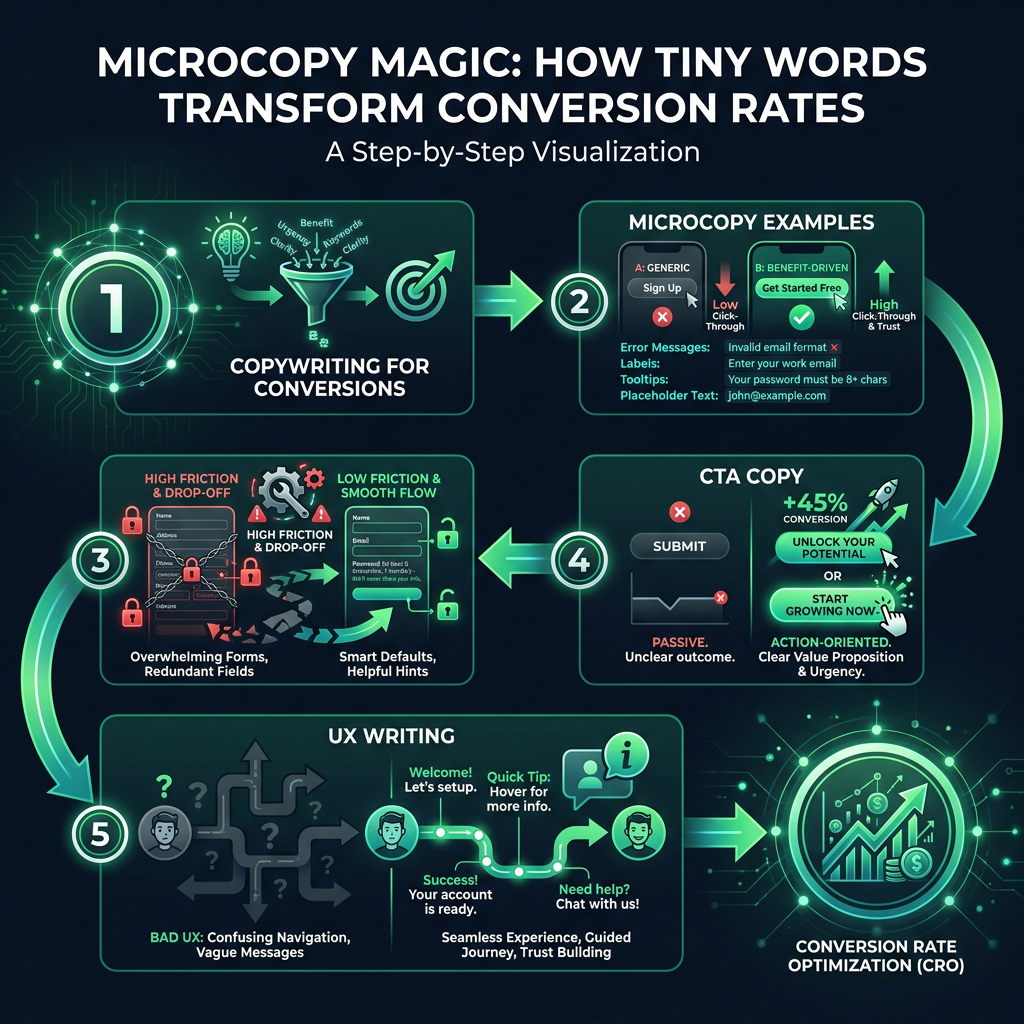
Infographic για digital marketing - οπτικοποίηση εννοιών copywriting for conversions, microcopy examples, form friction
    eyecaptain.io

    Microcopy Magic: How Tiny Words Transform Conversion Rates

    Struggling with form dropoffs and error messages? Discover the tiny UX writing tricks that turn frustrated users into paying customers.

    EyeCaptain

    Dimitris

    13 May 2026

    4 min read
    216 views
    copywriting for conversionsmicrocopy examplesform frictionCTA copyUX writing

    Effective copywriting for conversions is not just about long sales pages; it is also about the smallest details on your website. This is the world of UX writing, where small pieces of text on forms, buttons, and error messages can either guide users to success or create frustrating form friction that significantly harms your conversion rates.

    Every harsh or technical phrase can discourage a potential customer. The microcopy - the small text that guides a user through an action - can define their entire experience and directly impact your business results.

    The High Cost of Poor UX Writing: Understanding Form Friction

    The research is clear. A study from the Baymard Institute found that a significant 67% of users abandon online shopping carts. A primary reason is an overly complicated checkout process, often caused by confusing instructions or intimidating error messages.

    This means two out of every three potential customers may leave, not because they dislike your product, but because your website's text created unnecessary difficulty. For example, think of a form that returns an error like "INVALID INPUT!" in bright red text. It is frustrating and can make the user feel they made a mistake. This is a classic example of poor UX writing that increases form friction.
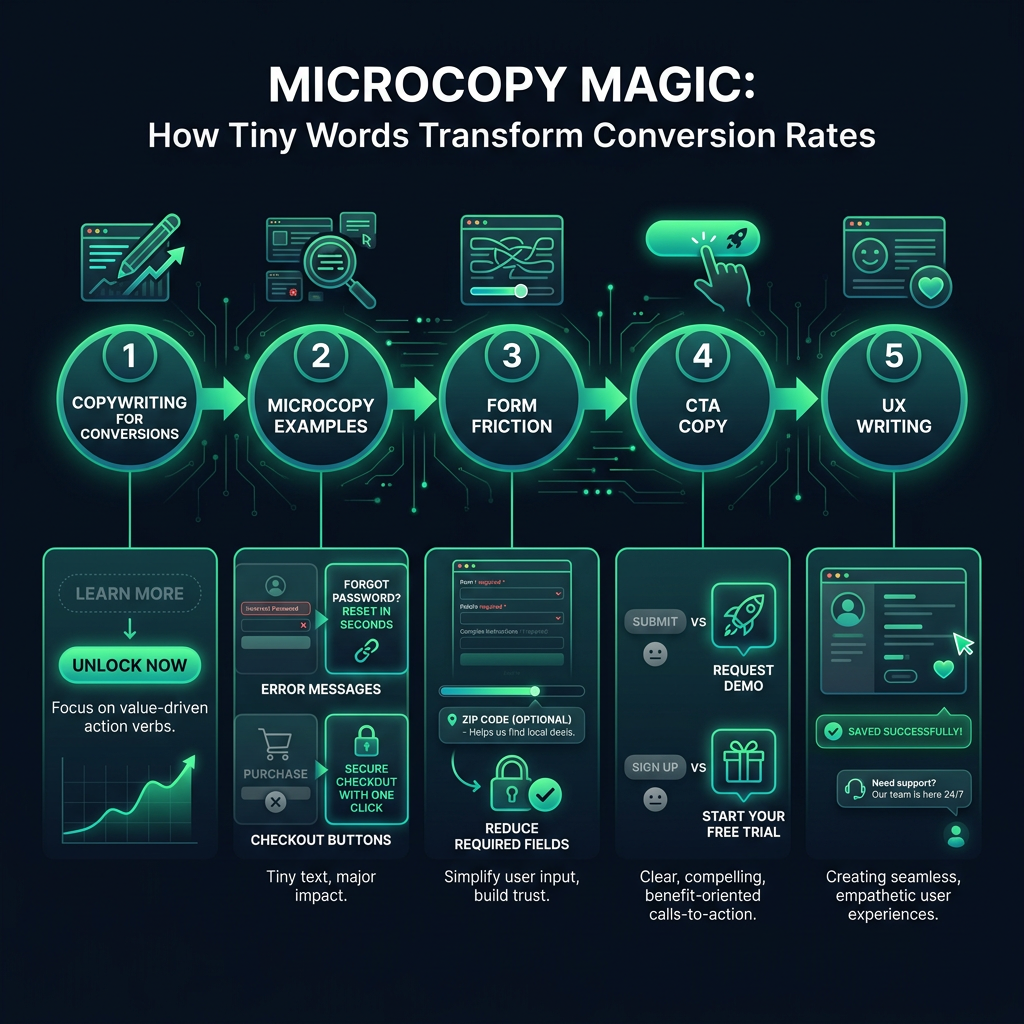

    Microcopy Magic: How Tiny Words Transform Conversion Rates infographic showing copywriting for conversions, microcopy examples, form friction for digital marketing
    EyeCaptain
    eyecaptain.io

    How Empathetic Language Transforms User Experience

    Let's review a few microcopy examples to see how a small change in language can improve the user experience. A small amount of empathy can make a significant difference.

    Instead of a generic "Password Error," try:
    "Your password needs at least 8 characters and one number."

    The first option is an unhelpful stop, while the second provides a clear guide for the user to succeed. One creates friction, and the other reduces it.

    Instead of a direct "Payment Failed," try:
    "There was a problem processing your card. Please check your details or try a different card."

    The second version feels like a helpful partner offering a solution, not an automated system abruptly ending the process. This is conversion-focused copywriting in action.

    How to Write Microcopy That Converts

    How can you master the art of UX writing? Crafting effective microcopy is based on a few core principles that focus on clarity and the user's perspective.

    EyeCaptainEyeCaptain
    97%
    Conversions Booster

    Your visitors leave without converting

    Most websites lose 97% of their traffic without a single conversion. Our AI scans 200+ CRO elements to find exactly where visitors drop off.

    Hero CTA missing

    1. Prioritize Empathy Over Technical Jargon

    Your text should always sound like it comes from a helpful person, not a technical manual. Imagine you are patiently guiding a friend through a difficult process. That is the tone to use. This human-centric approach builds trust and encourages users to complete the action.

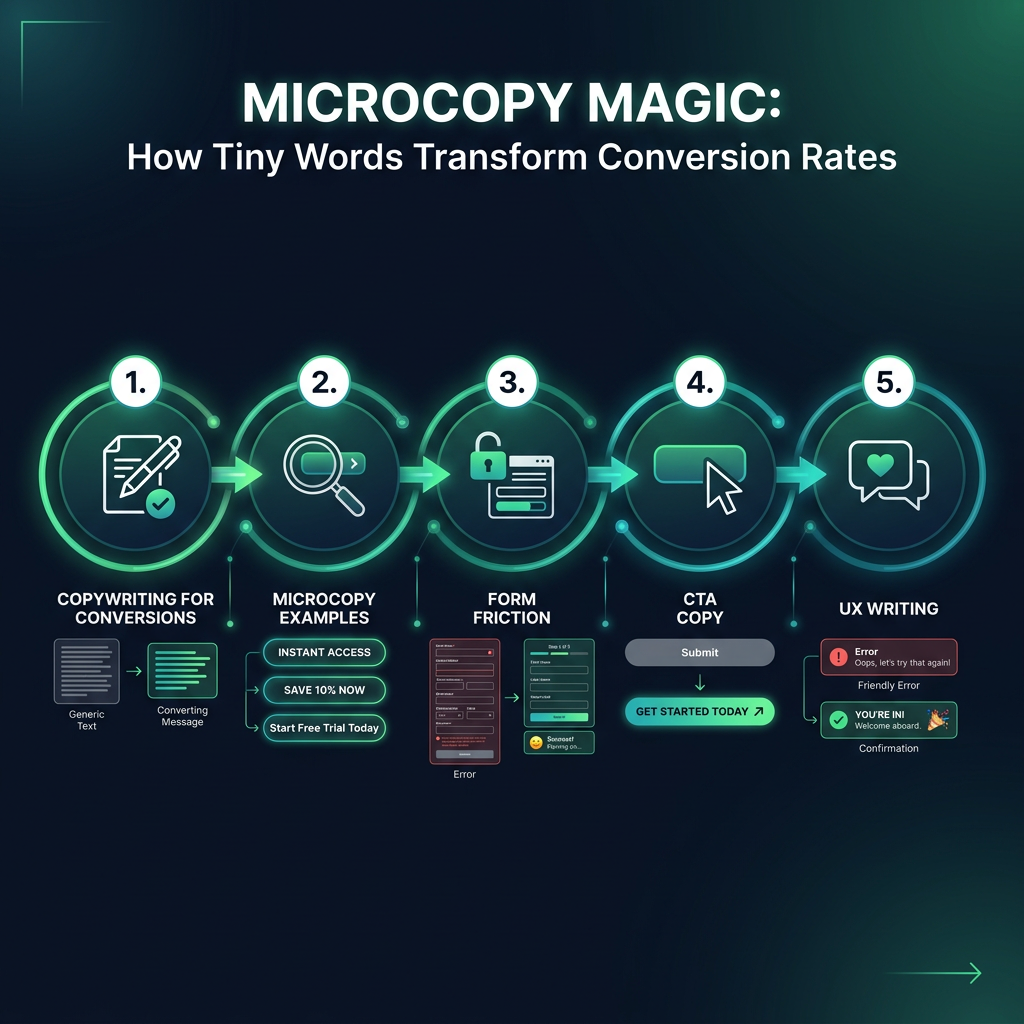
    Microcopy Magic: How Tiny Words Transform Conversion Rates infographic showing copywriting for conversions, microcopy examples, form friction for digital marketing
    EyeCaptain
    eyecaptain.io

    2. Provide Clear and Specific Guidance

    Vague messages like "Error" or "Incorrect Field" cause confusion. Be specific. Tell users exactly what the problem is and, more importantly, how to fix it. Research from the Nielsen Norman Group shows that specific, user-friendly error messages can significantly reduce user frustration and improve task success rates.

    3. Use Natural, Conversational Language

    You are having a conversation with your user, not writing a formal document. Avoid robotic or overly formal language. Ask yourself if you would say "Incorrect input detected" to a friend. You would probably say something more like, "It looks like there might be a typo in your email address." Keep your language simple and human.

    Inspiring Microcopy Examples That Boost Conversions

    To see excellent UX writing in practice, look at companies like Mailchimp. Their error messages and success notifications are well-known for their helpful and friendly tone, turning a moment of potential frustration into a positive brand interaction.

    Stripe is another great example. Its entire checkout process, from form field labels to CTA copy, is like a simple, smooth conversation designed to eliminate friction and build confidence. The text on their "Pay" button is often dynamic, showing the exact amount to reassure the user.

    Microcopy Magic: How Tiny Words Transform Conversion Rates infographic showing copywriting for conversions, microcopy examples, form friction for digital marketing
    EyeCaptain
    eyecaptain.io

    This level of detail is intentional. It is a carefully designed experience, built one word at a time. The true value of copywriting for conversions is found in these small details. Your microcopy has the power to turn confusion into clarity and frustration into a smooth process. When your users feel understood and guided, they are more likely to complete their goals and convert.

    Enjoyed this article?

    Join 1,500+ professionals getting weekly CRO & UX tips

    🎁 Bonus: Weekly CRO insights + exclusive resources

    No spam. Unsubscribe anytime.

    🚀 Boost Your Conversion Rate with EyeCaptain

    EyeCaptain is an AI-powered CRO & UX analysis tool that automatically scans your pages, identifies UX issues, and gives you actionable optimization suggestions to increase conversions. Try it for free, no card, no commitment.

    Free CRO Audit

    Did you find this helpful?

    Share it with someone who might find it useful.

    Be the first to learn CRO secrets

    Actionable tips, case studies & early access to new AI tools. Weekly in your inbox.

    1,200+ marketers trust us

    Cookie Settings

    We use cookies to improve your experience.