Infographic για digital marketing - οπτικοποίηση εννοιών CRO psychology, neuromarketing, cognitive biases
    eyecaptain.io

    Marketing Psychology 2026: 7 Biases That Convert

    Use marketing psychology in 2026 to improve conversions. Learn seven cognitive biases that shape trust, urgency, decisions, and online sales behavior.

    EyeCaptain

    Dimitris

    23 February 2026

    8 min read
    164 views
    CRO psychologyneuromarketingcognitive biasespersuasion techniqueswebsite optimization

    Understanding CRO psychology is the key to effective website optimization, transforming your site from a simple page into a persuasive digital experience. By leveraging principles of human behavior and understanding common cognitive biases, you can apply powerful persuasion techniques that significantly boost conversions and create a seamless journey for your users.

    Understanding Consumer Psychology and Buying Decisions

    At its core, understanding consumer psychology is not a mysterious practice; it is the science of understanding the subconscious drivers of behavior. It seeks to answer why people make the decisions they do. When the Baymard Institute analyzed thousands of e-commerce sites, their findings were a crucial insight for anyone involved in website optimization.

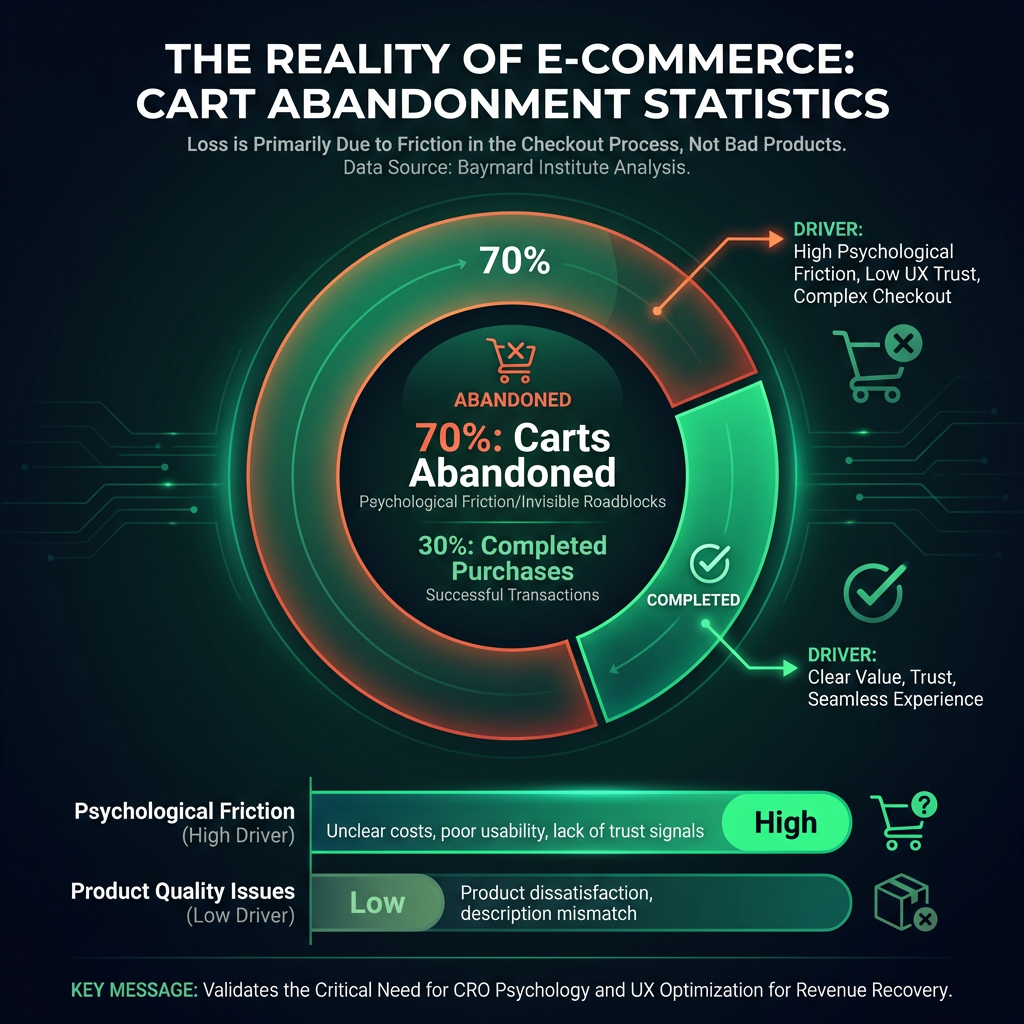
    Nearly 70% of all online shopping carts are abandoned before a purchase is completed.

    This significant statistic is not usually because the products are poor. More often, it is because small moments of psychological friction - tiny, almost invisible roadblocks in the user experience - interrupt the decision-making process and prevent the purchase.

    Applying Key Cognitive Biases in Your CRO Strategy

    Cognitive biases are mental shortcuts our brains use to make decisions quickly. By understanding these patterns, you can design a more intuitive and persuasive website experience.

    The Anchoring Effect: Shaping Price Perception

    Pricing is rarely a rational decision; it is almost entirely contextual. A classic example of the anchoring effect is when Apple launched its first smartwatch. By showcasing a high-end 10,000-price-point edition alongside standard models, the 399-price-point watch suddenly seemed incredibly reasonable - a great value, even. That is the anchoring effect in action.
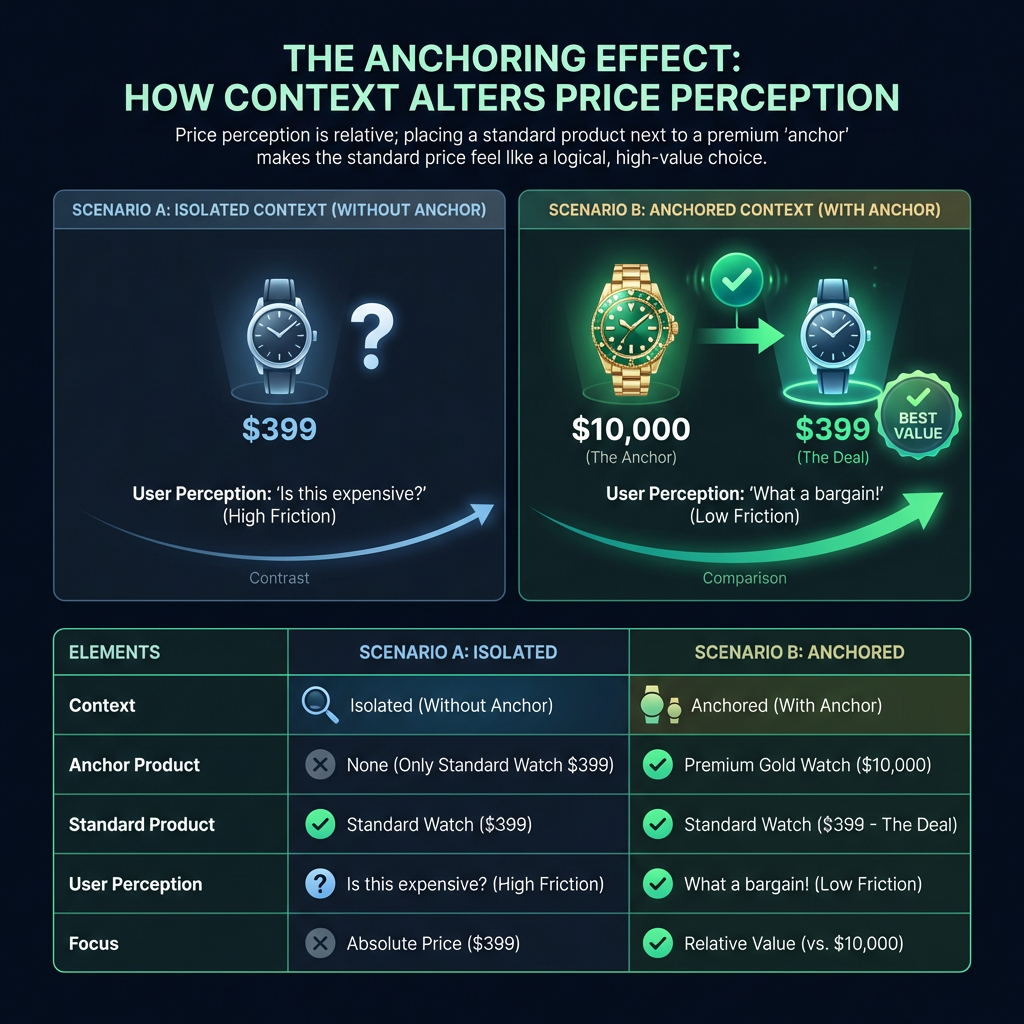

    Γράφημα σύγκρισης που απεικονίζει το 'Φαινόμενο της Άγκυρας' (Anchoring Effect) στο ψηφιακό μάρκετινγκ. Η αριστερή πλευρά δείχνει ένα έξυπνο ρολόι 399$ μόνο του, προκαλώντας αβεβαιότητα στον χρήστη. Η δεξιά πλευρά παρουσιάζει το ίδιο ρολόι δίπλα σε ένα μοντέλο 10.000$, κάνοντας το φθηνότερο να φαίνεται ως μεγάλη ευκαιρία. Το οπτικό αυτό παράδειγμα εξηγεί πώς η ψυχολογία των τιμών και η σύγκριση προϊόντων επηρεάζουν θετικά τις αποφάσεις αγοράς.
    EyeCaptain
    eyecaptain.io

    Our brains require a reference point to evaluate value. We instinctively search for a comparison to judge a price. A 500-unit product might feel expensive in isolation, but placing it next to a 5,000-unit alternative completely reframes its perceived value. This is a persuasion technique high-end brands have mastered for decades.

    Social Proof: Building Trust with Persuasion Techniques

    Research from the Nielsen Norman Group confirms a fundamental truth of online behavior: a vast majority of consumers read online reviews before making a purchase. However, successful website optimization is not just about accumulating reviews; it is about their quality and specificity.

    Consider Airbnb's review system. The reviews are rarely just a generic "nice place." They are short stories: "Cozy apartment with an amazing view of the sunset." This type of specific, user-generated content creates a vivid mental picture and forges an emotional connection, making it far more powerful than a simple five-star rating alone.

    Using Scarcity and Loss Aversion for Website Optimization

    A core principle of human psychology is that the pain of losing something is a more powerful motivator than the pleasure of gaining something of equal value. This is known as loss aversion. Global travel sites like Booking.com provide a masterclass in applying this principle through scarcity.

    You have likely seen their tactics, which are prime examples of CRO psychology:

    • "Only 2 rooms left at this price!"
    • "In high demand! 5 other people are looking at this."
    • "Someone just booked this hotel 5 minutes ago."
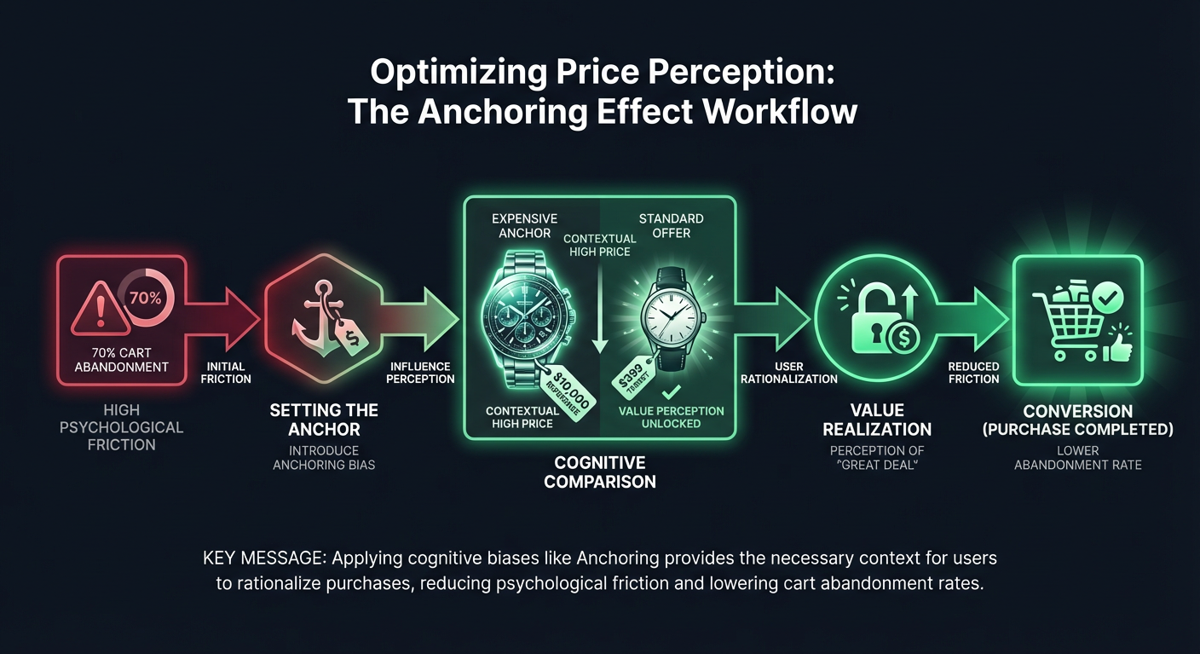
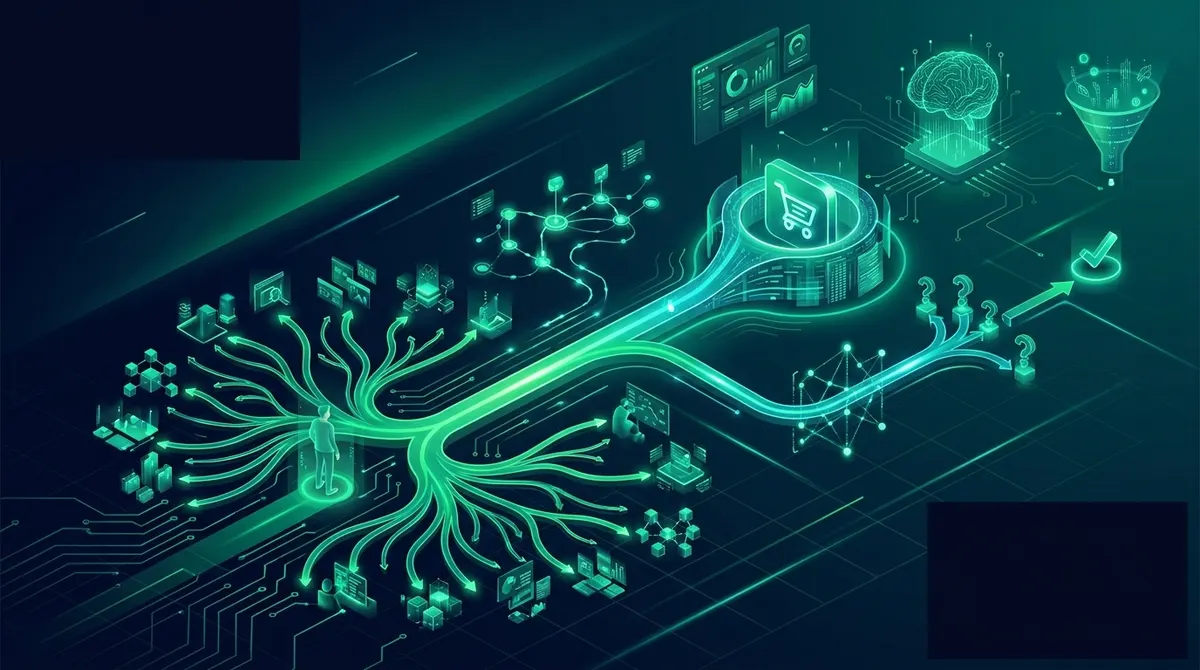
    Διάγραμμα ροής διαδικασίας που απεικονίζει τη στρατηγική του Anchoring Effect στο CRO. Τα βήματα δείχνουν τη μετάβαση από το υψηλό ποσοστό εγκατάλειψης καλαθιού (70%) στην ολοκλήρωση της αγοράς, μέσω της ψυχολογικής σύγκρισης τιμών. Το γραφικό εξηγεί πώς η προβολή μιας υψηλής τιμής ως σημείο αναφοράς κάνει το τελικό προϊόν να φαίνεται πιο οικονομικό.
    EyeCaptain
    eyecaptain.io

    These notifications create a sense of urgency and tap into the fundamental fear of missing out (FOMO). This is not about manipulation; it is intelligent design that leverages a basic human instinct to encourage decisive action.

    EyeCaptainEyeCaptain
    97%
    Conversions Booster

    Your visitors leave without converting

    Most websites lose 97% of their traffic without a single conversion. Our AI scans 200+ CRO elements to find exactly where visitors drop off.

    Hero CTA missing

    Advanced CRO Psychology: Building Deeper Connections

    Beyond the basics, you can use more nuanced psychological principles to create a website that truly resonates with your audience and reinforces their choices.

    Confirmation Bias: Reinforcing Customer Identity

    People are not actively looking to have their minds changed. Instead, they seek information that validates their existing beliefs and decisions. Amazon's recommendation engine is a powerful example of capitalizing on this confirmation bias.

    When a tech enthusiast sees the "Customers who bought this also bought..." section, it is more than just an upsell. It is a validation of their identity. It reinforces their self-perception as someone with good taste in technology. This persuasion technique makes customers feel understood and seen, not just sold to.

    The Reciprocity Principle: Building Trust by Giving Value

    Why do so many successful companies offer valuable resources for free? It is a strategic application of the reciprocity principle. HubSpot, for example, has built a global business by providing exceptional free tools, in-depth guides, and informative articles.

    When you provide genuine value with no immediate expectation of return, it triggers a natural human desire to give something back. This is not about creating obligation; it is about fostering appreciation and building a strong foundation of trust, which is essential for long-term customer relationships.

    Στατιστικό διάγραμμα κυκλικής μορφής που δείχνει τα αποτελέσματα έρευνας του Ινστιτούτου Baymard σχετικά με τις ηλεκτρονικές αγορές. Το γράφημα τονίζει με έντονο χρώμα ότι σχεδόν το 70% των καλαθιών αγορών εγκαταλείπονται πριν την πληρωμή, ενώ μόνο το 30% ολοκληρώνεται. Το οπτικό αυτό στοιχείο υπογραμμίζει τη σημασία της ψυχολογίας στο CRO, δείχνοντας ότι η ψυχολογική τριβή είναι η κύρια αιτία απώλειας πωλήσεων.
    EyeCaptain
    eyecaptain.io

    Cognitive Load: Why Simplicity Drives Conversions

    Presenting too many choices can overwhelm users, leading to decision paralysis and reducing your conversion rates. This is known as high cognitive load. Spotify's curated playlists and Netflix's clean, simple interface are brilliant examples of reducing this friction.

    Instead of overwhelming you with their entire libraries, they guide you toward relevant content, making the choice feel easy and personal. Simplicity in design is not just an aesthetic trend; it is a powerful psychological strategy for effective website optimization.

    Putting It All Together: A Holistic Approach to Persuasion

    Effective CRO psychology integrates all these elements and more. The psychology of color, the use of micro-animations for feedback, and the emotional power of brand storytelling are all persuasion techniques you can use to create a more human and effective experience.

    The best marketers and designers are not just building websites; they are architecting experiences that speak directly to the subconscious mind where most decisions are made. This is not about being manipulative. It is about deeply understanding people to create better products and experiences that solve a psychological need first and a functional one second.

    Enjoyed this article?

    Join 1,500+ professionals getting weekly CRO & UX tips

    🎁 Bonus: Weekly CRO insights + exclusive resources

    No spam. Unsubscribe anytime.

    🚀 Boost Your Conversion Rate with EyeCaptain

    EyeCaptain is an AI-powered CRO & UX analysis tool that automatically scans your pages, identifies UX issues, and gives you actionable optimization suggestions to increase conversions. Try it for free, no card, no commitment.

    Free CRO Audit

    Did you find this helpful?

    Share it with someone who might find it useful.

    Be the first to learn CRO secrets

    Actionable tips, case studies & early access to new AI tools. Weekly in your inbox.

    1,200+ marketers trust us

    Cookie Settings

    We use cookies to improve your experience.