Loss Aversion Marketing: How Fear of Missing Out Converts Hesitant Buyers
Struggling to convert hesitant customers? Discover psychological triggers that transform fence-sitters into eager buyers without feeling manipulative.
Dimitris
07 June 2026
3 min read
370 views
loss aversioncognitive bias in marketingconsumer psychologyneuromarketing website design
Your potential customers are terrified of making a wrong decision. More than they're excited about making the right one. This isn't just psychology — it's a proven marketing superpower called loss aversion.
HEADING: What is Loss Aversion and Why Does It Work?
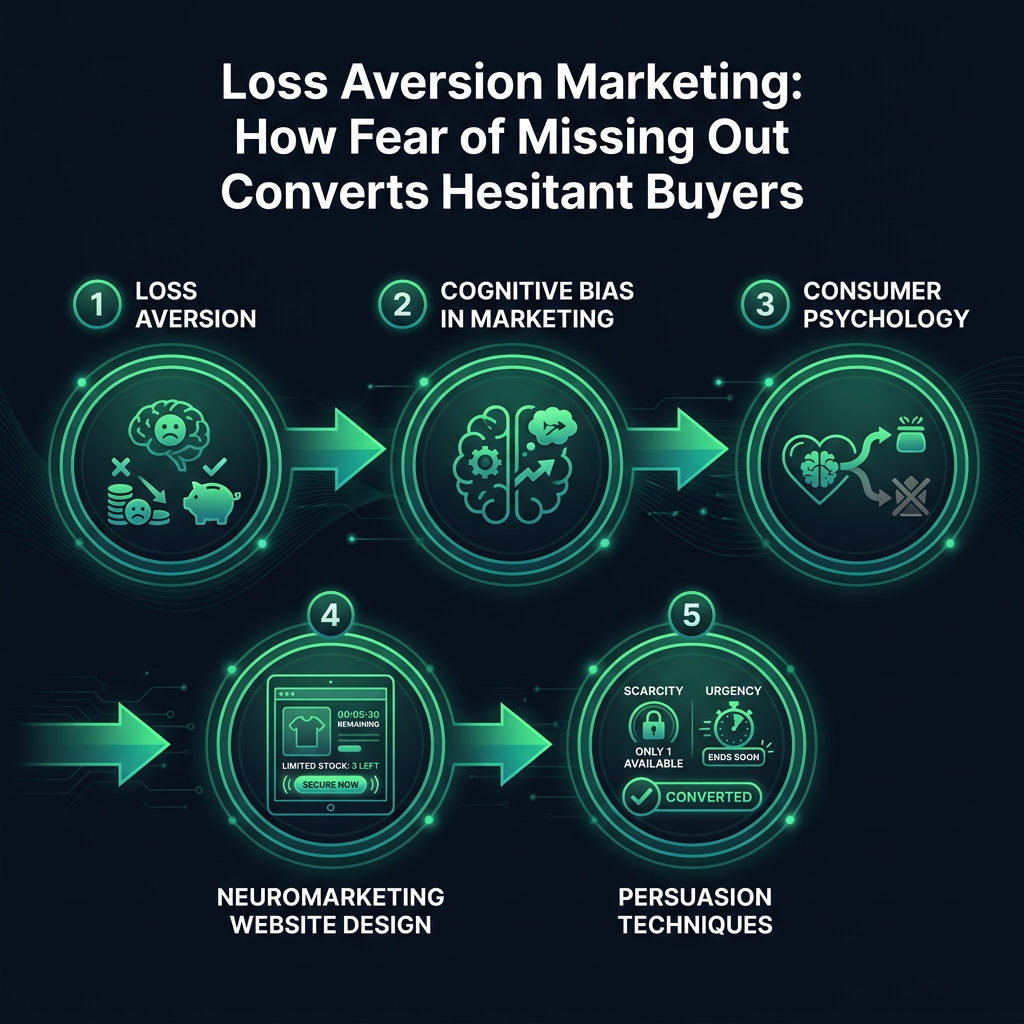
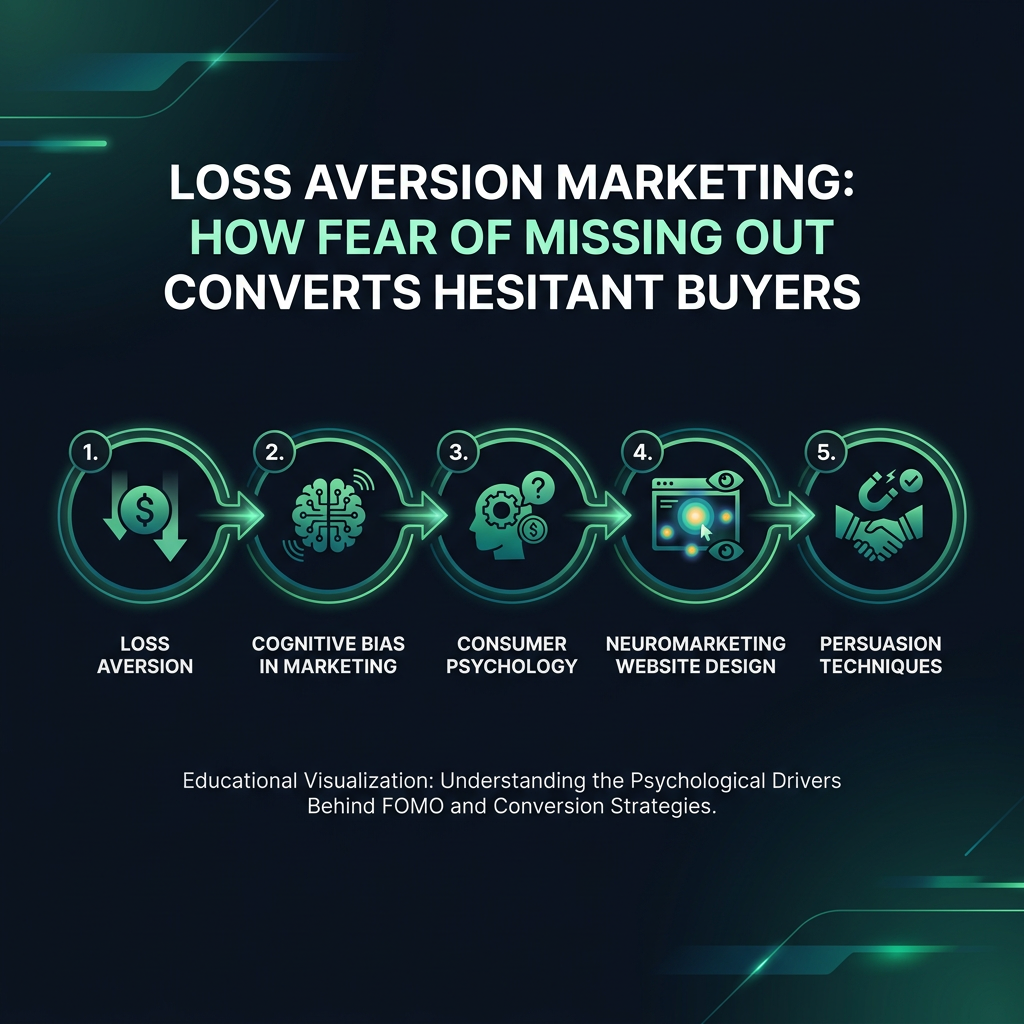
Loss aversion is a cognitive bias where people feel the pain of losing something more intensely than the pleasure of gaining an equivalent value. Researchers have found humans feel losses about 2-3 times more powerfully than gains. Imagine losing $50 feels worse than winning $50 feels good.
This psychological phenomenon explains why people hesitate. They're not calculating potential benefits — they're desperately avoiding potential risks.
HEADING: Ethical Psychological Triggers That Convert
eyecaptain.io
The key is understanding how to apply loss aversion without feeling manipulative. Three powerful strategies stand out.
Subheading: Create Genuine Scarcity
People panic when something valuable might disappear. Limited edition products, countdown timers, and exclusive offers tap directly into this primal fear. Baymard Institute studies show that 68% of online shoppers abandon carts — many due to hesitation about 'missing out'.
Subheading: Highlight Potential Losses, Not Just Gains
Instead of saying 'Buy now and save $50', frame it as 'Don't lose your chance to save $50'. The subtle language shift triggers an immediate psychological response. Your brain processes potential loss as a threat, creating urgency.
HEADING: Implementing Loss Aversion Without Feeling Sleazy
eyecaptain.io
The most effective loss aversion strategies feel helpful, not manipulative. Show customers exactly what they'll miss by not taking action. Use clear, empathetic language that demonstrates genuine value.
NNGroup research confirms that transparent communication increases trust. When you explain potential losses authentically — lost time, missed opportunities, avoided frustrations — people appreciate your honesty.
Most marketers get loss aversion wrong. They create fake urgency. They manufacture false scarcity. The real magic happens when you genuinely help people avoid real problems.
Your customers don't want to be tricked. They want to be understood. They want someone who speaks their language and recognizes their deepest hesitations.
EyeCaptain
88%
Conversions Booster
UX bugs are silently killing your revenue
88% of users never come back after a bad experience. Our AI detects CTA hierarchy issues, mobile gaps, and cognitive overload patterns.
EyeCaptain is an AI-powered CRO & UX analysis tool that automatically scans your pages, identifies UX issues, and gives you actionable optimization suggestions to increase conversions. Try it for free, no card, no commitment.


 EyeCaptain