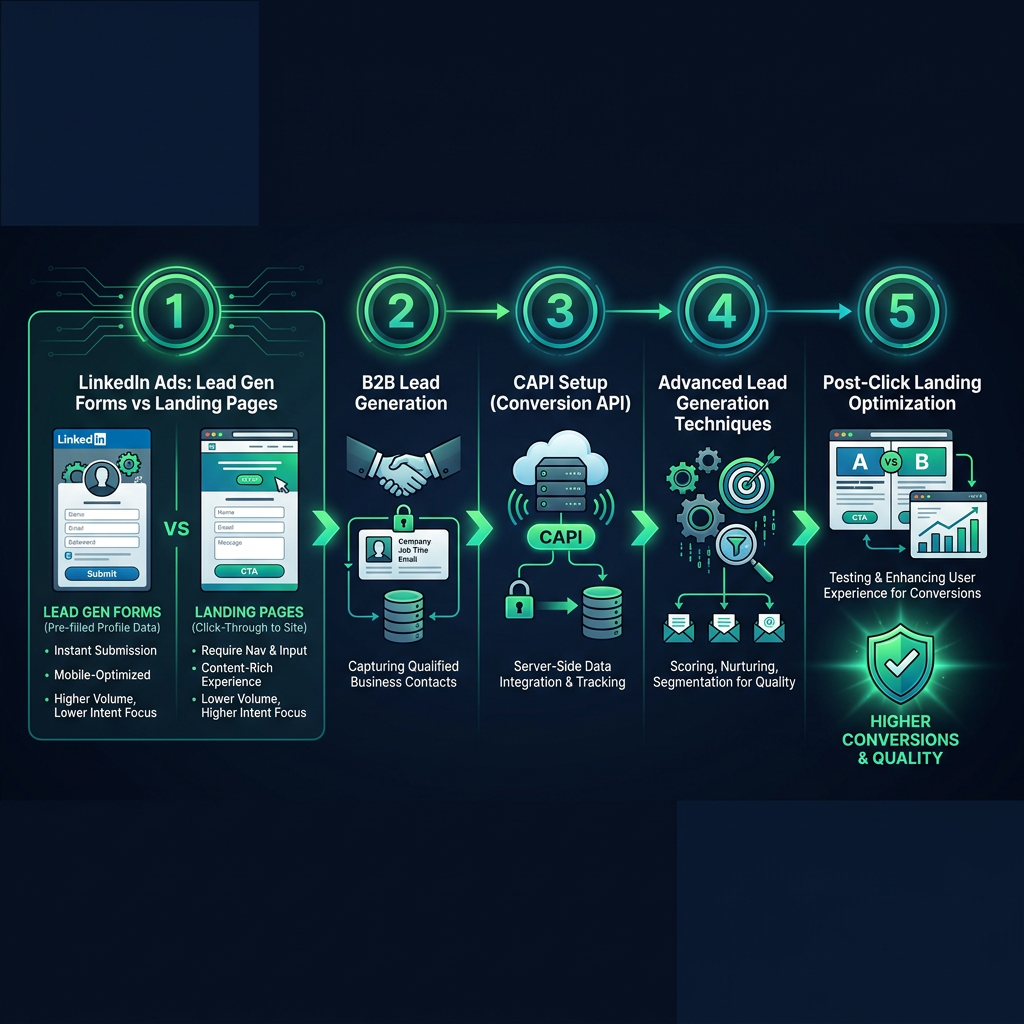

Struggling to decide between a LinkedIn Ads lead form vs a landing page for your campaigns? If you're tired of investing your budget into LinkedIn only to attract unqualified leads, you're not alone. The key to successful B2B lead generation isn't just about getting clicks; it's about attracting high-intent prospects who are genuinely interested in your solution. This guide breaks down which method to use and introduces advanced techniques to turn your advertising spend into real revenue.
LinkedIn Ads Lead Form vs. Landing Page: Which Wins for B2B Lead Generation?
The debate between using LinkedIn's native lead forms and directing traffic to a dedicated landing page is central to optimizing any campaign. While one offers speed, the other delivers quality. Understanding the trade-offs is crucial for success.
The Case for LinkedIn Lead Gen Forms: Speed and Simplicity
On the surface, LinkedIn's native lead generation forms seem like the perfect tool. They are streamlined, easy to set up, and pre-populate with a user's profile data. This seamless experience allows someone to express interest with just a couple of clicks, dramatically reducing friction.
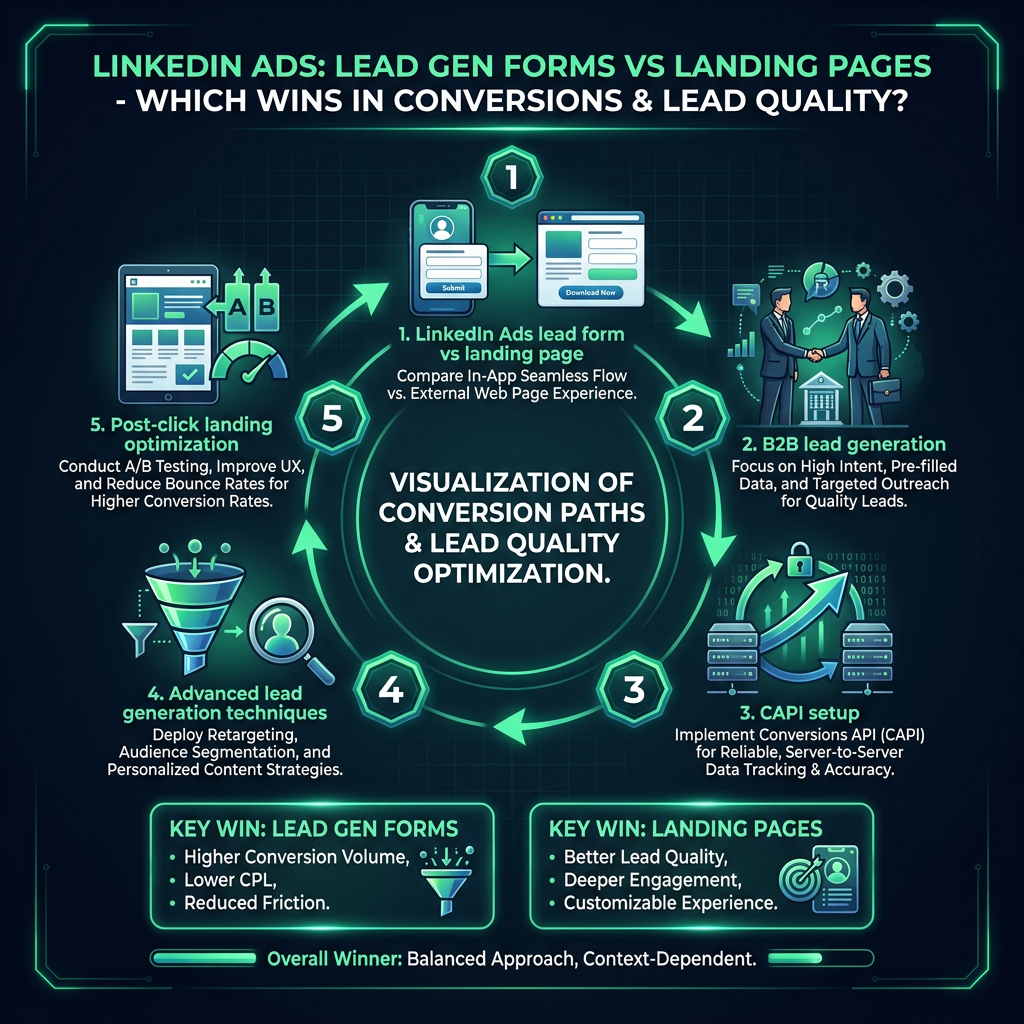

Studies show that pre-filled forms can convert at a much higher rate than traditional forms. The convenience is undeniable, but speed isn't the only metric that matters in effective B2B lead generation.
The core benefit here is a higher conversion volume. By making it incredibly easy to sign up, you lower the barrier to entry, which often results in more leads in your CRM. The critical question, however, remains: what is the quality of those leads?
Why Landing Pages Drive Higher-Quality Leads
While lead forms win on convenience, a dedicated landing page almost always wins on lead quality. A landing page requires a user to pause. They must leave the LinkedIn platform, engage with your content, understand your value proposition, and then consciously decide to fill out your form. This small amount of "positive friction" works in your favor.
- It acts as a natural filter: It effectively separates serious prospects from casual browsers who are not genuinely interested.
- It demonstrates higher intent: A person willing to spend an extra minute reading your page and manually entering their information has shown a significantly higher level of interest.
- It provides more context: You have more space to communicate your offer, provide social proof, and answer potential questions, which better qualifies the prospect before they ever reach your sales team.
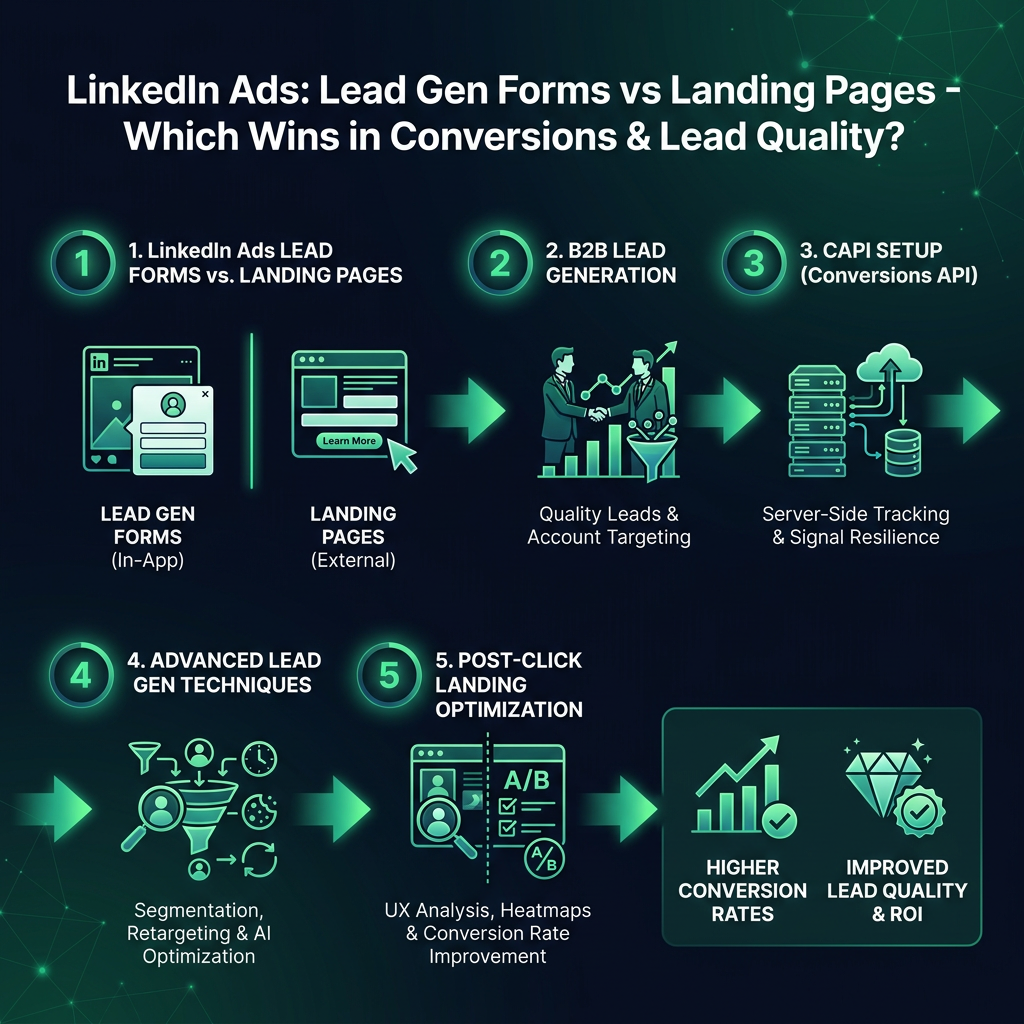
This isn't just theory. Research consistently shows that leads who convert on a full landing page have higher engagement rates and are more likely to become customers because they've invested time and mental energy in the decision.