
Is your landing page failing to convert visitors? Effective landing page optimization is the key to turning traffic into conversions, but a poor user experience can cause visitors to leave in seconds. Learning how to optimize a landing page isn't just about design; it's about understanding user psychology and implementing proven conversion rate optimization (CRO) strategies. This guide covers essential landing page best practices to help you generate more leads and sales.
Understanding User Psychology for Landing Page CRO
To truly master landing page optimization, you must understand your visitor's perspective. The best-performing landing pages don't just look good; they anticipate user needs and solve problems instantly. It's less about complex design and more about creating a clear, intuitive journey for the user to improve conversion rates.
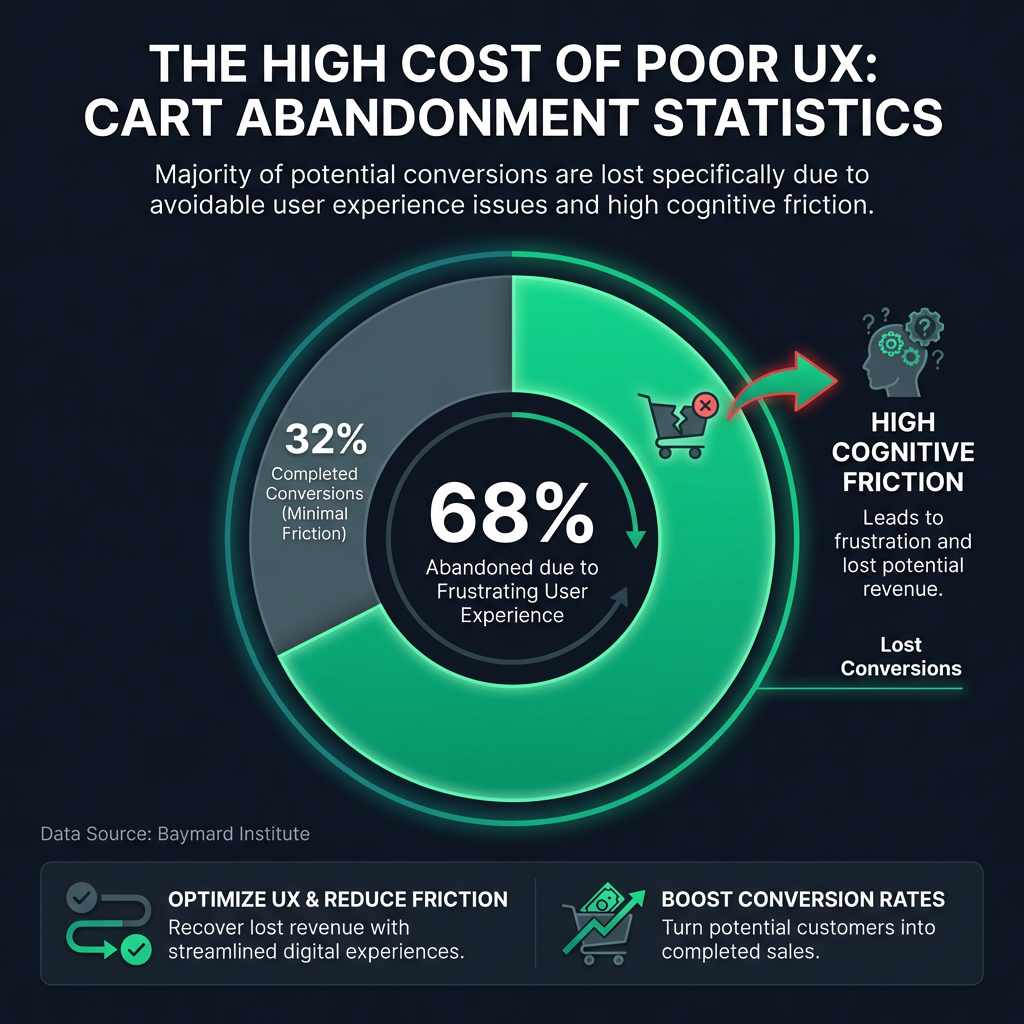
Research from the Baymard Institute reveals a staggering 68% of e-commerce shopping carts are abandoned due to a frustrating user experience. This isn't just a technical issue; it's a failure to meet user expectations.
Reduce Cognitive Friction to Improve Conversion Rates
Every element on your page - from the headline and images to the form fields - requires mental effort from your visitor. This is known as cognitive friction. Your goal in landing page CRO is to minimize this friction at every step.
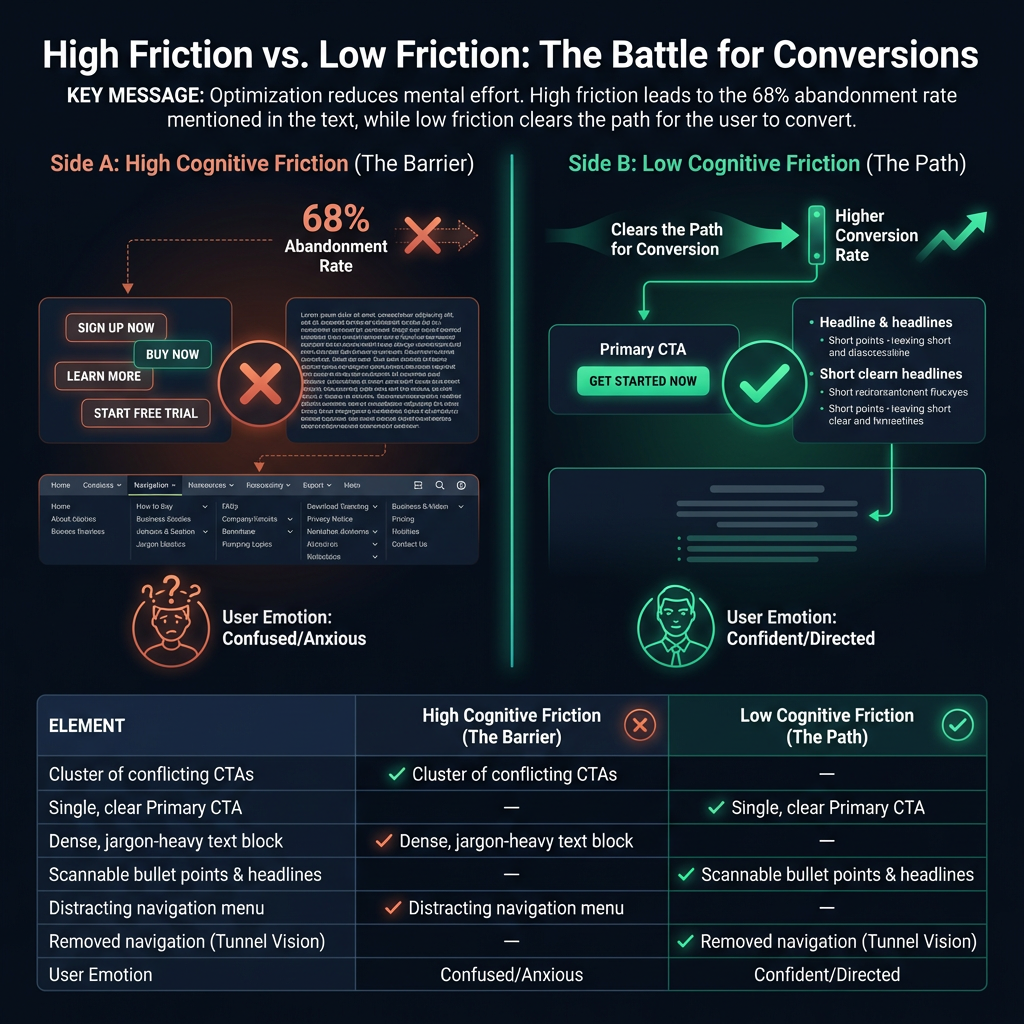

High friction leads to confusion and frustration, causing users to abandon your page. A low-friction experience, on the other hand, makes your visitor feel confident and understood, creating a direct path to your call-to-action.
How to Optimize a Landing Page: Core Elements for Success
A well-structured page guides the user logically from their problem to your solution. Here are the foundational elements you need to get right for effective landing page conversion optimization.
Craft a Compelling Value Proposition
What is the single most important promise you are making to your visitor? Your value proposition must be clear, concise, and compelling. Avoid generic statements and focus on a tangible outcome. Consider the difference: