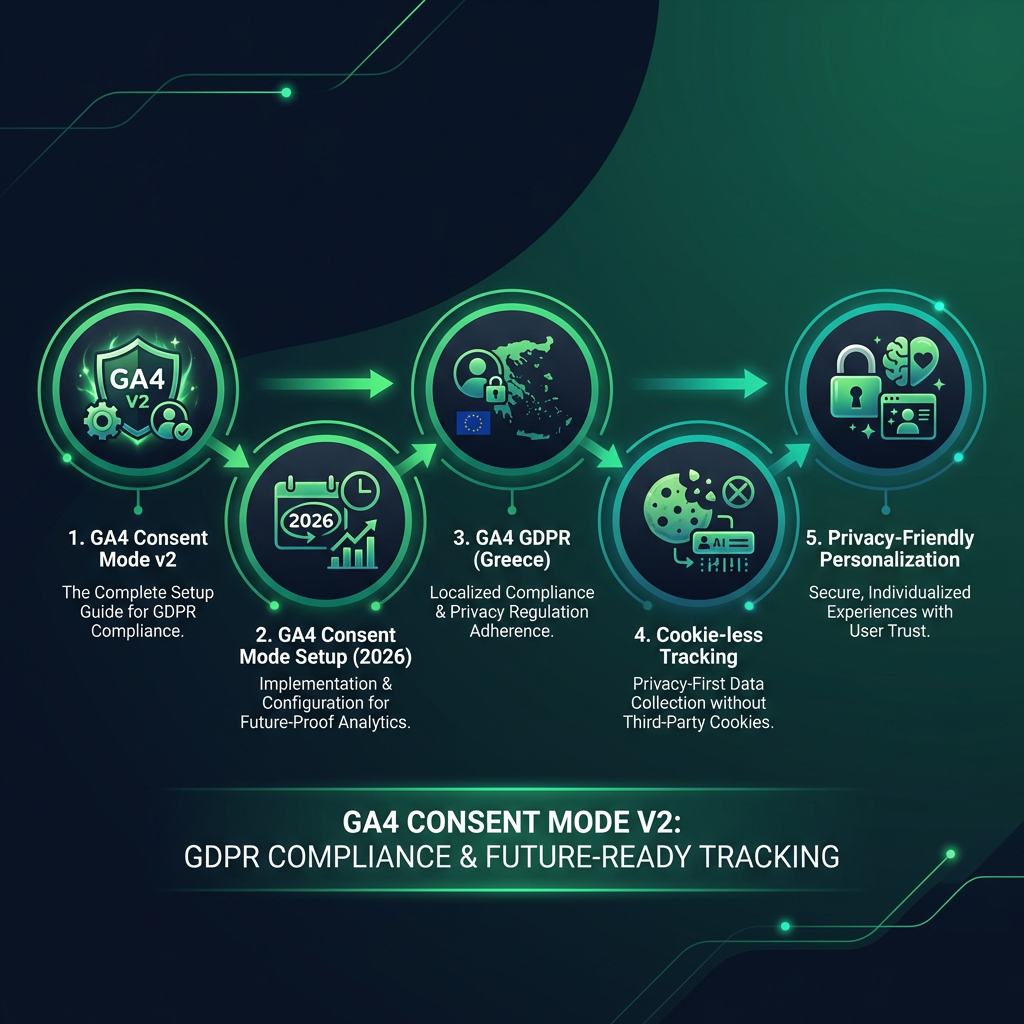

What is GA4 Consent Mode v2 and Why It Matters for Your Business
Your website's analytics are undergoing a significant evolution in privacy. Google's GA4 Consent Mode v2 is more than a simple update - it represents a fundamental shift in how you can approach user data collection.
Imagine losing a significant portion of your analytics data as more users decline cookies. This is a growing challenge for marketers worldwide. Consent Mode v2 is Google's answer to bridging these data gaps.
This new framework enables you to gather essential insights while respecting user privacy choices. The focus isn't on collecting less data, but on collecting more intelligent data through modeling.
How GA4 Consent Mode v2 Works
With traditional tracking, data collection stops when a user rejects cookies. Consent Mode v2 introduces behavioral modeling. When a user declines consent for analytics cookies, Google uses machine learning to model the behavior of these users based on the behavior of similar users who did consent. This helps to fill in the gaps in your data.


Research from the globally recognized Baymard Institute indicates that a substantial number of users actively limit or block tracking. Without a solution like intelligent modeling, you risk making decisions with incomplete data.
Implementing Consent Mode v2 for Global Privacy Compliance
A successful implementation of Consent Mode v2 is both a technical task and a strategic priority. It requires a thoughtful approach to user privacy. Here are the key steps to ensure you implement it correctly:
First, review your Consent Management Platform (CMP). Ensure it is compatible with GA4 Consent Mode v2 and can send the necessary consent signals. Your CMP must accurately communicate user choices to Google's tags.
Next, configure your Google Tag settings. You will need to adjust how your tags fire based on the consent given by the user. The goal is to achieve granular control over data collection in a way that is seamless for the user.
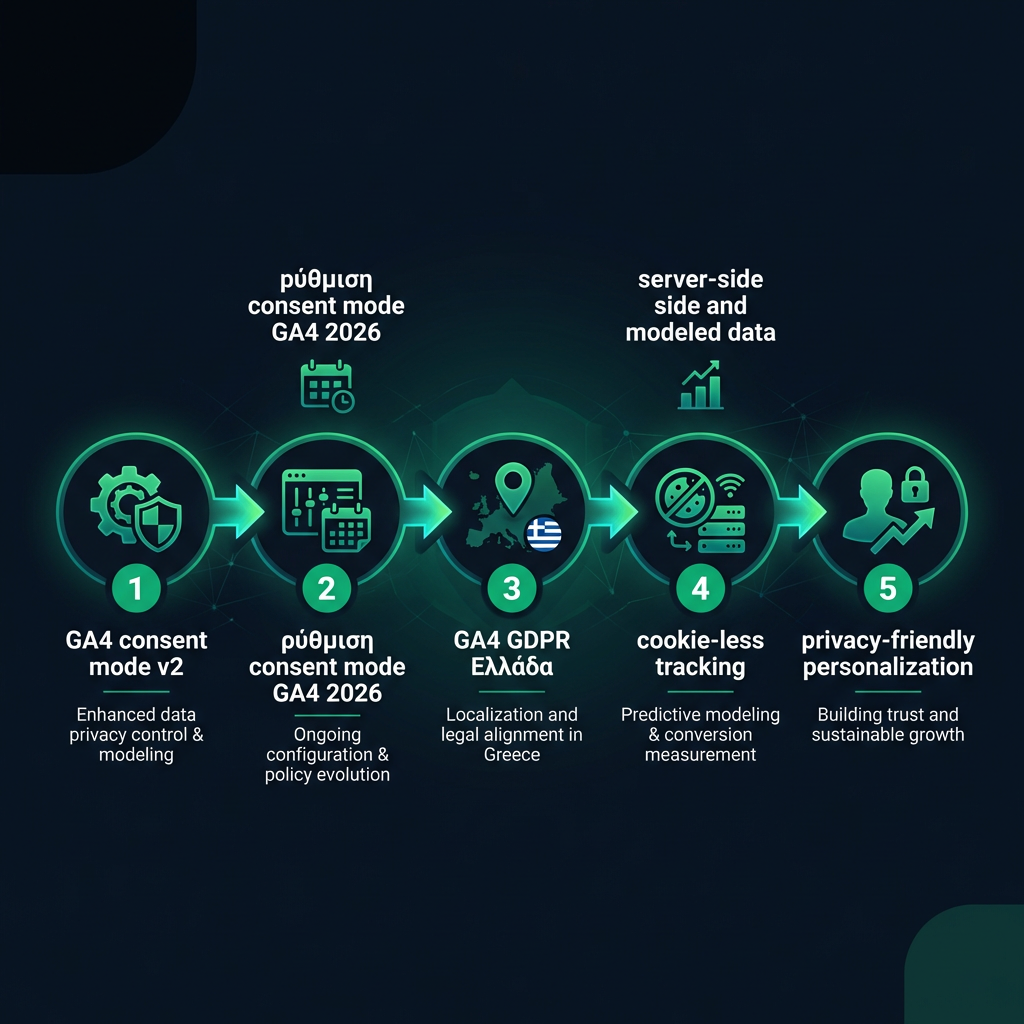
A key recommendation from privacy experts is to make your consent options clear and transparent. Users should easily understand what they are consenting to. Avoid "dark patterns" or confusing designs that might mislead users into giving consent.