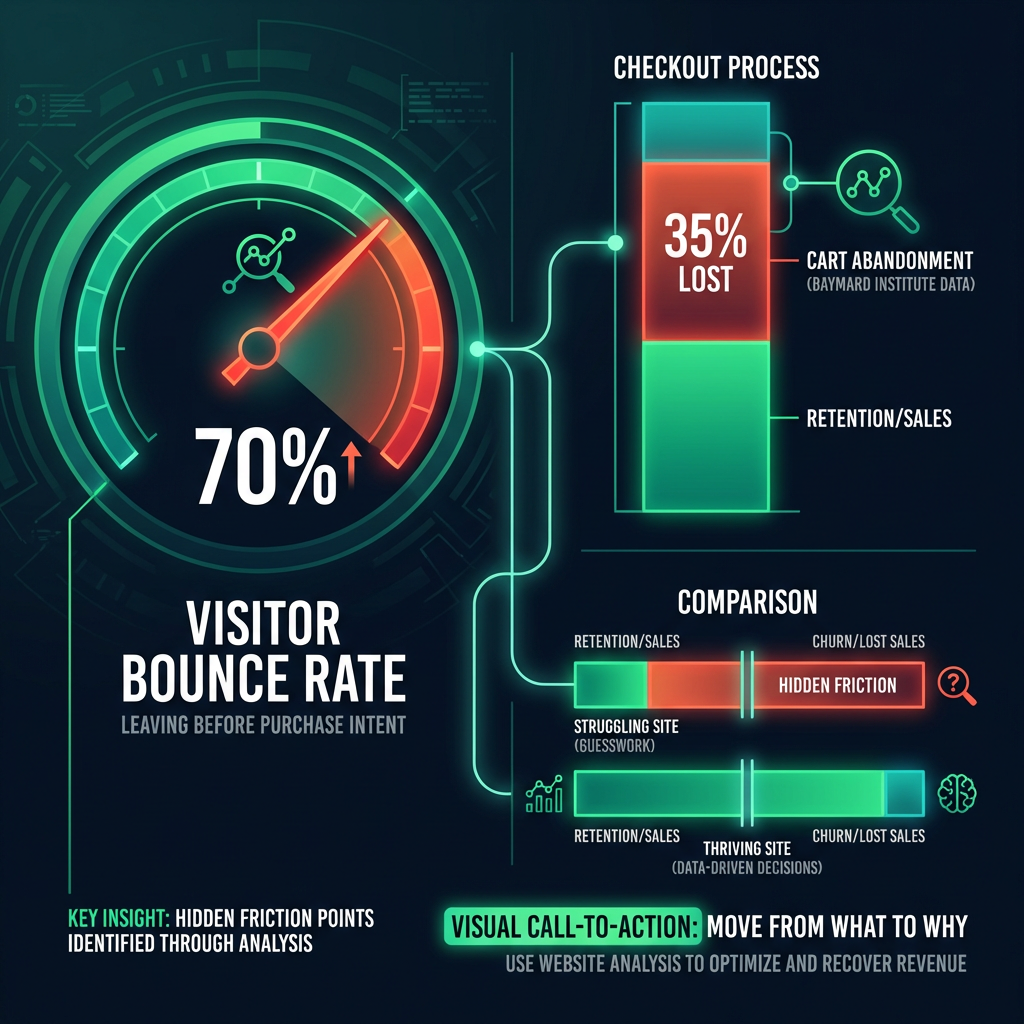

Is your website failing to convert visitors into customers, leaving you wondering why you're losing revenue? A comprehensive website analysis is the first step to uncovering the hidden friction points that cause a staggering 70% of potential customers to leave before they buy. This process goes beyond simple metrics, offering a clear path toward meaningful website optimization and a significant increase in your bottom line.
Understanding the True Goal of Website Analysis
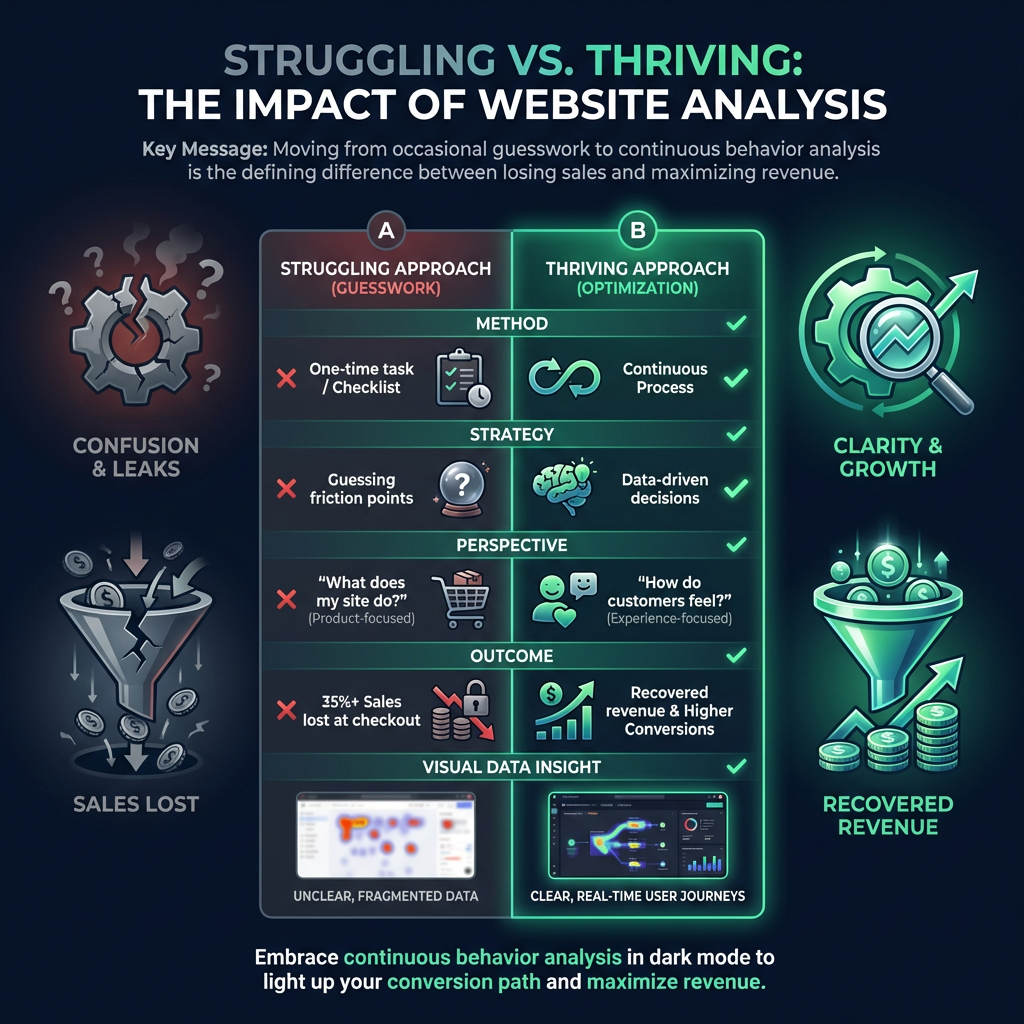
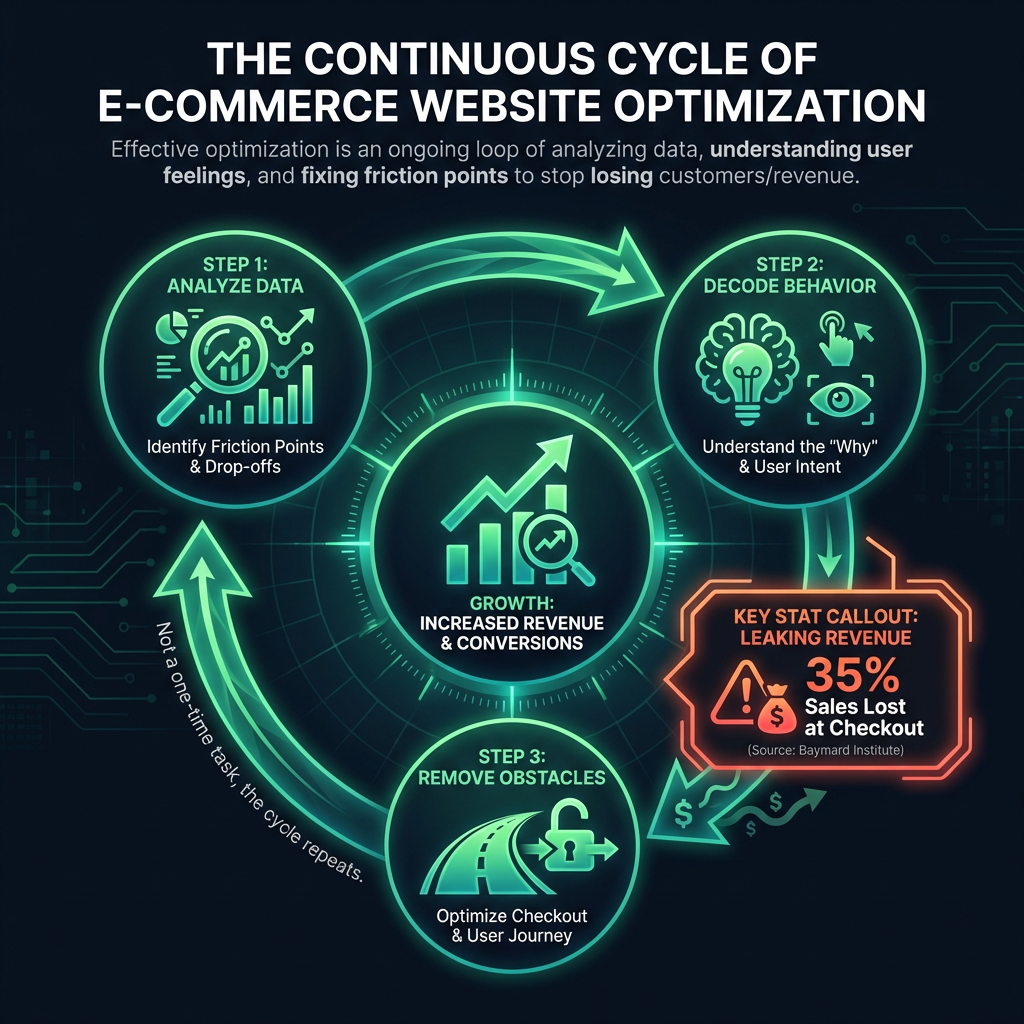
Effective website analysis is not a one-time task to check off a list; it's a continuous process of understanding your users and removing the obstacles they face. Industry leaders like Amazon invest millions into this because they know a critical secret: your conversion rate is a direct reflection of your customer understanding.
When you commit to ongoing analysis, you stop guessing and start making data-driven decisions that directly impact your business. It's about shifting your perspective from "what does my site do?" to "how do my customers feel when they use my site?".
Decoding User Behavior to Prevent Lost Sales

The data on user behavior can be alarming, but understanding it is the first step toward a solution. The key isn't just knowing what users do, but why they do it.
Research from the Baymard Institute shows that the average online store loses over 35% of its sales during the checkout process alone. These aren't lost leads; they are people who were ready to give you money but found the process too difficult.
The difference between a struggling e-commerce site and a thriving one is an obsession with analyzing and improving the user journey. It's rarely about your products; it's almost always about the experience of buying them.
The Process of Effective Website Optimization
To truly optimize your website, you need a multi-faceted approach that combines different tools and perspectives. Relying on a single source of data will only give you part of the picture. The goal is to turn every invisible roadblock into a smooth path to purchase.
A complete toolkit for effective website optimization includes:
- Heat Mapping: Visually see where users click, move, and scroll. This often reveals that your most important call-to-action buttons are being ignored.
- Session Recordings: Watch anonymous recordings of real user sessions. It's like looking over their shoulder to see exactly where they get stuck, confused, or frustrated.
- A/B Testing: Test changes - from a different button color to a simplified form - to see what actually improves user behavior and conversions.
Balancing Data with Human Insight
It is crucial to combine both quantitative and qualitative data. Think of it this way: numbers tell you what is happening, but people tell you why it's happening.