
If your website isn't effectively turning visitors into customers, you are missing out on potential revenue. This is where conversion rate optimization (CRO) comes into play - a powerful, data-driven strategy designed to increase the percentage of users who take a desired action on your site. This guide explores what CRO is, how it enhances your marketing efforts, and how you can start improving your site's performance today.
What is CRO? Understanding Conversion Rate Optimization
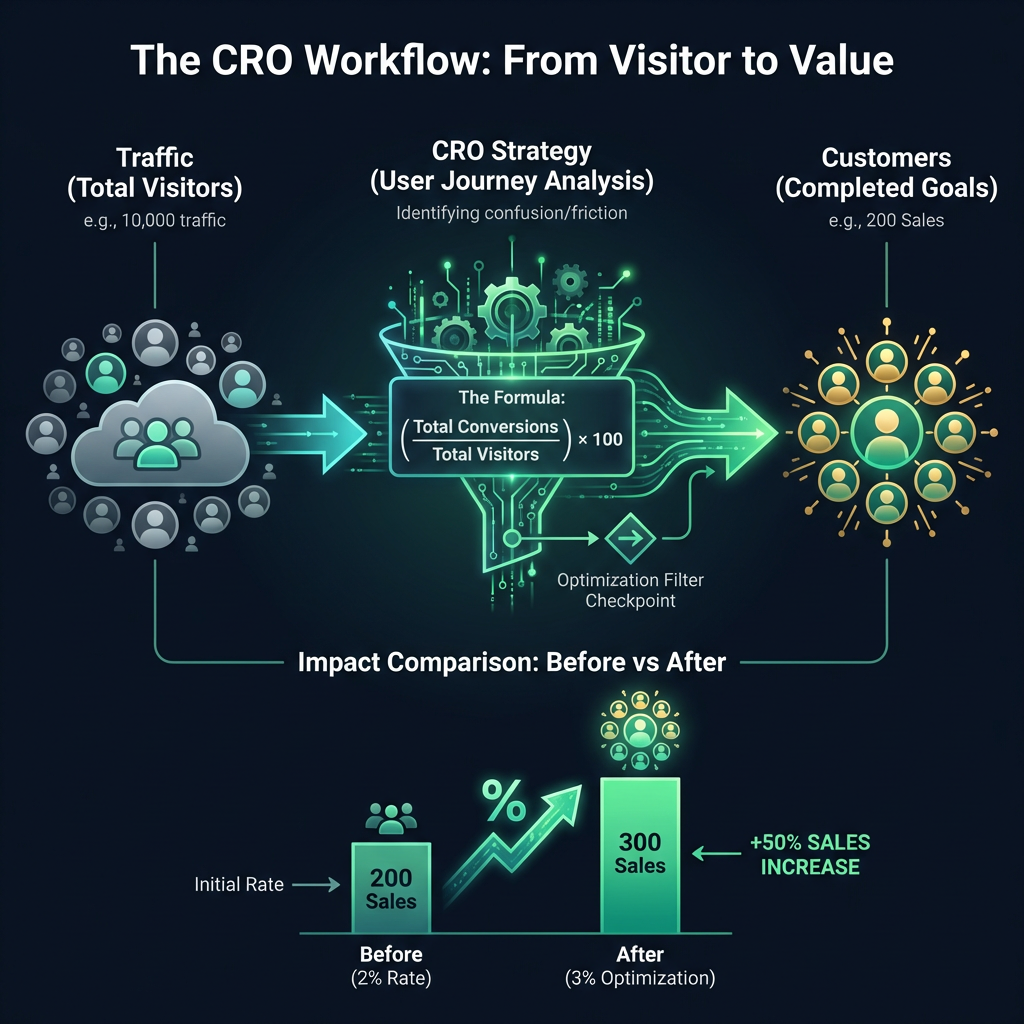
At its core, conversion rate optimization, or CRO, is the systematic process of improving your website to increase the likelihood that a visitor will complete a specific goal, such as making a purchase or signing up for a newsletter. It is not about guesswork; it is about using data to understand why users might be leaving your site without converting.
Think of the CRO process as looking at your website through your customers' eyes. It helps you pinpoint the exact spots in the user journey where people get confused, frustrated, or simply lose interest. The ultimate goal of this type of website optimization is to turn more of your casual browsers into valuable, loyal customers.

How to Calculate Conversion Rate
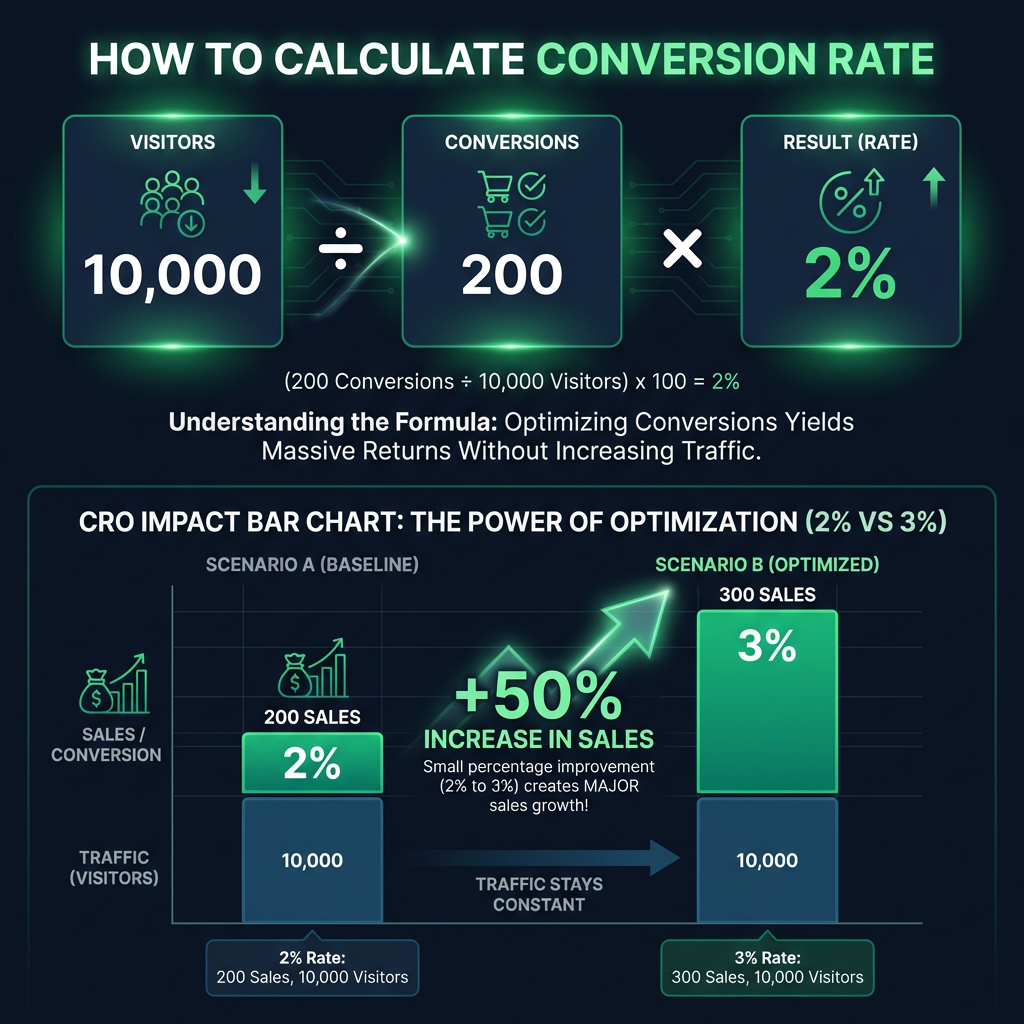
Many businesses focus heavily on driving more traffic, but a high volume of visitors means little if they do not convert. That is why your conversion rate is a critical metric. So, how do you calculate conversion rate? The formula is straightforward and universal:
(Total Number of Conversions / Total Number of Visitors) * 100 = Conversion Rate %
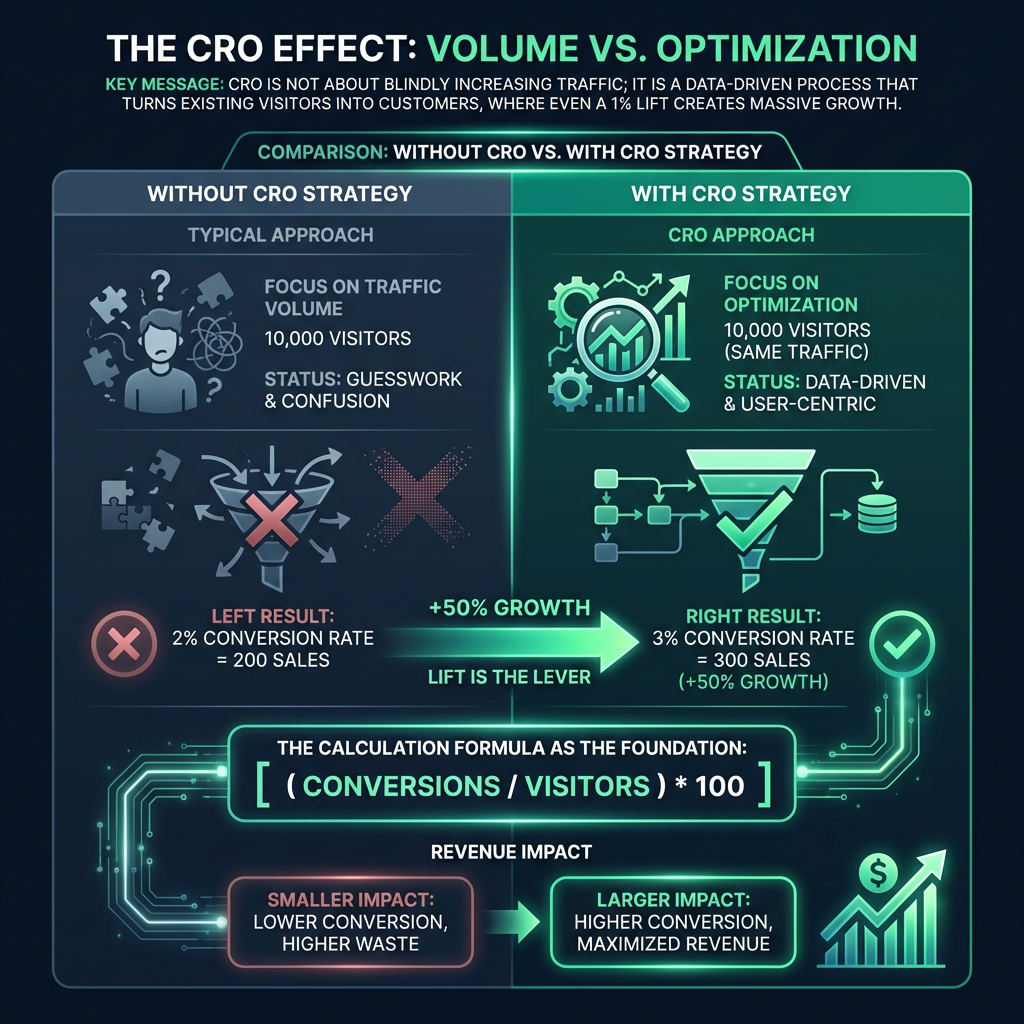
For example, if 10,000 people visit your site in a month and you generate 200 sales, your conversion rate is 2%. Even a small increase in that percentage, from 2% to 3%, represents a 50% increase in sales from the same amount of traffic, highlighting the massive impact of effective CRO.
Why CRO Marketing is More Effective Than Traditional Methods
Traditional marketing can often involve investing in broad campaigns with unpredictable outcomes. CRO marketing, in contrast, is a precise, data-driven approach. It uses data, user feedback, and testing to make specific improvements that generate measurable results.
Global data supports this. Research from the Baymard Institute shows the average e-commerce site has a conversion rate of around 2-3%. However, top-performing sites often achieve rates of 5% or higher. That difference is a direct result of a dedicated focus on improving conversion rates, leading to significantly higher profits.
The Psychology Behind High-Converting Websites
A crucial element of CRO is understanding user psychology. People do not just buy products; they buy solutions to their problems and an improved experience. Your website has only a few seconds to make a positive impression and build trust.