
Infographic για digital marketing - οπτικοποίηση εννοιών στρατηγικές μείωσης εγκατάλειψης καλαθιού, cognitive bias in marketing, reduce ecommerce cart abandonment
    eyecaptain.io

    Cart Abandonment: 5 Cognitive Biases Sabotaging Your Sales (And How to Fix Them)

    Discover why customers leave without buying and the hidden psychological triggers killing your conversions. Learn 5 proven strategies to boost sales.

    EyeCaptain

    Dimitris

    30 April 2026

    4 min read
    169 views
    cognitive bias in marketingreduce ecommerce cart abandonmentcheckout optimization

    Struggling with a high shopping cart abandonment rate? You're not alone. If your online store is losing revenue from sales at the final step, the solution might not be in your pricing, but in your customer's psychology. Understanding how to reduce ecommerce cart abandonment involves more than just technical fixes; it requires a deep understanding of the cognitive biases that influence purchasing decisions. By applying smart psychological marketing techniques, you can optimize your checkout process and recover potentially lost revenue.

    Understanding the Psychology Behind Cart Abandonment

    Every time a potential buyer hesitates on your checkout page, your conversion rate suffers. The Baymard Institute reports an astonishing 69.8% of online shopping carts are abandoned. While some of this is unavoidable, a significant portion isn't due to technical issues but is a direct result of predictable psychological triggers. Mastering checkout optimization means first understanding the customer's mindset.

    Cognitive Bias in Marketing: How Your Customer's Brain Impacts Sales

    The silent battle for a sale is often won or lost in the customer's mind. Two powerful cognitive biases frequently contribute to abandoned carts, and learning to counter them is key to improving your conversion rates.

    1. Loss Aversion: The Fear of Spending
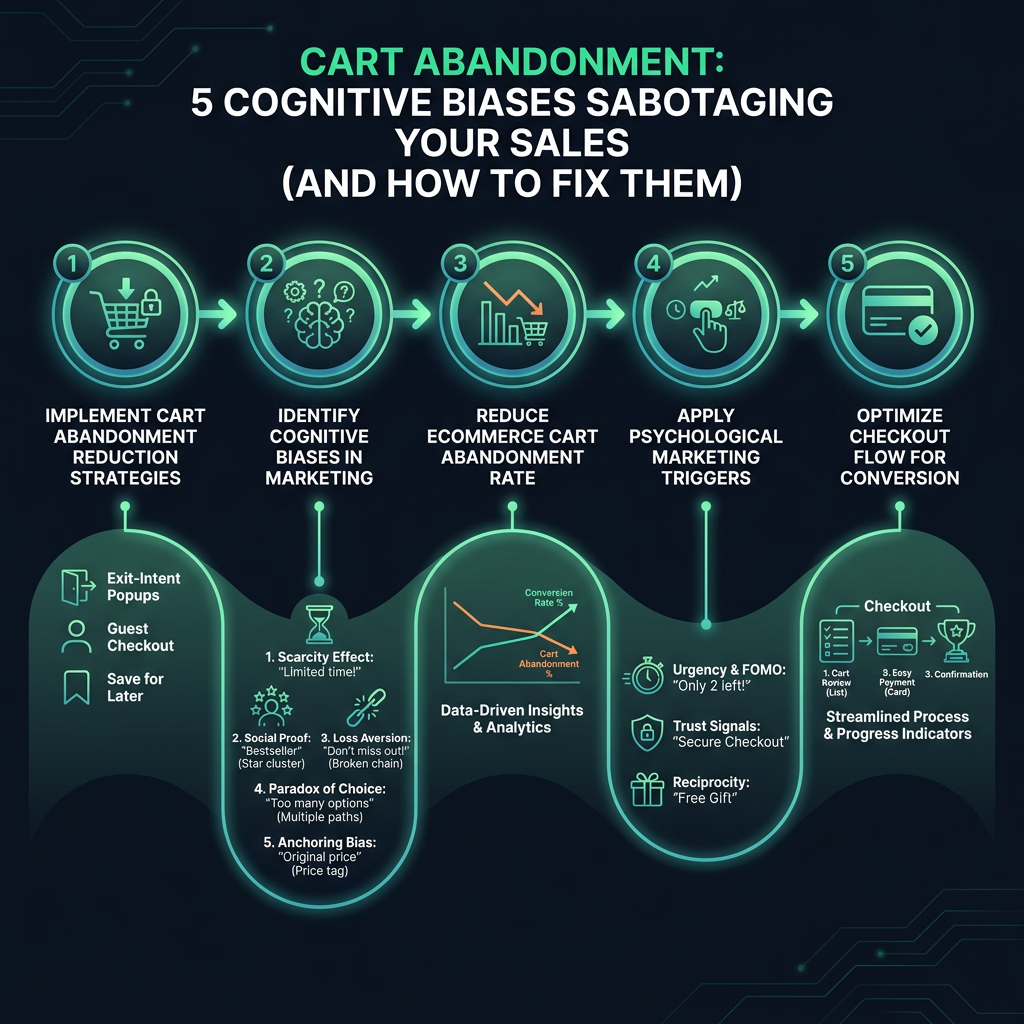
    Cart Abandonment: 5 Cognitive Biases Sabotaging Your Sales (And How to Fix Them) infographic showing στρατηγικές μείωσης εγκατάλειψης καλαθιού, cognitive bias in marketing, reduce ecommerce cart abandonment for digital marketing
    EyeCaptain
    eyecaptain.io

    Have you ever seen a customer fill their cart with excitement, only to abandon it at the payment screen? This is often caused by loss aversion. This powerful cognitive bias means the psychological pain of losing something (like money) feels far more intense than the pleasure of gaining something of equal value. At the final moment, the purchase no longer feels like gaining a great product; it feels like losing their money.

    To combat this, you must consistently reinforce value. Frame the final cost not as a loss, but as an investment in a solution. Clearly display savings, highlight "Free Shipping" banners, and remind them of the problem your product solves. You are not selling a price tag; you are selling a tangible benefit.

    2. The Paradox of Choice: Paralysis by Analysis

    While options seem customer-friendly, too many can be overwhelming and lead to inaction. This is known as the paradox of choice. When a customer is faced with too many decisions during checkout - multiple shipping options, account creation prompts, gift wrap add-ons - their brain can become fatigued. The easiest path forward is often to do nothing at all, resulting in an abandoned cart.
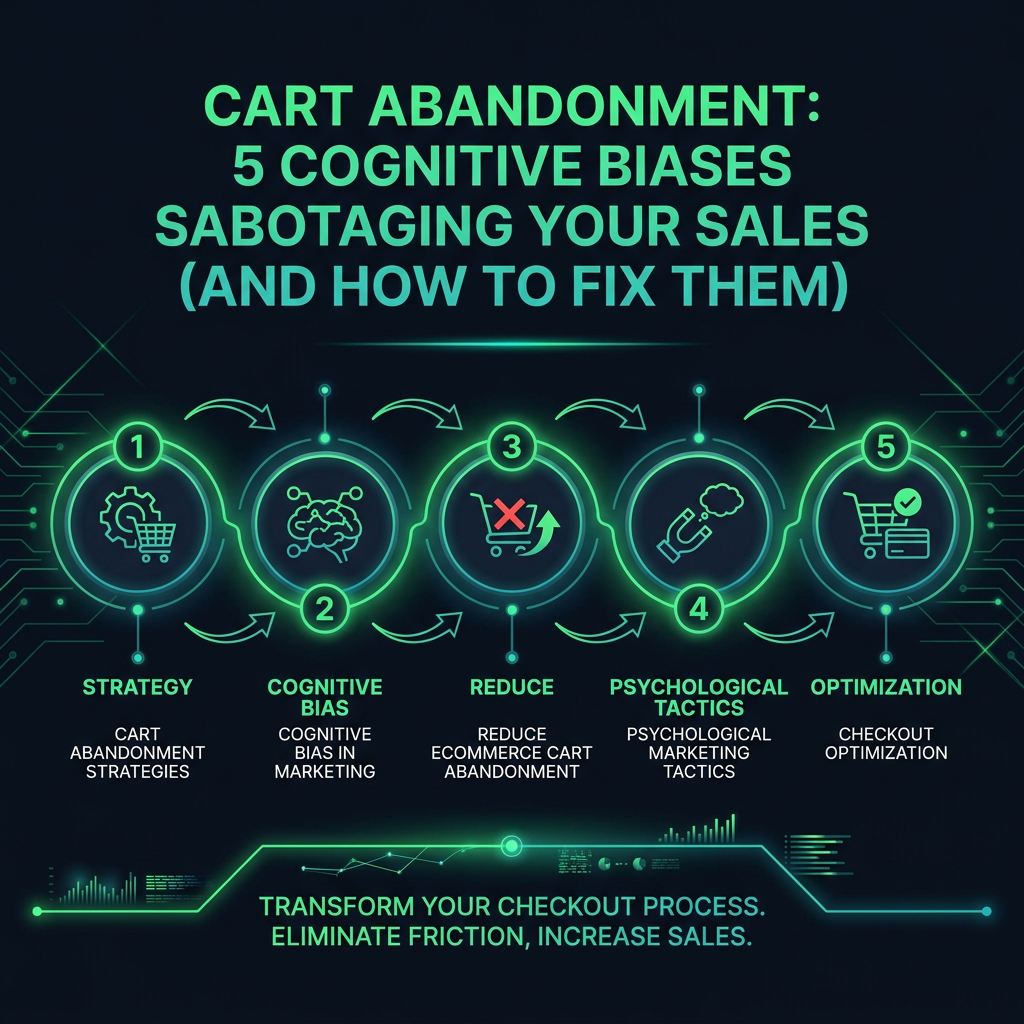
    Cart Abandonment: 5 Cognitive Biases Sabotaging Your Sales (And How to Fix Them) infographic showing στρατηγικές μείωσης εγκατάλειψης καλαθιού, cognitive bias in marketing, reduce ecommerce cart abandonment for digital marketing
    EyeCaptain
    eyecaptain.io

    Your goal is to make the path to purchase as simple and clear as possible. A streamlined checkout process is a profitable one.

    EyeCaptainEyeCaptain
    -35%
    Conversions Booster

    Your checkout is leaking revenue

    35% of cart abandonments are caused by fixable UX issues. Our analysis reveals trust gaps, hidden costs, and checkout friction points.

    Trust signals missing

    Effective Strategies to Reduce Cart Abandonment

    Once you understand the "why," you can implement targeted strategies. These psychological marketing techniques are designed to build trust, reduce friction, and guide the customer confidently toward completing their purchase.

    1. Master Checkout Optimization for a Seamless Experience

    Your checkout page should not feel like a maze. To reduce ecommerce cart abandonment, you must streamline the process. Here's how:

    • Eliminate unnecessary steps: Remove any field or page that is not absolutely essential for the transaction.
    • Offer guest checkout: Forcing account creation is a major barrier to conversion. Always provide an option to check out as a guest.
    • Be transparent with costs: Surprise shipping fees and taxes are the number one reason for abandonment. Display all costs upfront.
    • Provide trust signals: Display security badges (SSL, McAfee, Norton) and accepted payment logos (Visa, Mastercard, PayPal) to reassure customers their information is safe.

    2. Leverage Scarcity and Social Proof

    Urgency is a powerful motivator. When customers believe an item is in limited supply or high demand, their desire for it increases. This is not about being deceptive; it is about providing context that encourages a decision.

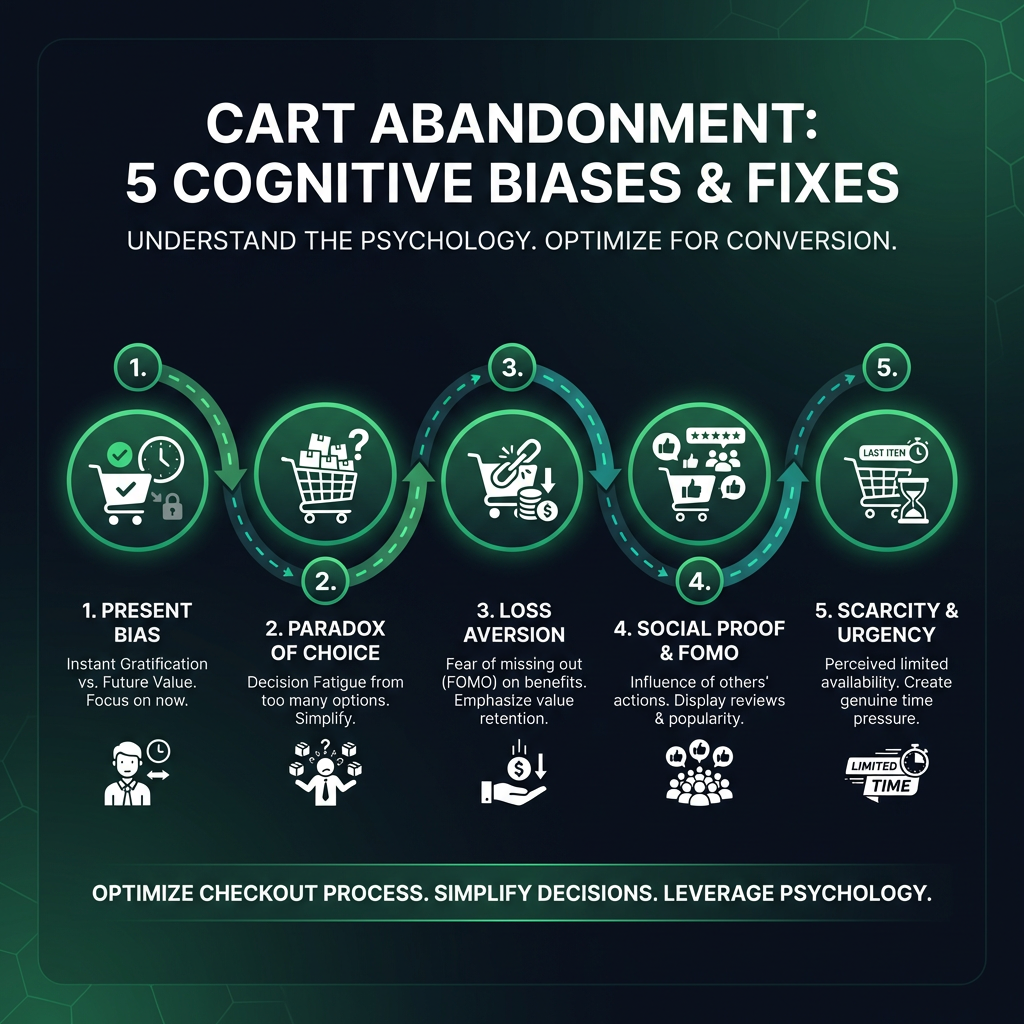
    Cart Abandonment: 5 Cognitive Biases Sabotaging Your Sales (And How to Fix Them) infographic showing στρατηγικές μείωσης εγκατάλειψης καλαθιού, cognitive bias in marketing, reduce ecommerce cart abandonment for digital marketing
    EyeCaptain
    eyecaptain.io
    • Show stock levels: A simple message like "Only 3 left in stock!" can create a healthy sense of urgency.
    • Use social proof: Showcasing real-time activity, such as "Someone in Berlin, Germany just purchased this item," demonstrates popularity and builds trust across a global audience.
    • Implement countdown timers: For special offers or sale prices, a timer showing when the deal expires can effectively prevent procrastination.

    3. Reframe Value and Build Trust

    Ultimately, your checkout page is the final conversation with your customer. Every word and design element either builds confidence or creates friction. Reassure them they are making a smart choice.

    The stores that truly succeed do not just sell products; they understand people. They navigate the silent hesitations happening in a customer's mind and respond to those unspoken fears with clarity and reassurance.

    By implementing these strategies, you can transform your checkout from a point of friction into a powerful conversion tool. The key is to shift your focus from simply processing a transaction to guiding a person through a thoughtful and reassuring psychological journey.

    Enjoyed this article?

    Join 1,500+ professionals getting weekly CRO & UX tips

    🎁 Bonus: Weekly CRO insights + exclusive resources

    No spam. Unsubscribe anytime.

    🚀 Boost Your Conversion Rate with EyeCaptain

    EyeCaptain is an AI-powered CRO & UX analysis tool that automatically scans your pages, identifies UX issues, and gives you actionable optimization suggestions to increase conversions. Try it for free, no card, no commitment.

    Free CRO Audit

    Did you find this helpful?

    Share it with someone who might find it useful.

    Be the first to learn CRO secrets

    Actionable tips, case studies & early access to new AI tools. Weekly in your inbox.

    1,200+ marketers trust us

    Cookie Settings

    We use cookies to improve your experience.