
Effective A/B testing is a fundamental part of a modern digital strategy, enabling businesses to move beyond assumptions and drive measurable growth. This guide explores how to leverage data analytics and execute successful conversion rate optimization (CRO) experiments, transforming your approach from guesswork into a systematic process for enhancing both revenue and user satisfaction.
Why A/B Testing is Essential for Sustainable Growth
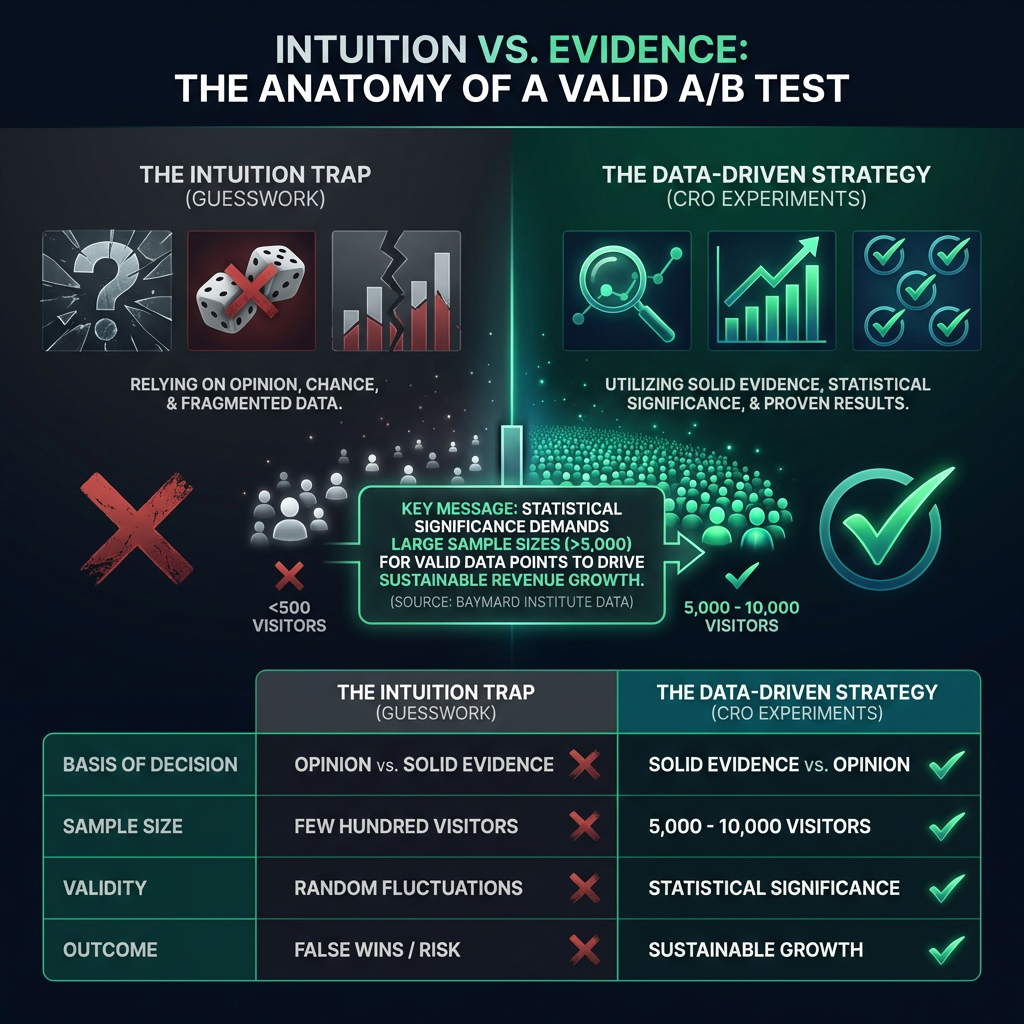
In the competitive global marketplace, many optimization efforts are based on intuition rather than solid evidence. While some businesses might make design choices based on opinion, you have the opportunity to use strategic A/B testing. By leveraging data analytics, you can systematically improve your performance, one informed decision at a time. This data-centric mindset is a core principle of successful and sustainable business growth.
Understanding Statistical Significance in CRO Experiments
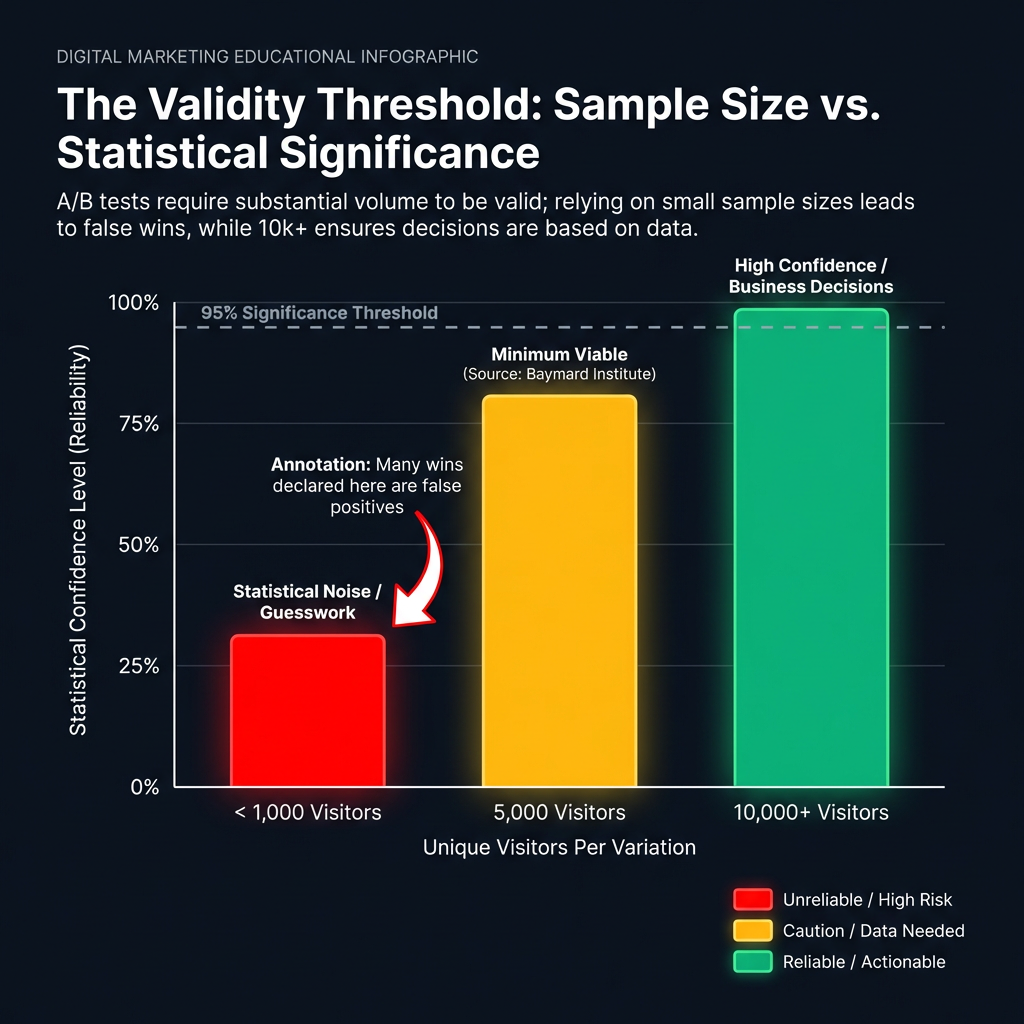
The term statistical significance is more than just a popular phrase; it is the foundation of a valid and impactful A/B test. An analysis of numerous e-commerce experiments revealed a critical insight: a high percentage of tests that were declared "wins" were mathematically invalid. These teams were making business decisions based on random statistical fluctuations, not genuine user preference.
The Critical Role of Sample Size in A/B Testing
The validity of your test results depends on achieving an adequate sample size. Running a test on only a few hundred visitors is unlikely to produce trustworthy data. Research from the Baymard Institute, a global authority on e-commerce UX, suggests a minimum of 5,000 unique visitors per variation to draw meaningful conclusions. For high-confidence results that can inform major business decisions, a sample size closer to 10,000 is often recommended.
One of the most common mistakes in running CRO experiments is stopping a test prematurely. It is tempting to see an early increase in conversions and declare a winner, but this can be highly misleading. To distinguish a true winner from statistical noise, you need:

- Patience: Allow the test to run for its planned duration to account for variations in user behavior over time.
- Discipline: Avoid drawing early conclusions from incomplete data.
- Rigor: Adhere to the statistical principles that ensure a valid and reliable experiment.
Crafting a Data-Backed Hypothesis for Your A/B Test
A powerful hypothesis is not a random guess; it is a scientific statement derived from user behavior data and analytics. The most effective hypotheses, as noted by experts at the globally recognized Nielsen Norman Group, follow a clear structure:
We believe that [implementing this change] for [this specific user segment] will result in [this improved metric] because [of this data-driven insight].
Consider Amazon's renowned culture of experimentation. They do not test ideas without supporting data. They use deep data analytics to understand user behavior and motivations, treating every element - from a button's color to a line of text - as part of a larger communication strategy.