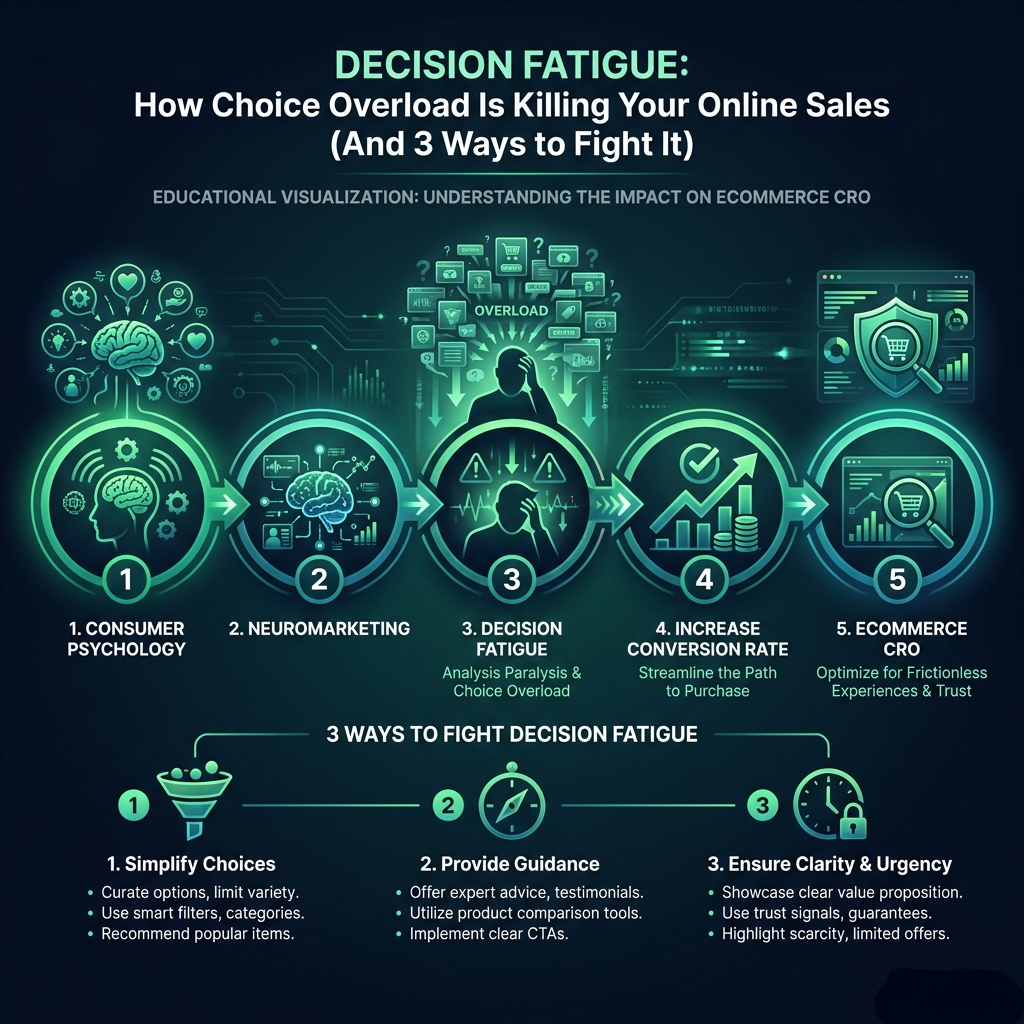

Are you struggling to increase your conversion rate despite having a quality product and consistent website traffic? The hidden reason may be decision fatigue, a core concept in consumer psychology that can quietly undermine your ecommerce conversion rate optimization (CRO) efforts. By understanding how mental exhaustion affects purchasing behavior, you can implement simple changes to guide customers to the checkout and significantly boost your sales.
What is Decision Fatigue? A Core Concept in Consumer Psychology
Imagine your customer's ability to make good choices is like a smartphone battery. Every decision, no matter how small, drains some of its power. By the time they reach your "Complete Purchase" button, their mental energy may be depleted. An exhausted mind does not make confident purchases; it often gives up and leaves your site. This phenomenon is decision fatigue.
It is the measurable decline in the quality of our choices after a long session of decision-making. This principle of consumer psychology explains why we might choose a familiar meal when we're tired, or why studies show the quality of complex decisions can decline throughout the day. For an ecommerce store, this cognitive overload is a silent conversion killer.
Your visitor has already made dozens of choices before landing on your website. They arrive with their mental battery already partially drained. If you then present them with 12 product colors, 4 shipping options, and 3 payment methods, it's easy to see why their brain might feel overwhelmed. This is where understanding neuromarketing becomes crucial for effective ecommerce CRO.
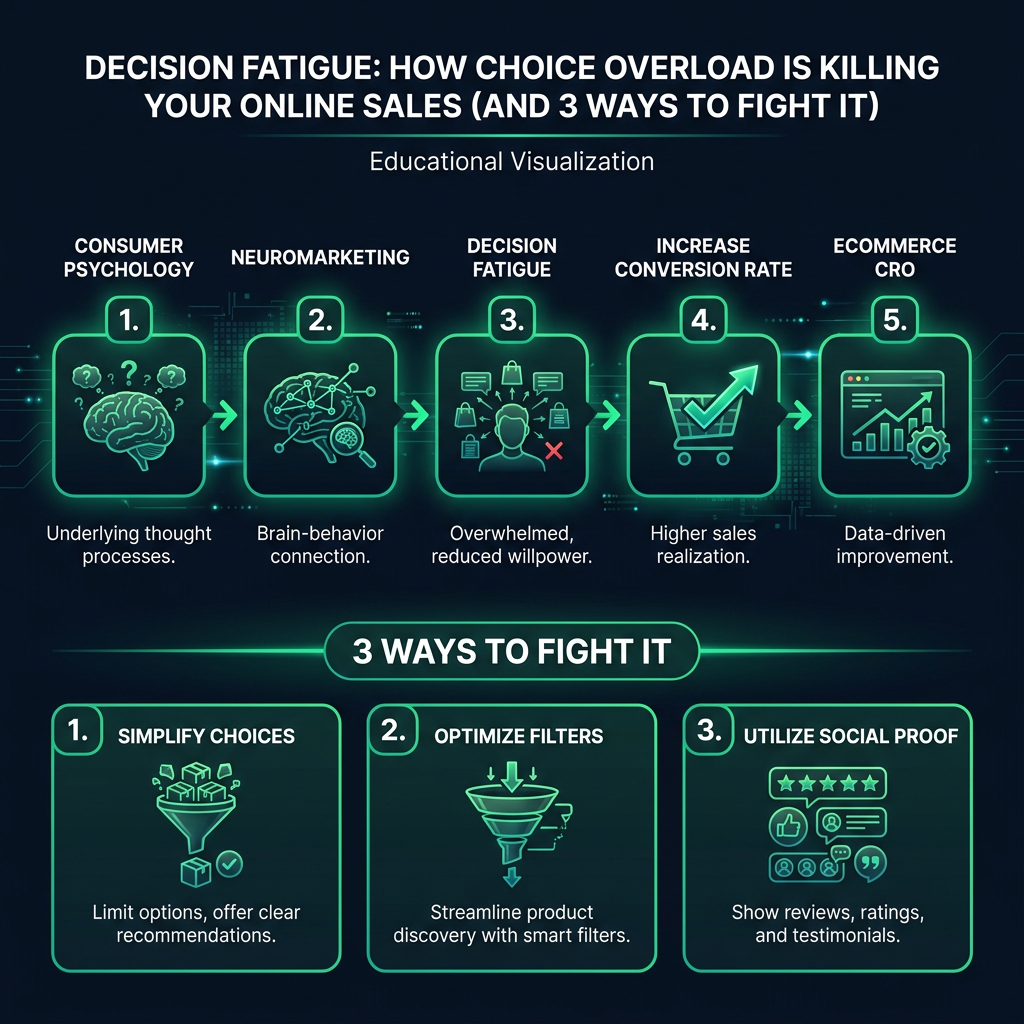

Compelling research from the Nielsen Norman Group found that by reducing the number of form fields from 11 to just 4, one website increased its conversions by 120%. The reason was not just speed; it was the reduction in the mental effort required from the user.
How to Identify the Impact of Decision Fatigue on Your Conversion Rate
While you cannot install a "decision fatigue" tracker, its effects are often visible in your analytics data if you know where to look. Identifying these patterns is the first step toward optimizing your customer journey and improving your conversion rate.
Analyze Cart Abandonment by Traffic Source
Examine your cart abandonment rate, but segment it by traffic source. Is your paid traffic converting at a lower rate than your organic traffic? This can be a significant warning sign. Visitors from advertisements have already made more decisions - from which ad to notice to which link to click - making them more susceptible to choice paralysis once on your site.
Compare Mobile vs. Desktop Conversions
If your mobile conversion rate is significantly lower than your desktop rate, you are likely overwhelming your mobile users. A smaller screen makes every element feel more crowded and every choice seem more complex to evaluate, leading to increased mental fatigue and higher abandonment rates.
Review Session Recordings for Hesitation
Watch session recordings of users who abandoned their carts during checkout. Look for signs of difficulty: long pauses, hovering over buttons without clicking, or toggling back and forth between shipping options. Each moment of hesitation is a signal that the user is experiencing cognitive load, putting the sale at risk.
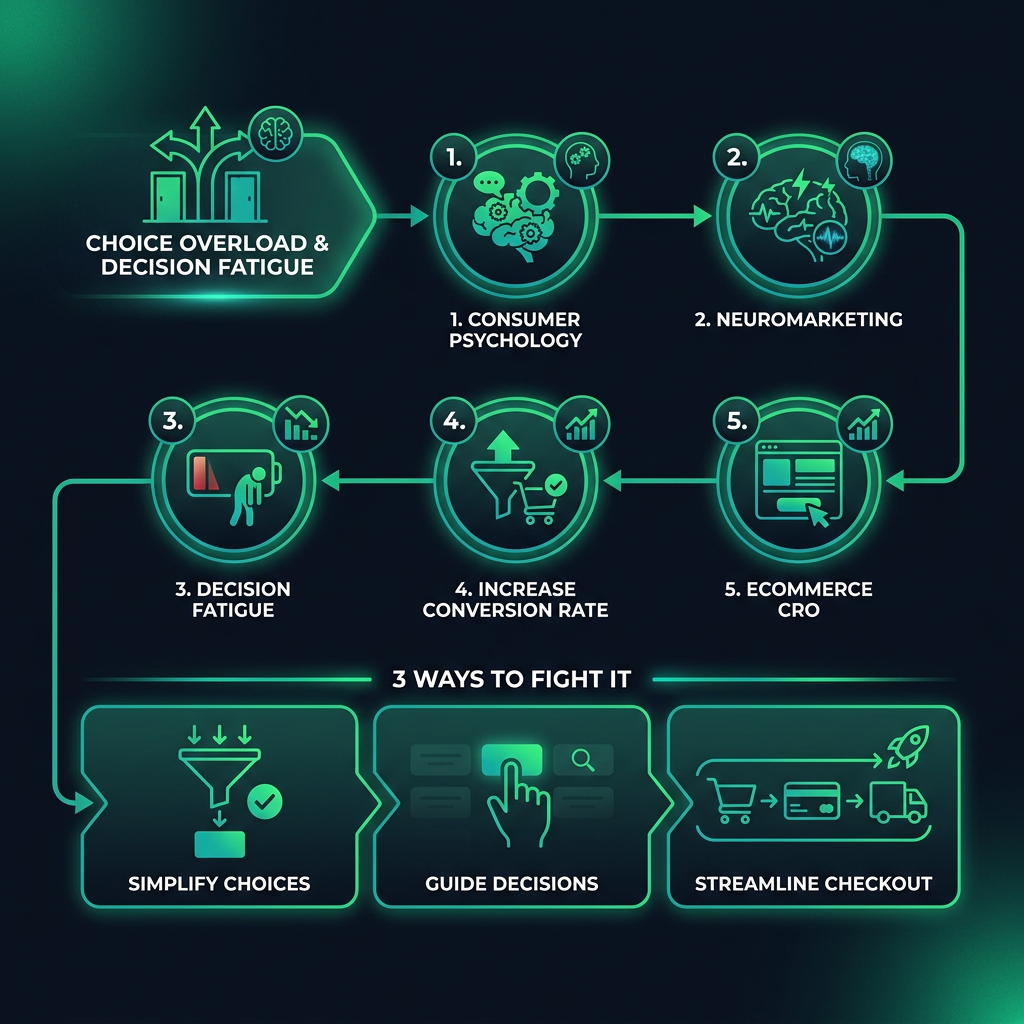
3 Neuromarketing Tactics to Combat Decision Fatigue and Increase Conversions
The solution is not to eliminate all options. The goal is to remove unnecessary decisions and make the ideal path the easiest one to follow. Here are three evidence-based strategies you can implement today.